Thailand rewards travelers who mix things up: temples in the morning, beaches by afternoon, mountains a flight away. With visitor numbers climbing again heading into 2026, the classic circuit still delivers, but knowing which stop suits which kind of trip saves you from wasted travel days.
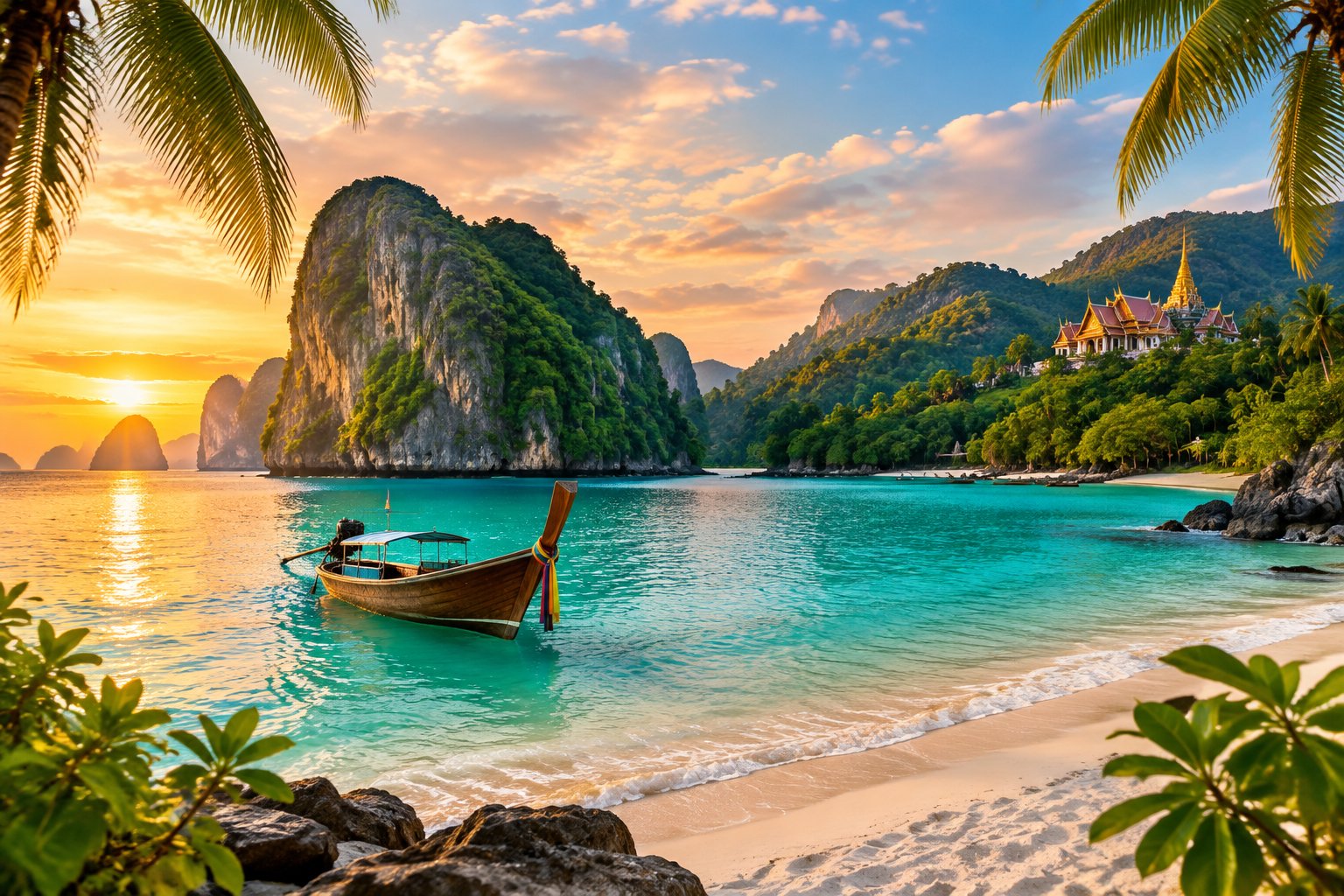
Bangkok anchors nearly every Thailand itinerary, while beach time in Krabi or Koh Samui and mountain air in Chiang Mai or Pai round out a well-paced two-to-three-week trip. You don't need all ten hotspots to have a great trip. You need the right three or four, matched to how you actually like to travel.
This rundown covers the top 10 destinations in Thailand for 2026. Discover the best places to visit in Thailand, from Bangkok's river temples to Koh Tao's dive sites, with honest notes on which stops work as day trips.
Key Takeaways
- Limit your stops: Focus on three or four destinations for a standard two-week trip to avoid travel burnout.
- Balance regions: A balanced route combines Bangkok's urban energy, northern mountain culture, and southern island beaches.
- Mind the seasons: The Andaman Sea peaks from November to April, while Gulf islands remain sunny well into July and August.
- Leverage day trips: Ayutthaya and Kanchanaburi work well as quick side trips from Bangkok rather than separate bases.
1. Bangkok: Temples, Markets, and River Life
Bangkok is Thailand's essential starting point, mixing riverside temples, sprawling markets, and some of the country's best street food into one dense, walkable core. Most travelers spend two to four nights here before heading out to the coast or the north.
Sampling authentic Thai cuisine is a central part of the experience, from humble street stalls to riverside dining. You can watch street vendors toss piping-hot servings of pad thai in glowing woks along bustling alleyways.
For dessert, carts serve fresh mango sticky rice drizzled with warm coconut cream and toasted mung beans.
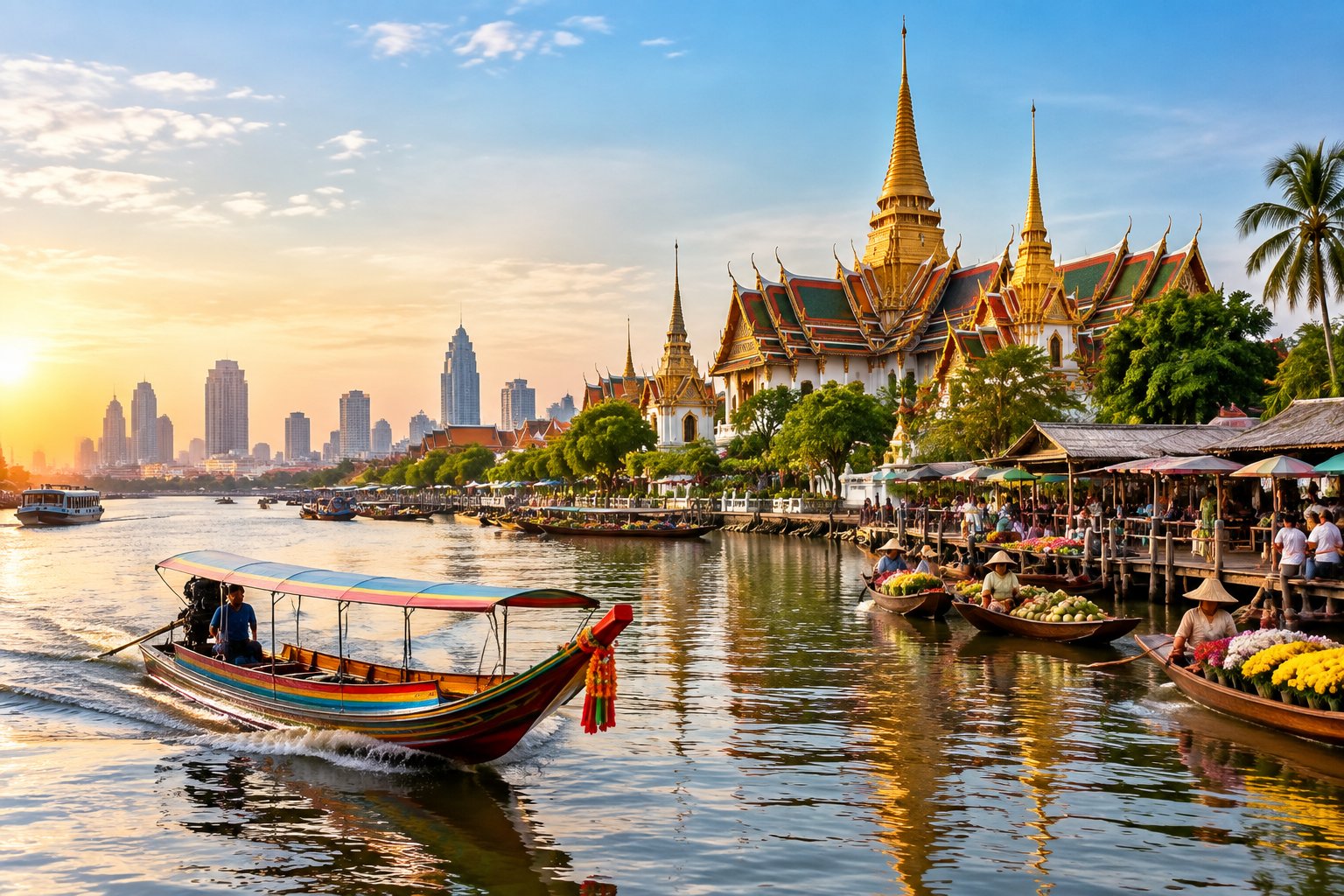
Dedicate a full day to the Grand Palace, the Emerald Buddha, Wat Pho, and Wat Arun along the Chao Phraya River.
For shopping, spend hours browsing Chatuchak Weekend Market. In the evenings, head to Khao San Road for lively open-air bars, street food stalls, and great people-watching.
Even if you stay elsewhere, Khao San Road remains an iconic hub to experience the city's lively nighttime energy.
3 Absolute Highlights:
- Sunrise or sunset views of Wat Arun from a Chao Phraya River boat
- A half-day wander through Chatuchak Weekend Market's thousands of stalls
- Street-side pad thai and mango sticky rice in the old town
Where to Stay in Bangkok
Bangkok also works as a launch pad for coastal side trips to Pattaya and Coral Island. Travelers heading to Pattaya will find high-rise beachfront resorts, water sports, and bustling entertainment.
Alternatively, the calmer Hua Hin is home to the Hua Hin Night Market and the trendier Cicada Market.
If mountains interest you more than beaches, Khao Yai National Park is an easy escape from the capital. A trip to Khao Yai National Park lets travelers hike jungle trails and spot wild elephants in their natural habitat.
How to Spend Your First Day in Bangkok
Start early at the Grand Palace before heat and crowds roll in. Its soaring golden chedis and intricate royal halls set the tone for the morning.
Visiting the Grand Palace provides a memorable look at centuries of royal craftsmanship and Siamese architectural heritage.
Be sure to dress respectfully when visiting the Grand Palace, keeping shoulders and knees covered to comply with entry rules.
From there, walk to Wat Pho to see the giant reclining Buddha and explore the birthplace of traditional Thai massage.
Because Wat Pho sits right next to the royal grounds, combining both sites during a single morning is seamless.
Cross the river by ferry to Wat Arun in the late afternoon, when the light hits the spires best. Finish with dinner near the river and a slow walk through a night market.
For your stay, the Riverside area near Wat Arun puts you close to the temples and ferry piers, while Sukhumvit suits travelers who want nightlife and easy BTS access. Check current hotel prices in Bangkok via Booking.com or Expedia.
2. Chiang Mai: Northern Temples and Food
Chiang Mai delivers a cooler, slower alternative to Bangkok, built around a walled Old City, mountain temples, and a food scene centered on northern dishes like khao soi. It's the natural base for exploring northern Thailand.
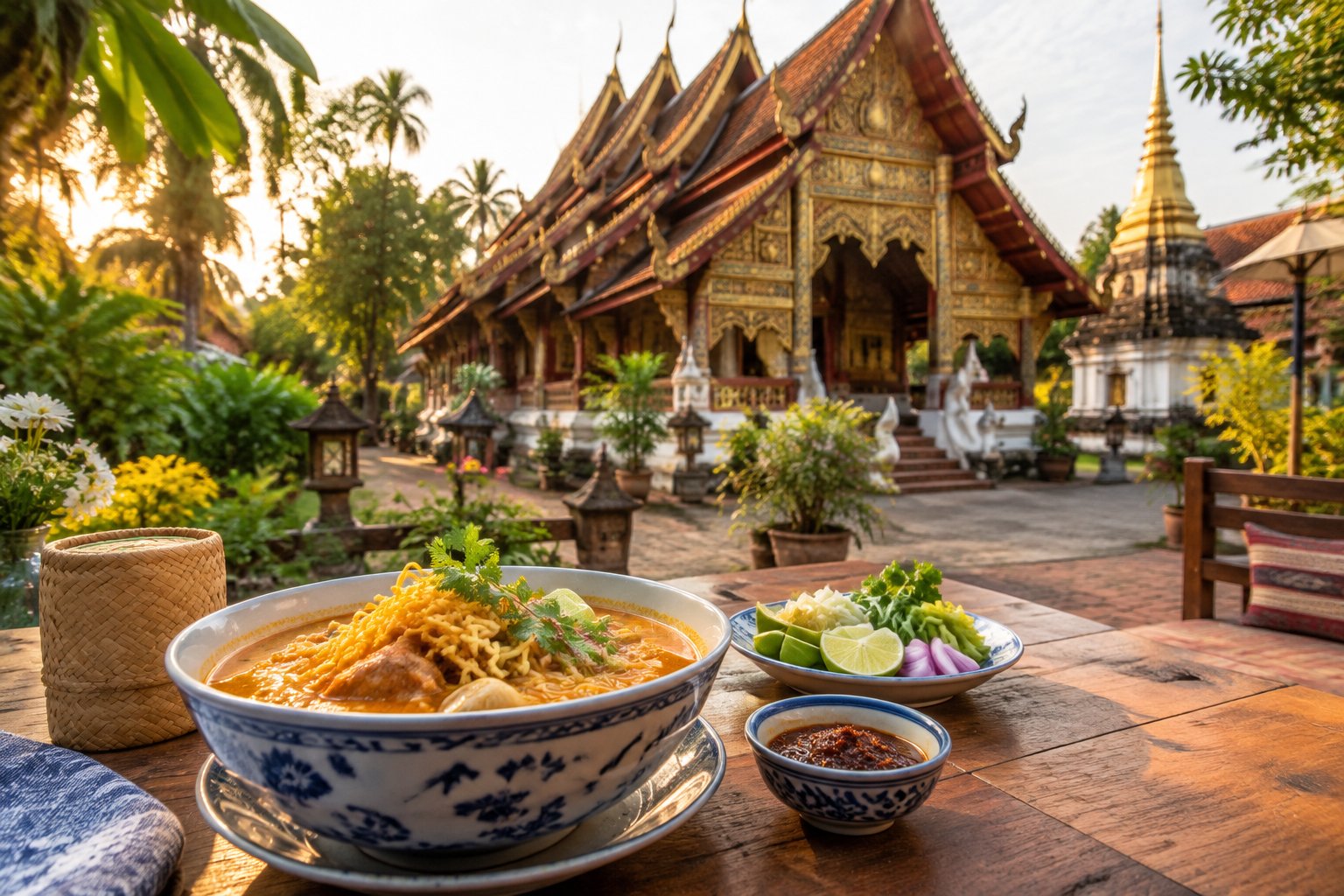
Wat Phra That Doi Suthep sits on a mountainside overlooking the city and ranks among the most-visited temples in the north. The Old City alone holds dozens of smaller temples worth wandering between, and the Sunday Walking Street market turns the main road into a food and crafts fair each week.
3 Absolute Highlights:
- Doi Suthep Temple at sunset, with the city spread out below
- A bowl of khao soi at a family-run shop in the Old City
- Sunday Walking Street for handicrafts and grilled skewers
Where to Stay in Chiang Mai
Doi Inthanon National Park, home to Thailand's highest peak, makes for a full-day trip from the city. If your visit lines up with November, the Yi Peng Lantern Festival offers a striking look at Thai culture in its most photogenic form.
When Is Chiang Mai at Its Best?
November through February brings cooler temperatures and clearer skies, making it the most comfortable stretch for temple-hopping and day trips to Doi Inthanon. March and April bring burning season haze that can dull mountain views. If lanterns matter to your trip, plan around the Yi Peng dates, which shift each year with the lunar calendar.
Stay in the Old City for walkable access to temples and markets, or Nimman for a trendier café and boutique scene. Check current hotel prices in Chiang Mai via Booking.com or Expedia.
3. Phuket: Beaches and Andaman Island Trips
Phuket works best as a comfortable base for Andaman Sea island trips rather than a destination to explore end to end. As Thailand's largest island, it holds 39 beaches according to a Phuket travel guide, along with the busiest nightlife strip in southern Thailand.
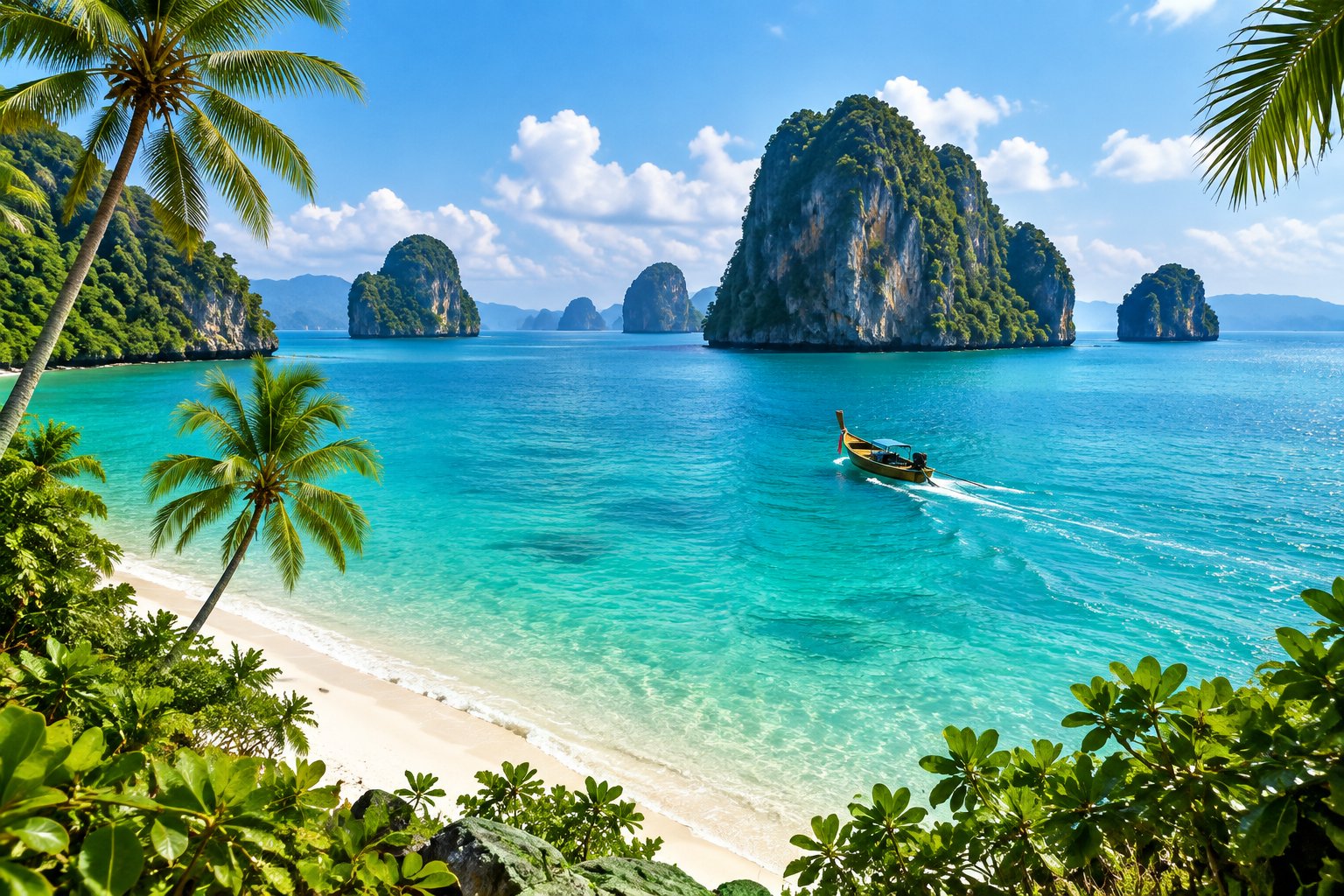
Patong Beach is the loud, developed option, packed with bars and vendors, while Old Phuket Town offers Sino-Portuguese architecture and a calmer pace. From either base, day trips reach Phang Nga Bay and James Bond Island, or the more remote Similan Islands for snorkeling and diving.
Many travelers also book day-long boat trips out to the Phi Phi Islands directly from Phuket's southeastern marinas. Speedboat excursions to Koh Phi Phi allow you to discover towering sea cliffs and bright coral reefs in a single outing.
3 Absolute Highlights:
- A longtail boat tour through Phang Nga Bay's limestone karsts
- Snorkeling or diving at the Similan Islands
- An evening walk through Old Phuket Town's heritage shophouses
Where to Stay in Phuket
Phuket's airport connections make it a practical entry point for a Thailand trip focused on the Andaman coast, especially if you're pairing it with Krabi.
Flights to Phuket
Which Phuket Base Fits Your Trip?
Stay near Patong Beach if you prioritize nightlife, water sports, and quick tour bookings. The area brings heavy traffic and crowds, but it keeps you right in the action.
Old Phuket Town fits those who want character and quieter evenings, with a short drive to reach the main beaches. Families often land in Kata or Karon for calmer water and a more residential feel.
Check current hotel prices in Phuket via Booking.com or Expedia.
4. Krabi: Limestone Cliffs and Island Hopping
Krabi pairs some of Thailand's most dramatic limestone scenery with easy access to island hopping, making it a strong alternative to Phuket for travelers who want fewer crowds. Ao Nang serves as the main tourist hub, with Railay Beach a short boat ride away.
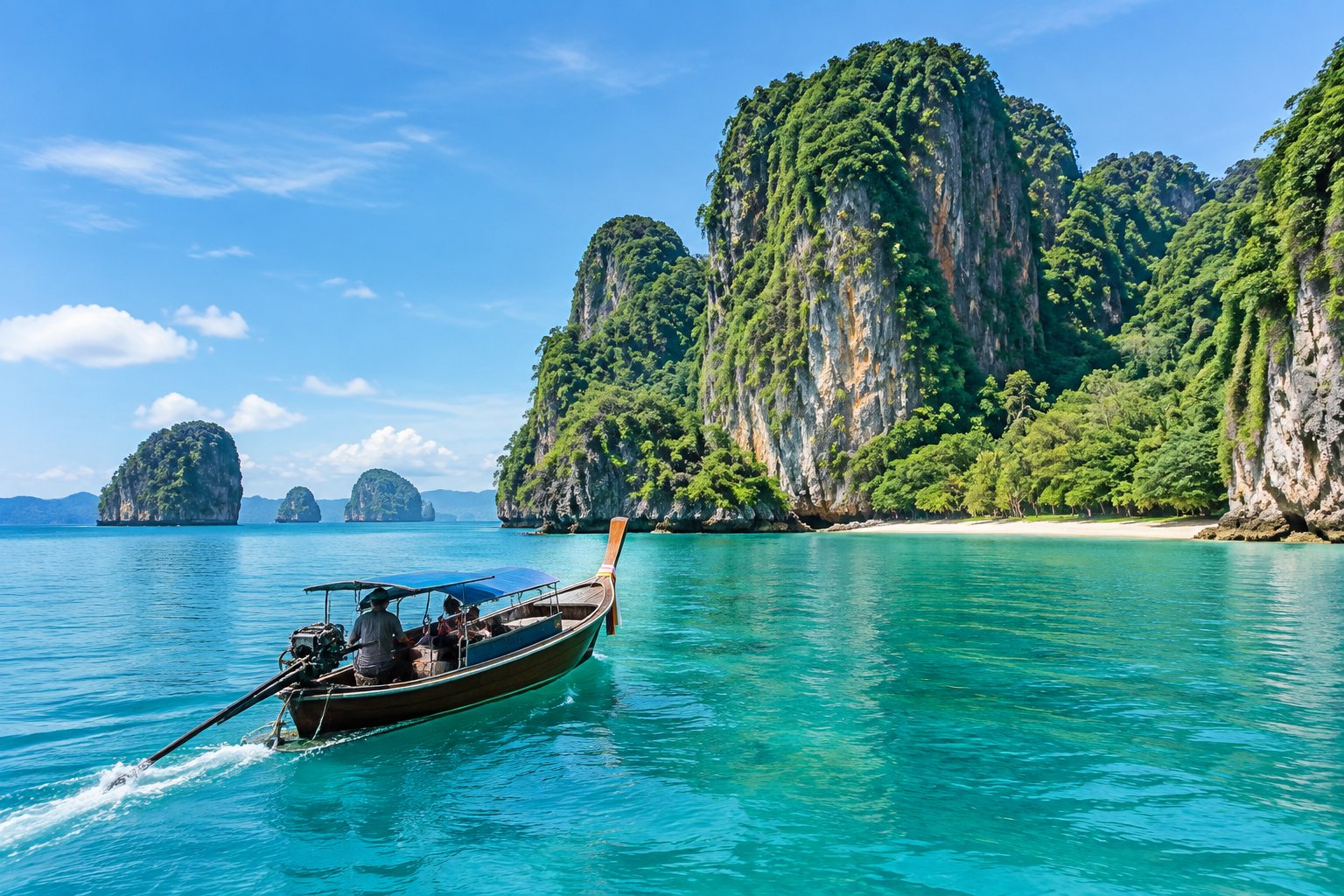
Railay Beach sits framed by towering karst cliffs that draw climbers from across the globe. You can kayak beneath dramatic limestone walls or simply relax on soft sand.
Nearby Phra Nang Cave Beach ranks among the region's most photographed stretches of sand. The Emerald Pool, a jungle-fed swimming hole inland, makes a good half-day trip away from the coast.
3 Absolute Highlights:
- Rock climbing or swimming at Railay Beach's karst-lined shores
- A day trip to the Phi Phi Islands, including the famous Maya Bay
- Kayaking or a jungle swim at the Emerald Pool
Where to Stay in Krabi
A boat excursion to Koh Phi Phi lets you explore stunning lagoons and dramatic cliffs. Speedboat day trips out to the Phi Phi Islands, including Maya Bay, depart straight from Ao Nang beach for hours of snorkeling.
For a slower pace away from tour boats, head to Koh Lanta. The island features long, uncrowded stretches of sand and calm coastal sunsets.
Renting a scooter on Koh Lanta allows you to explore quiet fishing villages, hidden coves, and relaxed beach bars at your own pace.
Should You Stay in Ao Nang or Railay?
Ao Nang has road access, a wider choice of hotels, and easy restaurant options, making it the practical pick for most travelers. Railay is boat-access only, which keeps it quieter in the evenings once the day-trippers leave. Climbers and travelers chasing a slower pace tend to prefer Railay despite the extra logistics.
Where to Stay in Ao Nang
Where to Stay in Railay
Check current hotel prices in Krabi via Booking.com or Expedia.
5. Koh Samui: A Gulf Island Base
Koh Samui offers an easier, more developed island experience than the Andaman coast, with direct flights and a ring road connecting its beaches. Chaweng Beach is the island's liveliest strip, packed with resorts, restaurants, and nightlife.
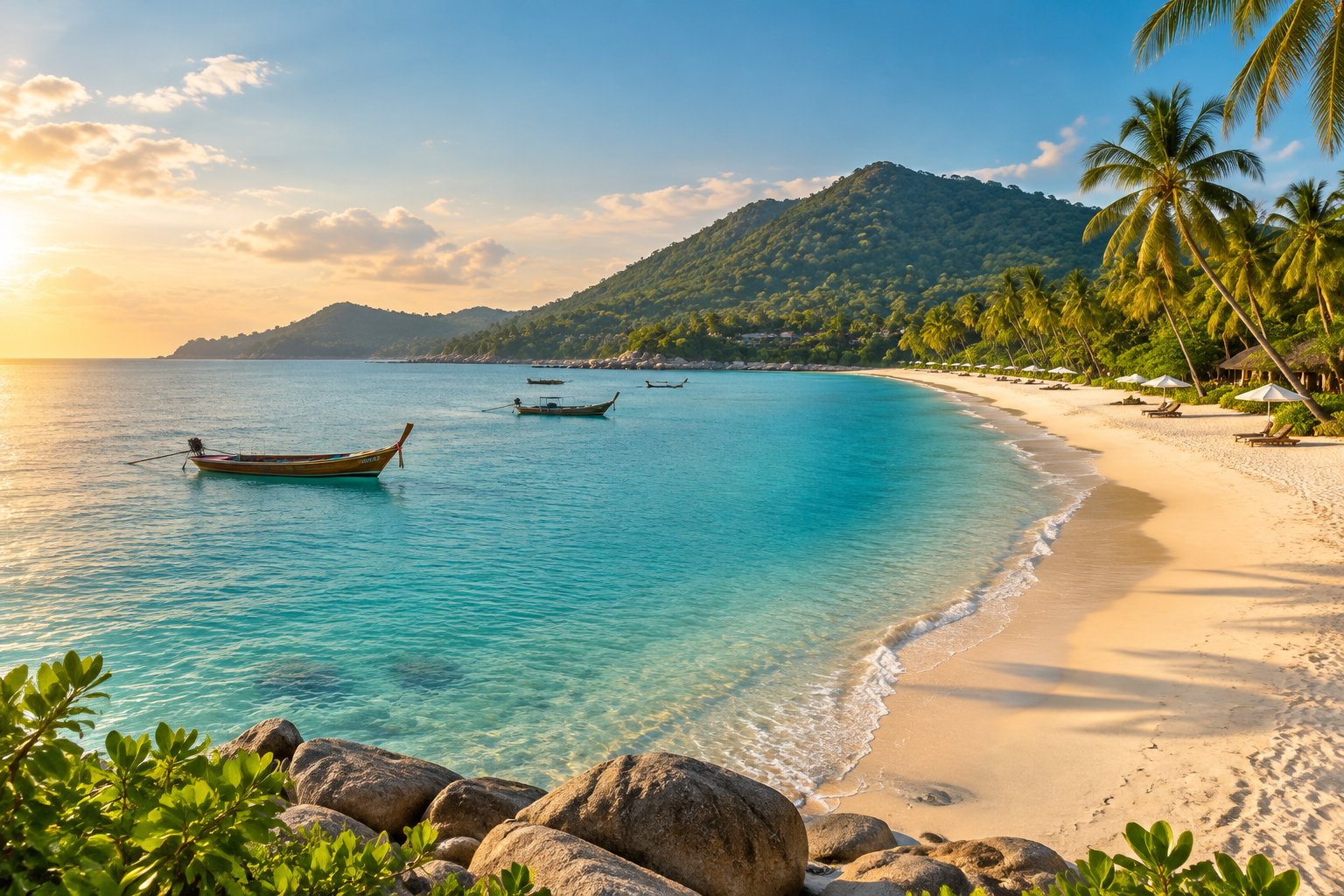
The Big Buddha Temple, also known as Wat Phra Yai, sits on a small island connected by causeway and makes an easy half-day stop. For a break from the beach, Ang Thong National Marine Park delivers a full-day boat trip through dramatic limestone islands and a lagoon accessible by short hike.
3 Absolute Highlights:
- Sunset drinks along Chaweng Beach
- A full-day boat trip through Ang Thong National Marine Park
- Photos at the Big Buddha Temple before the afternoon crowds arrive
Where to Stay in Kho Samui
Samui's ferry connections make island-hopping within the gulf straightforward, without needing to backtrack through Bangkok.
Which Gulf Islands Pair Well with Samui?
The island of Koh Pha Ngan sits a quick ferry ride away across the water. While Koh Phangan draws crowds for the monthly Full Moon Party, it also offers quiet northern bays far from the noise.
Further north, Koh Tao completes the gulf trio for scuba divers and snorkelers.
Check current hotel prices in Koh Samui via Booking.com or Expedia.
6. Ayutthaya: Ancient Ruins Near Bangkok
Ayutthaya delivers a compact dose of Thai history less than two hours from Bangkok. The ancient city served as Thailand's capital for over 400 years before its destruction in 1767.
Today, its ruins form Ayutthaya Historical Park, a UNESCO World Heritage Site according to a guide to the ancient capital.
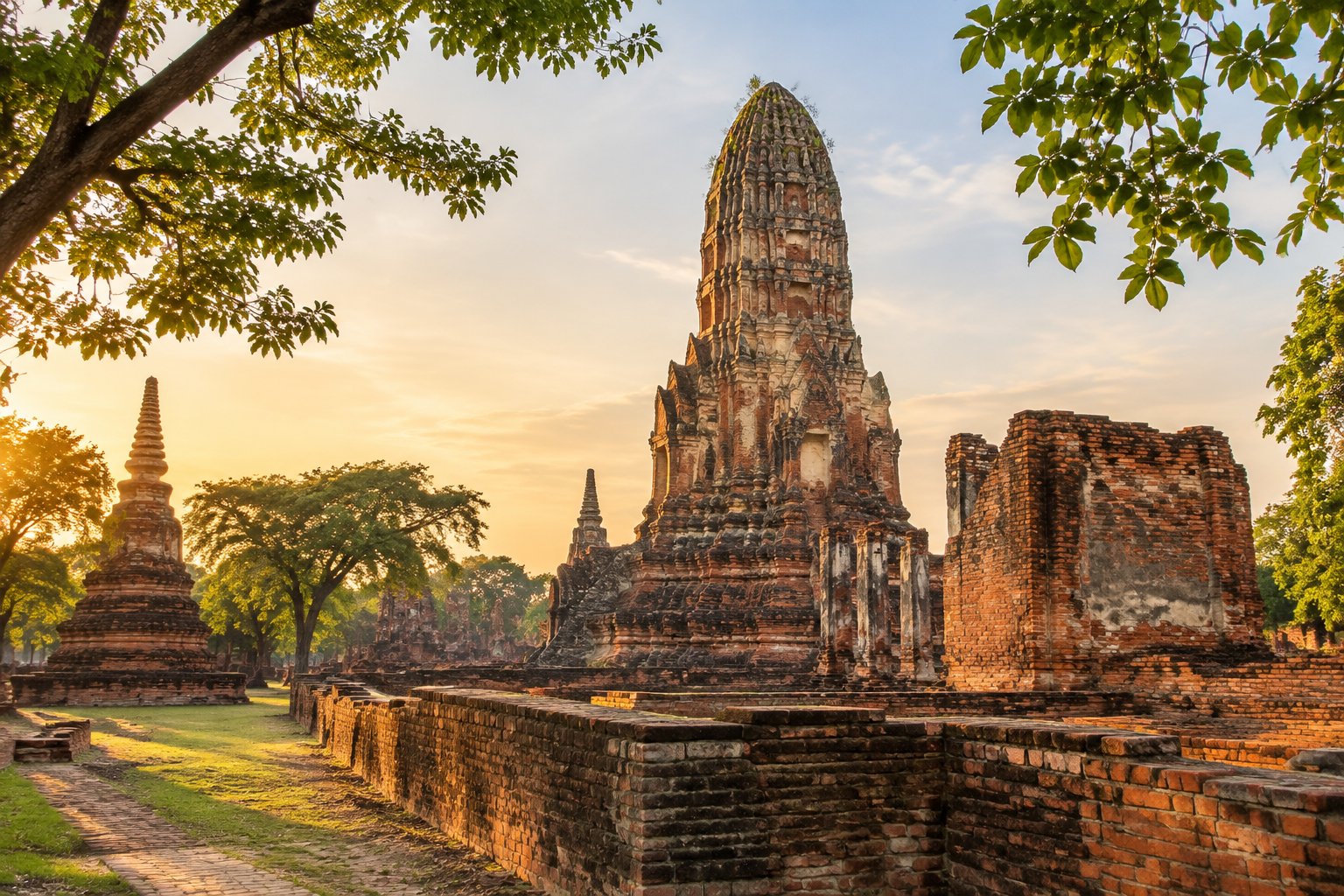
Wat Mahathat holds the famous Buddha head entwined in tree roots, one of the most photographed sights in the country. Arriving early at Wat Mahathat lets you take in the ancient brick towers before midday tour groups arrive.
Wat Phra Si Sanphet, the former royal temple, shows off three restored chedis that once anchored the palace grounds.
3 Absolute Highlights:
- The tree-root Buddha head at Wat Mahathat
- The three chedis of Wat Phra Si Sanphet at golden hour
- Cycling between ruin clusters on the old city island
Where to Stay in Ayutthaya
Ayutthaya works as a straightforward day trip from Bangkok, reachable by minivan from the Mo Chit terminal.
Is Ayutthaya a Day Trip or an Overnight Stay?
A single day covers the main park easily if you start by mid-morning. Renting a bicycle or hiring a tuk-tuk lets you take in the ancient stupas at your own pace.
Sukhothai, the earlier Siamese capital, sits much further north. The ancient temples of Sukhothai Historical Park reward a dedicated journey, so treat Sukhothai as a distinct northern stop rather than a quick add-on from Bangkok.
Check current hotel prices in Ayutthaya via Booking.com or Expedia.
7. Chiang Rai: Striking Temples and Border Scenery
Chiang Rai stands out for two of Thailand's most visually striking modern temples and easy access to the Golden Triangle border region. The White Temple, or Wat Rong Khun, draws visitors with its stark white, mirror-studded facade unlike any traditional Buddhist temple in the country.
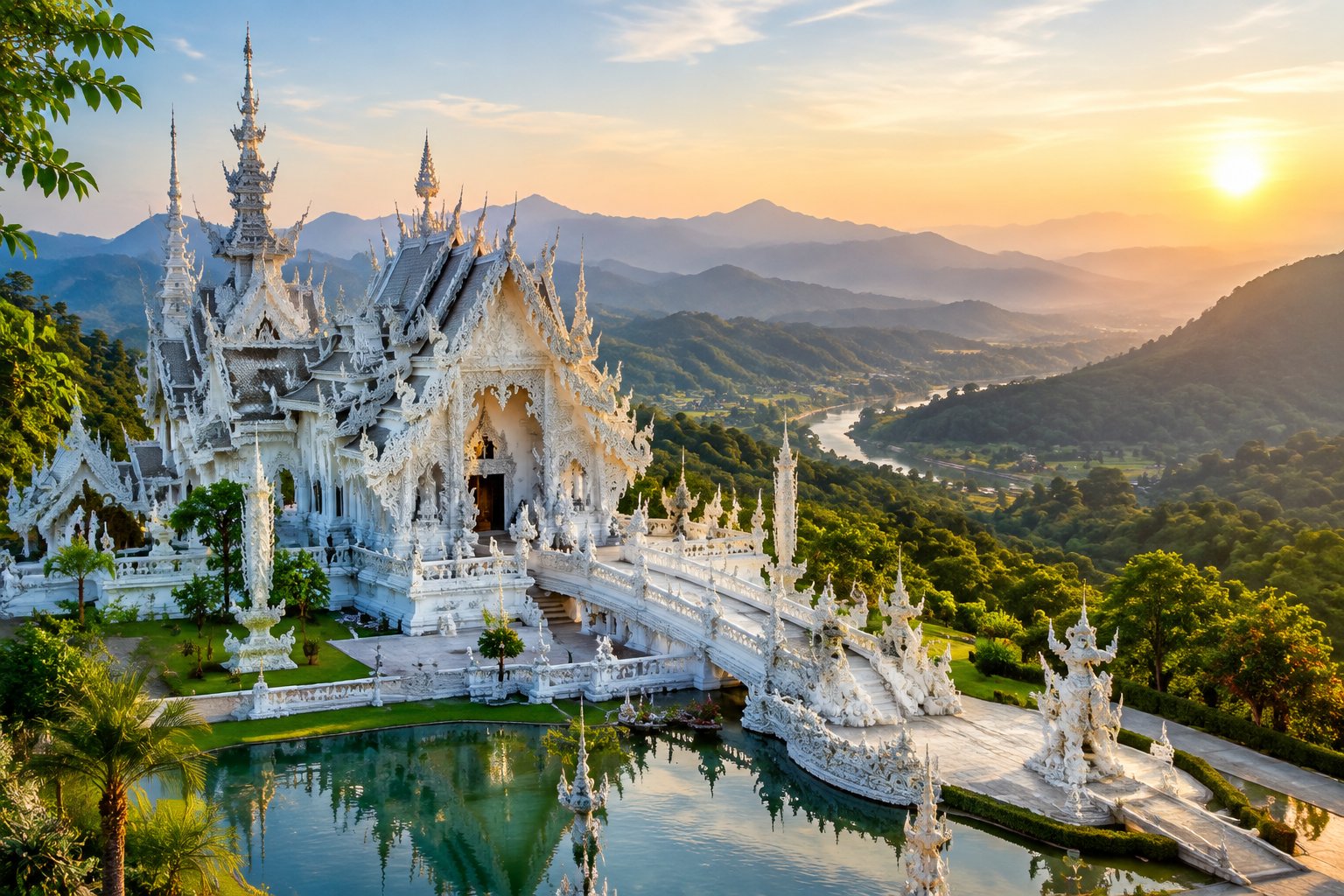
A short drive away, the Blue Temple, known locally as Wat Rong Suea Ten, offers a smaller but equally vivid contrast in cobalt blue and gold. Both temples reward an early visit, before tour buses from Chiang Mai fill the parking lots.
3 Absolute Highlights:
- The mirrored, otherworldly White Temple at Wat Rong Khun
- The cobalt-blue interior of Wat Rong Suea Ten
- A river-view stop at the Golden Triangle, where Thailand meets Laos and Myanmar
Where to Stay in Chiang Rai
The Golden Triangle, where the Mekong River marks the meeting point of Thailand, Laos, and Myanmar, sits roughly an hour further north and pairs well with a full-day temple itinerary.
Can You Combine the Temples and Golden Triangle?
Both White Temple and Blue Temple sit close enough to Chiang Rai's city center to visit in a single morning. The Golden Triangle adds another hour or two of driving each way, so most travelers combine it with an overnight stay rather than squeezing everything into one long day from Chiang Mai.
Check current hotel prices in Chiang Rai via Booking.com or Expedia.
8. Pai: A Slower Mountain Escape
Pai gives you a genuine change of pace after Chiang Mai's temples, built around canyon views, hot springs, and a walking street that fills with food stalls each evening. It's a small mountain town in the Mae Hong Son province, roughly 146 kilometers from Chiang Mai according to a Pai travel roundup.
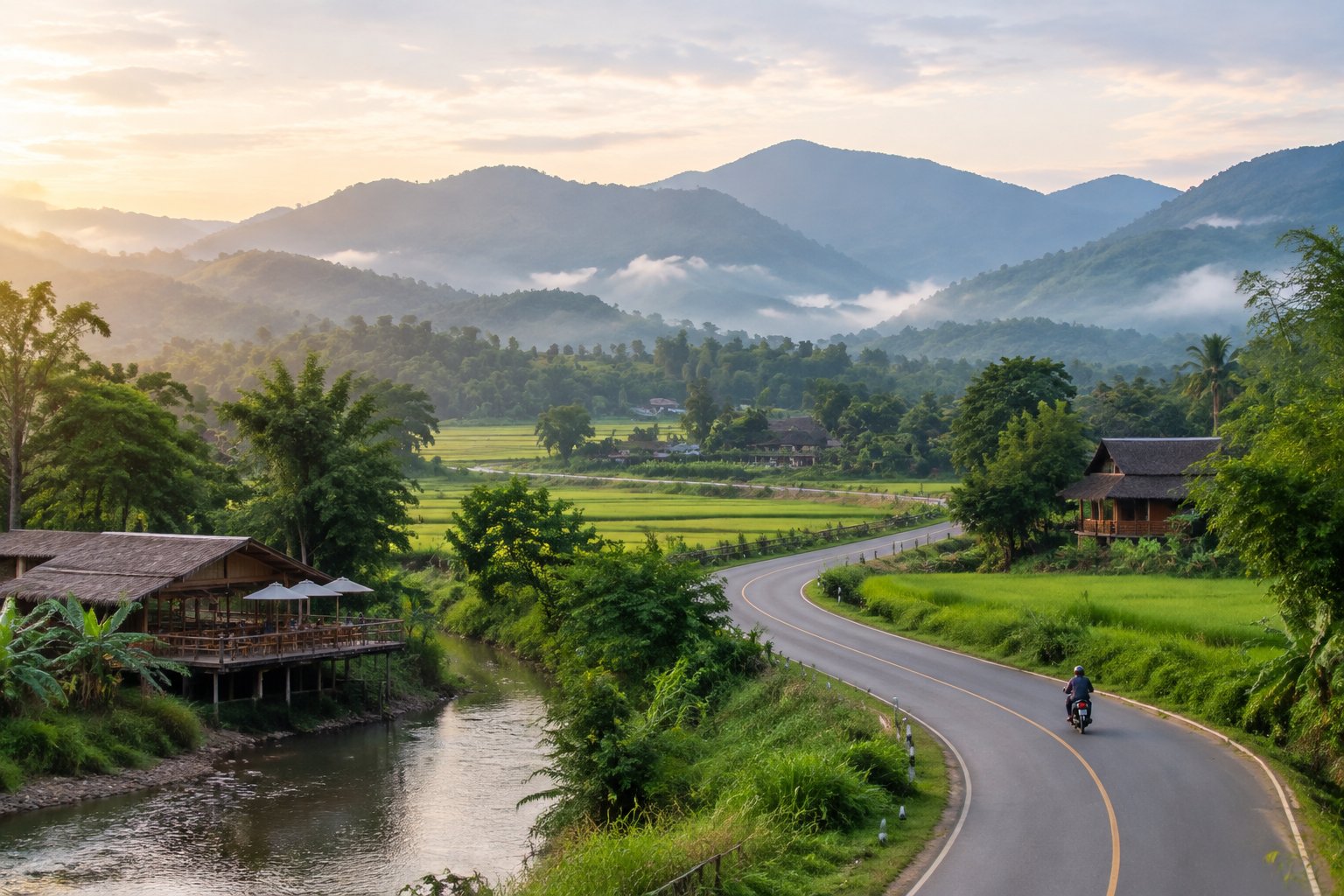
Pai Canyon features narrow ridgeline paths and breathtaking sunset views. The red-clay tracks look out over wide, forested valleys.
Hiking along the dusty ridges of Pai Canyon requires sturdy footwear, especially when traversing the narrow cliff paths.
In town, Pai Walking Street turns the main road into a nightly food market, heavy on grilled skewers, fresh fruit shakes, and portions of mango sticky rice.
Over the years, Pai has emerged as one of the most beloved scenic escapes across northern Thailand for relaxed backpackers and nature lovers.
3 Absolute Highlights:
- Sunset from the narrow ridges of Pai Canyon
- An evening browsing Pai Walking Street's food stalls
- A soak in one of the nearby natural hot springs
Where to Stay in Pai
Pai works best as a two-to-three-night stop rather than a rushed day trip, given how much of its appeal comes from slowing down.
How Do You Reach Pai Safely?
The route from Chiang Mai twists through over 700 mountain curves. Pack motion sickness medication if you get car sick, especially for the three-to-four-hour minivan ride.
Only rent a scooter if you have solid riding experience, as the steep, tight turns challenge riders every season.
Pai also anchors one end of the Mae Hong Son Loop, a longer circuit through the province's mountain roads for travelers with extra time. Check current hotel prices in Pai via Booking.com or Expedia.
9. Kanchanaburi: Wartime History and Waterfalls
Kanchanaburi blends sobering WWII history with western Thailand's best waterfalls. Allied prisoners of war built the iconic Bridge on the River Kwai, where passenger trains still cross today.
You can also ride a scenic remaining stretch of the Death Railway along cliff edges above the river.
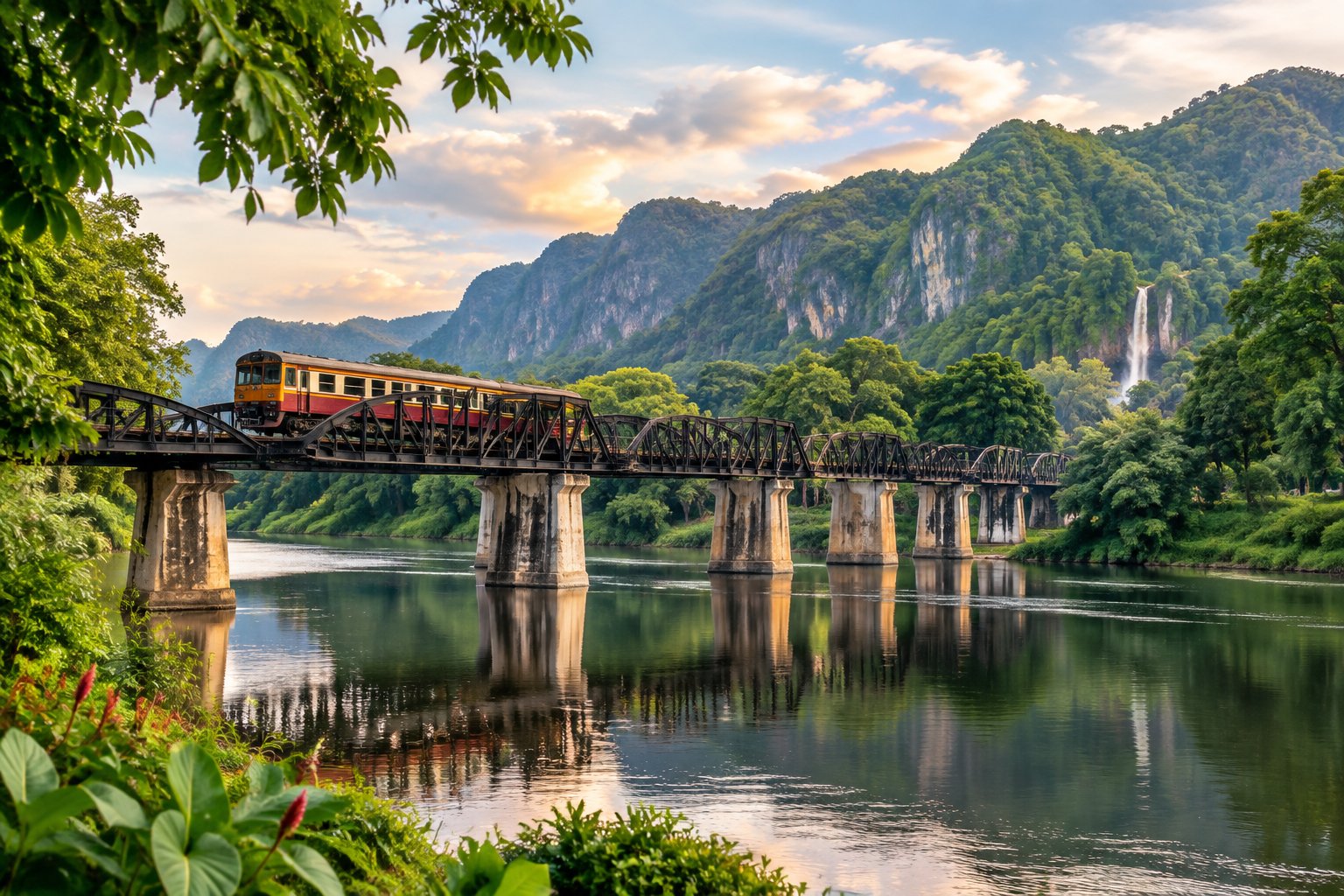
Erawan National Park holds a seven-tiered waterfall with turquoise swimming pools at several levels, a full contrast to the province's war history sites. Most visitors pair a morning at the bridge and railway museums with an afternoon at the falls.
3 Absolute Highlights:
- A walk across the Bridge on the River Kwai
- Swimming at Erawan National Park's multi-tiered falls
- A scenic ride on a remaining stretch of the Death Railway
Where to Stay in Kanchanaburi
Kanchanaburi sits roughly two hours from Bangkok, making it workable as a long day trip, though an overnight stay lets you cover both the history sites and the waterfalls without rushing.
How Many Days Do You Need in Kanchanaburi?
One full day covers the Bridge on the River Kwai, a nearby war museum, and a short Death Railway ride. Add a second day if Erawan National Park's waterfalls are on your list, since the park sits roughly 90 minutes from town and rewards an early start before the pools get crowded.
Check current hotel prices in Kanchanaburi via Booking.com or Expedia.
10. Koh Tao: Diving and Laid-Back Beaches
Koh Tao is Thailand's hub for scuba diving, thanks to affordable certification courses and calm, transparent water. Although Ko Tao spans just 21 square kilometers, according to a Koh Tao travel overview, it packs in dozens of top dive sites.
Day boat trips take you past secluded coves, shallow coral gardens, and calm bays.
Sairee Beach is the main strip for restaurants, dive shops, and sunset drinks, while quieter bays on the island's east side suit travelers after less foot traffic. Chumphon Pinnacle ranks among the better-known dive sites for spotting larger marine life.
3 Absolute Highlights:
- An open-water diving certification course at one of the island's dive schools
- Snorkeling or diving at Chumphon Pinnacle
- Sunset at Sairee Beach after a day on the water
Where to Stay in Kho Tao
Koh Tao pairs naturally with Koh Samui or Koh Phangan on a gulf island itinerary, connected by regular ferries.
Is Koh Tao Right for First-Time Divers?
Calm seas and a high density of dive schools make Koh Tao one of Southeast Asia's best spots to earn certification. Prices remain competitive, and shallow house reefs offer gentle warm-ups.
Advanced divers can head straight to deep offshore pinnacles like Sail Rock and Chumphon Pinnacle.
Check current hotel prices in Koh Tao via Booking.com or Expedia.
Choosing the Hotspots That Fit Your Trip
Ten hotspots won't fit into one trip, so match your picks to what you actually want from Thailand. Selecting the best places to visit in Thailand depends on whether you prefer bustling markets, sacred ruins, or quiet tropical islands.
A two-week trip handles Bangkok plus two other stops comfortably, such as Chiang Mai for temples and Krabi for beaches.
Beach lovers get the most out of pairing a Gulf island like Koh Samui with an Andaman base like Krabi or Phuket, since the two coasts offer different scenery and boat trips. History-focused travelers should treat Ayutthaya as a Bangkok day trip and save a separate leg for Sukhothai if the itinerary allows it.
Mountain time in Chiang Mai or Pai works best as its own northern loop, ideally paired with Chiang Rai's temples rather than squeezed into a beach-heavy trip.
Build a buffer day between destinations. Domestic flights, ferries, and long drives take longer than expected, and rushed travel days quickly wear you down.
Frequently Asked Questions
How many days do you need for a trip to Thailand?
Two to three weeks provides the right balance for most travelers. That timeframe allows you to tour sights like the Grand Palace in Bangkok, explore northern cultural hubs, and unwind on southern islands without feeling rushed.
What is the best time of year to visit Thailand?
November through February offers comfortable temperatures and dry conditions across most of the country. If you visit the Gulf islands like Koh Samui and Koh Tao, May through August also provides great beach weather.
Which is better for first-timers: Phuket or Krabi?
Phuket offers more developed infrastructure, larger resorts, and lively nightlife. Krabi provides dramatic scenery with towering limestone cliffs and a slightly more relaxed pace. Both hubs also offer easy boat excursions to the Phi Phi Islands.
How should I get around between destinations?
Budget domestic flights connect Bangkok with Chiang Mai, Phuket, and Krabi in under two hours. For shorter regional hops, trains, minivans, and high-speed catamarans offer dependable service.
Comments