New Zealand, or Aotearoa, gives you a rare mix of volcanic landscapes, wild coasts, alpine lakes, and lively cities. For a first trip, the Top 10 Hotspots in New Zealand include Northland and Auckland, Rotorua, Tongariro, Wellington, Abel Tasman, Aoraki/Mount Cook, Lake Tekapo, Queenstown, Fiordland, and the West Coast.
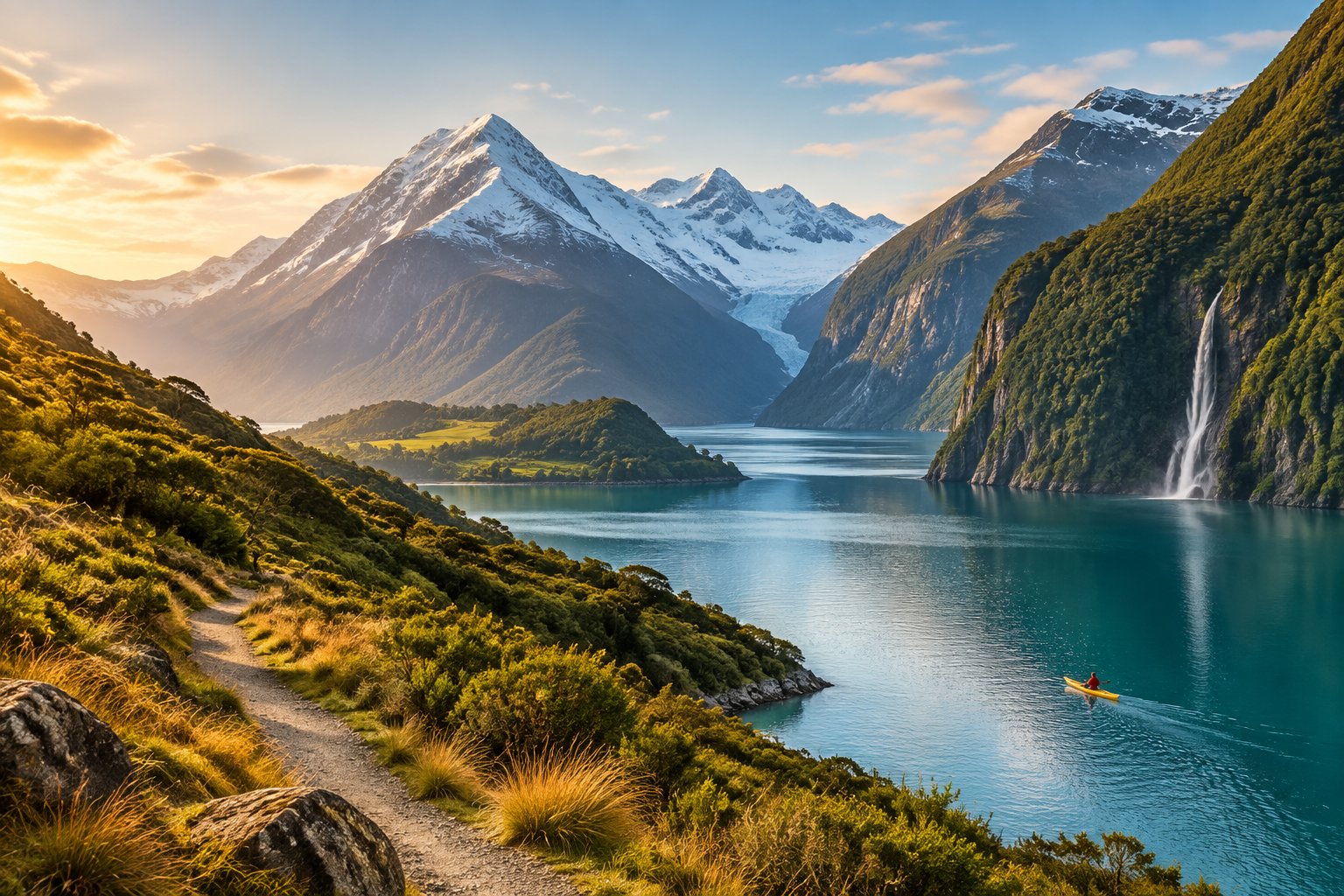
You can build a trip around a few nearby highlights or travel between both main islands for a broader look at the country. Set aside time for Māori culture, check conditions before heading onto alpine tracks, and choose stays that keep your travel days manageable.
Key Takeaways
- Pair Northland’s coast with Auckland’s city attractions.
- Plan South Island time around alpine scenery, wildlife, and Fiordland.
- Choose overnight bases that suit your route and preferred pace.
Northern Coasts and Auckland’s Urban Energy
Northland, Auckland, and the Coromandel give you a strong start with island bays, city culture, and beaches. You can move from Waitangi’s history to Auckland’s harbor, then continue south to coastal walks and natural hot pools.
Explore the Bay of Islands and Northland
In Northland, the Bay of Islands brings together sheltered water, small towns, and important Māori history. Visit the Waitangi Treaty Grounds to learn about the Treaty of Waitangi, then explore Paihia or take a boat trip around the islands.
The Waitangi Treaty Grounds feature cultural performances, carved meeting houses, and modern museum exhibits. Russell, across the water from Paihia, offers a relaxed base for exploring the bay.
Farther north, Cape Reinga gives you expansive coastal views and a sense of how remote the top of the country feels.
At Cape Reinga, the Tasman Sea collides dramatically with the Pacific Ocean beside an iconic lighthouse.
What Makes Auckland a Must-See?
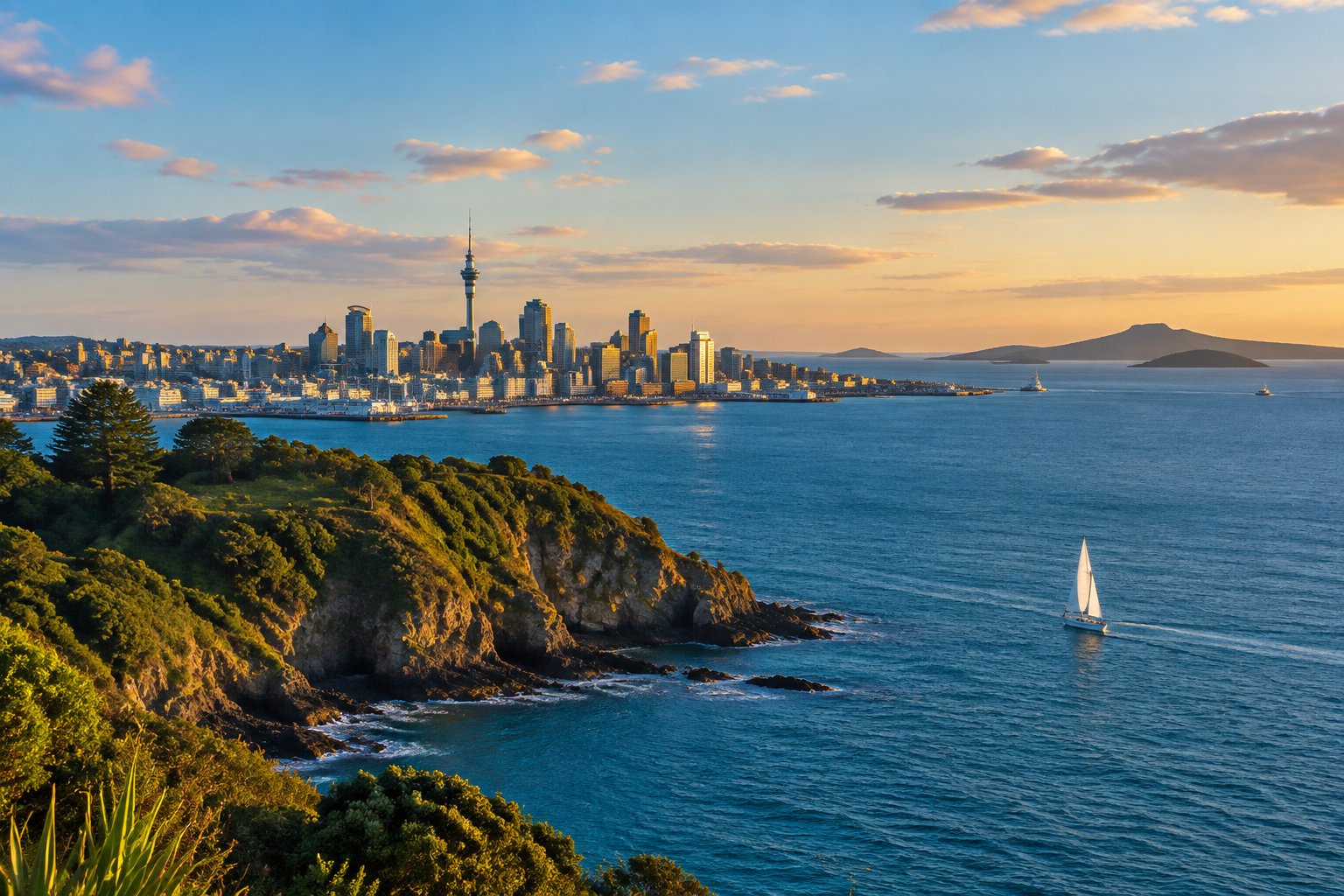
Auckland adds urban energy, harbor views, and easy access to islands and beaches. Take in the city from the Sky Tower, explore the Auckland War Memorial Museum, or catch a ferry to Waiheke Island for walking and vineyard visits.
A day trip to Waiheke Island is a highlight for olive groves, sandy bays, and world-class wine tasting. Regular passenger ferries connect downtown Auckland to Waiheke Island across the Hauraki Gulf in about 40 minutes.
Standing over 300 meters tall, the Sky Tower gives visitors 360-degree vistas across two harbors. Observation decks and dining options make it a central landmark in the CBD.
For a waterfront stay, InterContinental Auckland offers guest rooms with harbor or city views. Its central location places you near the city’s dining and retail precincts.
Find Beaches and Hot Pools on the Coromandel Peninsula
The Coromandel Peninsula is known for coastal walks and beach time. At Cathedral Cove, the track leads to a natural rock arch, while Hot Water Beach lets you dig a warm pool in the sand around low tide.
Bringing a spade to Hot Water Beach allows you to carve out your own soothing thermal pool right in the sand. Timing your visit to Hot Water Beach within two hours of low tide guarantees the warmest experience.
Check the Department of Conservation’s Cathedral Cove track and safety details before you go. The track can close after heavy rain, and the page advises visitors to avoid the cliffs and check tide and sea conditions.
Geothermal Wonders and Māori Heritage
The North Island brings geothermal features and deep Māori cultural connections into easy reach of lakes, volcanoes, and museums. Rotorua, Tongariro, and Wellington each offer a distinct stop, from steaming pools to film craft and national collections.
Experience Rotorua’s Geothermal Landscapes
Rotorua is a natural base for exploring geothermal sites and Māori culture. It also sits within easy reach of Hobbiton near Matamata, where movie fans can tour the Hobbiton Movie Set in the rolling hills.
Fans of The Lord of the Rings can step straight into Middle-earth while exploring the lush movie set.
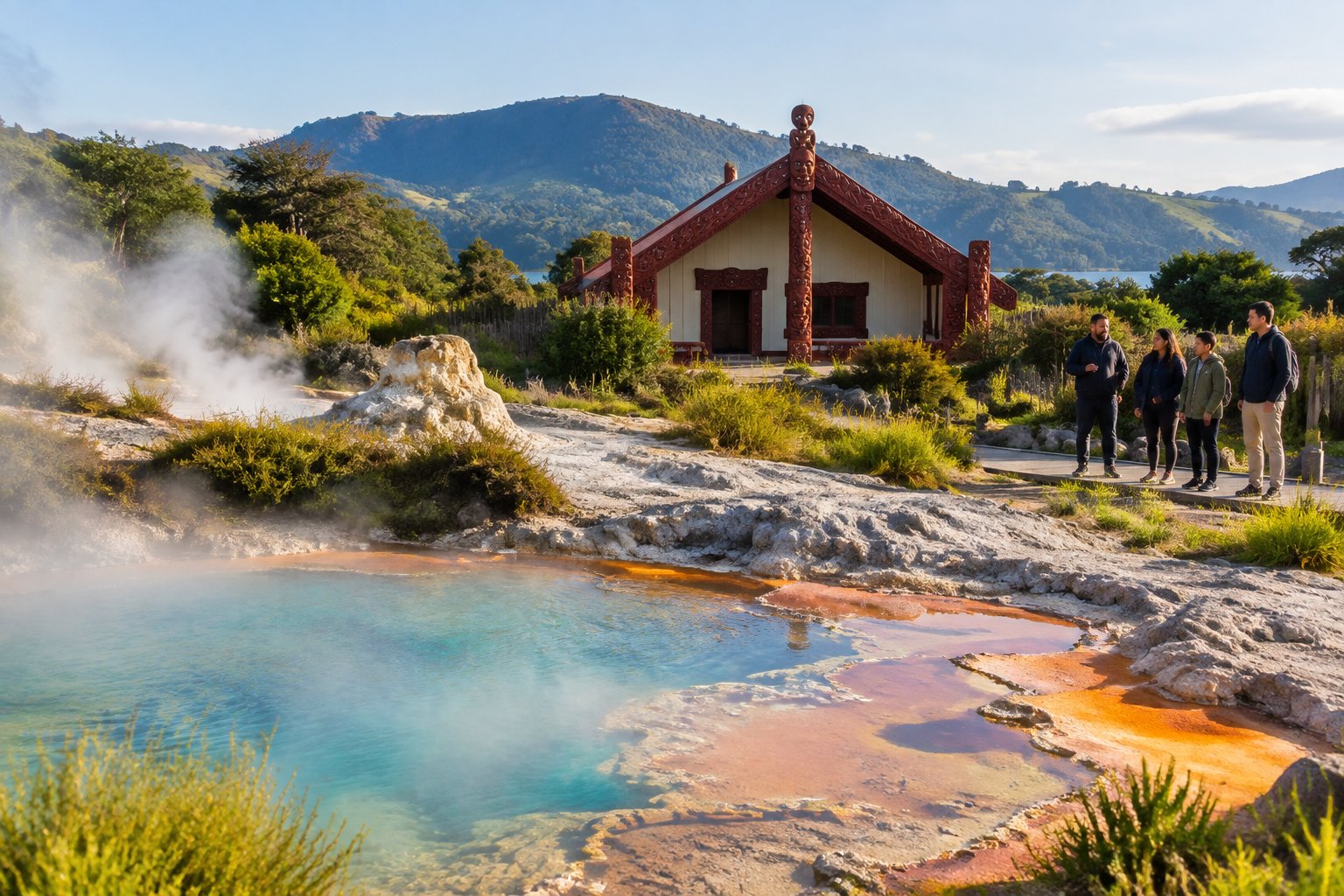
At Wai-O-Tapu Thermal Wonderland, walk among vivid mineral pools, including Champagne Pool, and watch for the Lady Knox Geyser’s scheduled eruption.
The surreal volcanic landscape of Wai-O-Tapu showcases bubbling mud pools and steaming craters. Inside Wai-O-Tapu Thermal Wonderland, the deep Champagne Pool stands out with its luminous orange mineral ledge and turquoise waters.
Te Puia combines geothermal features with Māori arts, cultural tours, and nocturnal habitats housing the elusive kiwi bird. Orakei Korako is another option for exploring a geothermal valley.
At Te Puia, visitors can also witness the powerful Pōhutu Geyser erupting amidst steaming vents and silica terraces. A visit to Te Puia offers a rare look at traditional wood carving and weaving traditions preserved by master artisans.
Nearby Taupo and Huka Falls make worthwhile additions, where the Waikato River surges toward dramatic falls. At Huka Falls, powerful turquoise waters blast through a narrow ravine at an astonishing volume.
Lake Taupo and the shores of Lake Taupō offer sailing, kayaking, and thermal springs. Further east, Napier and Hawke’s Bay entice travelers with Art Deco architecture and celebrated vineyards.
For a city-center stay, Regent of Rotorua has a heated pool, mineral pool, and on-site dining.
Hike the Tongariro Alpine Crossing
Located in Tongariro National Park, the Tongariro Alpine Crossing takes you across volcanic terrain, past the luminous Emerald Lakes and wide mountain views. The trail skirts Mount Ngauruhoe, famously featured as Mount Doom in cinema.
Mineral deposits tint the Emerald Lakes with striking jewel tones that contrast against the dark volcanic terrain.
Tongariro National Park holds dual World Heritage status for its Māori cultural heritage and dramatic volcanic landscape. The challenging day hike on the Tongariro Alpine Crossing remains one of the premier outdoor treks in the country.
The Department of Conservation describes the route as steep and challenging, with an elevation change of about 1,196 meters; check the track’s current guidance before setting out.
Conditions can change quickly, and alpine skills are essential in winter. Book a shuttle if you need one, stay on marked tracks, and consider a cabin at Whakapapa Holiday Park for an overnight base in the national park.
Discover Wellington’s Museums and Film Culture
Wellington gives you a compact city stop centered on museums, creative work, and waterfront walks. You can encounter native wildlife at the Zealandia sanctuary before heading downtown.
Explore Te Papa and the wider Te Papa Tongarewa collections, then make time for Weta Workshop and its work connected to The Lord of the Rings films. Visiting Te Papa Tongarewa offers hands-on galleries that delve into national history and Māori treasures.
Guided tours at Weta Workshop give you an intimate look at practical movie effects, miniature sets, and intricate costumes. Exploring Weta Workshop in the suburb of Miramar is an unforgettable stop for cinema enthusiasts.
For a central stay near the waterfront, QT Wellington combines hotel rooms with an art collection and on-site dining. You can also stroll toward Oriental Bay when you want a break from museums.
South Island Scenery, Wildlife, and Alpine Stays
The South Island packs coastal parks, high peaks, lakes, adventure towns, and fiords into a large, varied landscape. Build your route around regions so you have enough time for walks, scenic drives, and overnight stays.
Walk the Abel Tasman Coast
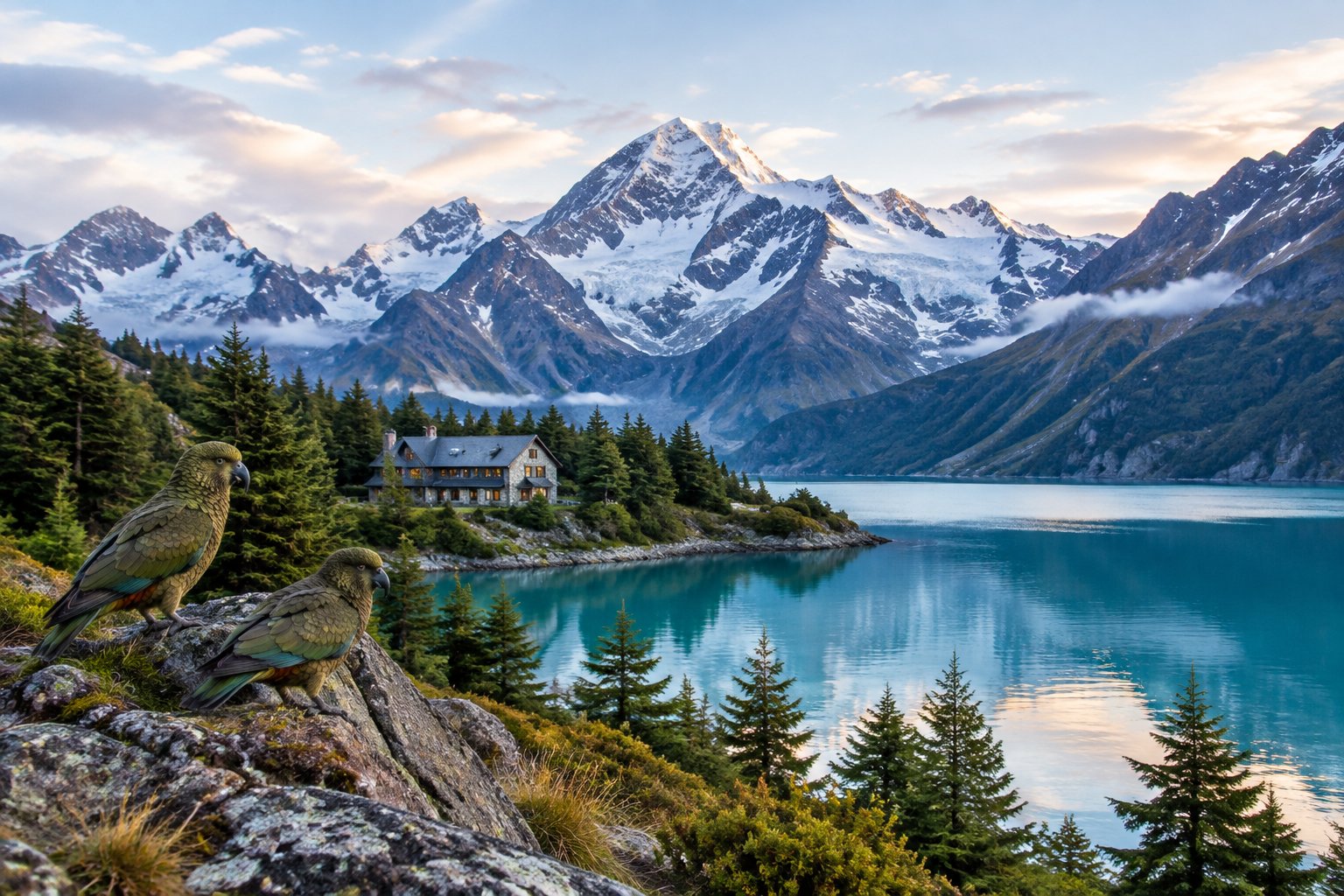
Abel Tasman National Park is a good pick for golden beaches, clear water, and coastal walking. You can walk a section of the Abel Tasman Coast Track, link sections with water transport, or stay longer for a multi-day route.
As one of the country's Great Walks, the Abel Tasman Coast Track crosses golden sand beaches, tidal estuaries, and native coastal forest. Tramping the Abel Tasman Coast Track allows travelers to hike between scenic coves at an easy, customizable pace.
Kayaking around granite headlands in Abel Tasman National Park lets you discover sheltered lagoons and marine reserves. Water taxis provide easy transport between various bays and coves along the shore.
For a secluded overnight stay within the park, Awaroa Lodge offers rooms and suites surrounded by forest and waterways. The lodge is not accessible by road, so plan your arrival as part of your walking or water-based itinerary.
Just east across the top of the island, Marlborough offers world-famous vineyards and sheltered sounds that pair naturally with a coastal trek.
Visiting the Marlborough wine region allows travelers to sample acclaimed Sauvignon Blanc alongside scenic waterways.
Spot Marine Wildlife in Kaikōura
On the South Island's northeast coast, Kaikōura offers spectacular coastal scenery backed by mountain ranges. The waters of Kaikoura are widely renowned for whale watching excursions, where marine life gathers in deep offshore trenches.
Along the rocky shoreline, visitors can often spot fur seals and little blue penguins returning from the sea at dusk.
Visit Aoraki/Mount Cook and Lake Tekapo
Aoraki/Mount Cook National Park pairs the Southern Alps with glacier views and walks such as the Hooker Valley Track. You can also explore the Tasman Glacier, taking boat tours among icebergs on its terminal lake.
Mount Cook National Park draws hikers and climbers seeking alpine landscapes beneath New Zealand's highest peak.
Crossing three swing bridges, the Hooker Valley Track leads walkers to a terminal lake filled with floating icebergs. The Hooker Valley Track provides panoramic perspectives of towering ice-capped summits with minimal elevation gain.
As the largest ice flow in the country, the Tasman Glacier carves a dramatic path through the alpine peaks. Scenic flights and glacier landings give visitors another way to appreciate its scale.
Nearby Lake Tekapo offers turquoise water and dark skies within an International Dark Sky Reserve. During clear winter nights, this dark sky reserve can even provide opportunities to view the Aurora Australis, often called the southern lights.
Covering the Mackenzie Basin, the Aoraki Mackenzie International Dark Sky Reserve protects some of the clearest night skies on Earth. Evening tours within this International Dark Sky Reserve let you view distant star clusters and galaxies through powerful telescopes.
Use Peppers Bluewater Resort as a Lake Tekapo base, with accommodation options ranging from rooms to villas. If you want to stargaze, plan an evening outside and leave time for the drive between Tekapo and Mount Cook.
Make Queenstown Your Adventure Base
Queenstown combines Lake Wakatipu scenery with activities on the water and views of The Remarkables. The jagged Remarkables mountain range provides a dramatic backdrop for scenic flights and hiking trails.
During winter, the Remarkables also transform into a premier alpine destination for skiing and snowboarding.
You can ride the Skyline Gondola, try bungee jumping at the historic Kawarau Bridge, or take a day trip to Arrowtown and the nearby vineyards around Gibbston.
Leaping from the Kawarau Bridge over the river gorge provides an unforgettable classic adventure.
Queenstown is globally recognized as the historic home of commercial bungee jumping. Thrill-seekers can try bungee jumping from canyon perches, specialized ledges, or high-wire cable cars over rugged river gorges.
Nearby, charming Arrowtown invites travelers to explore restored miners' cottages, tree-lined streets, and local bakeries.
For a central lakeside base, Novotel Queenstown Lakeside offers rooms beside Lake Wakatipu. Wānaka is another alpine stop if you want a quieter lakeside town and access to mountain walks.
Cruise Milford Sound in Fiordland
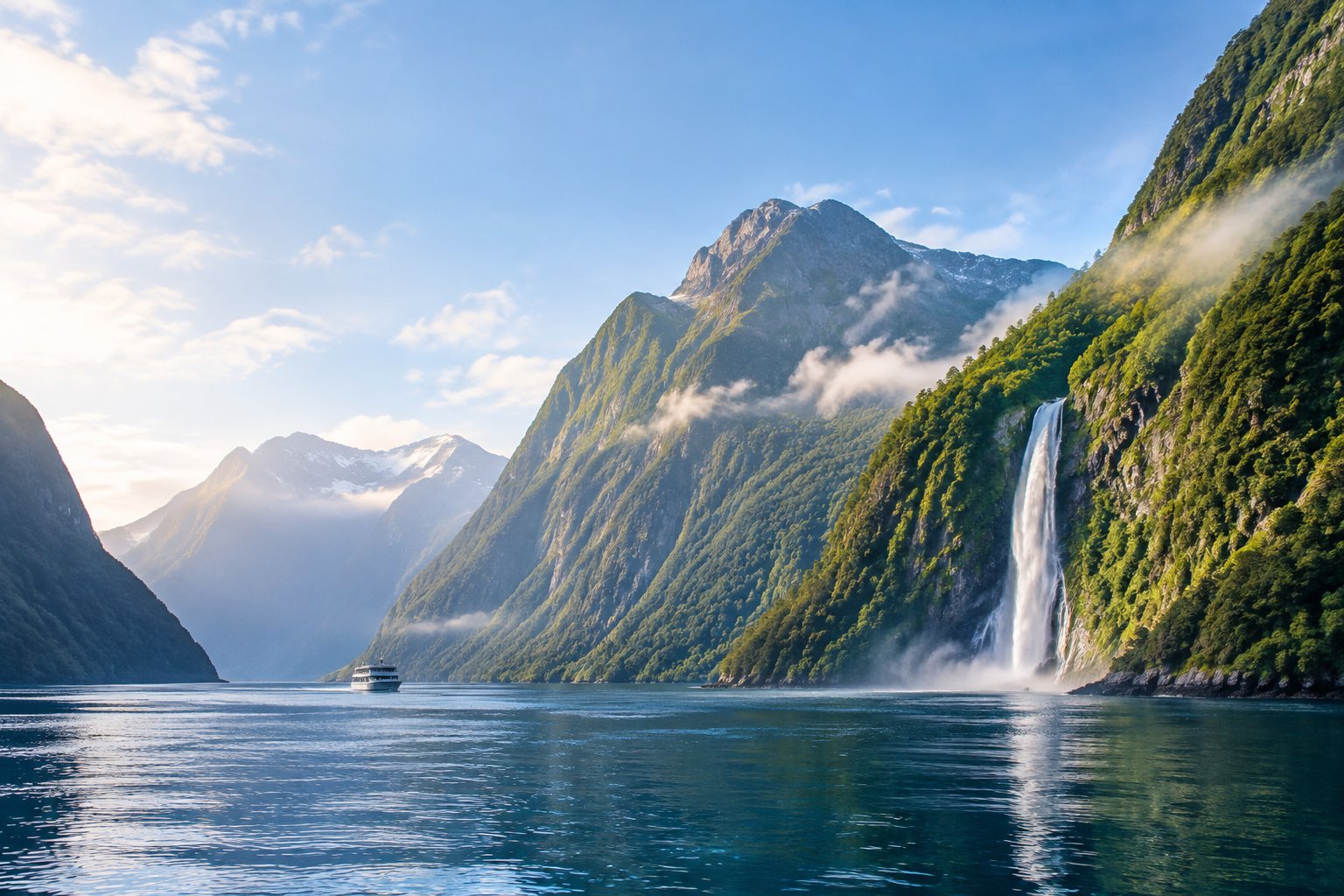
Milford Sound is a standout Fiordland experience, with steep cliffs, towering Mitre Peak, and waterfalls best seen from the water. Located within Fiordland National Park, it shares the region with Doubtful Sound, a deeper and remarkably tranquil fiord.
Rising sheer above the fiord's dark waters, Mitre Peak forms one of the country's most iconic natural landmarks.
Fiordland National Park encompasses vast temperate rainforests, pristine alpine lakes, and dramatic glacier-carved valleys. Exploring this corner of the South Island reveals untouched wilderness at every turn.
Whether you cruise through deep sounds or hike alpine trails, Fiordland National Park offers an awe-inspiring wilderness encounter. Taking a boat ride or scenic flight across Fiordland National Park reveals cascading waterfalls tumbling into ink-dark waters.
You can reach the fiord by Milford Road from Te Anau, stopping at places such as Mirror Lakes along the way.
The Department of Conservation says the Te Anau return drive is 240 kilometers and needs an eight-hour day if you include scenic stops, short walks, and a cruise. Read its Milford Road driving advice before you leave, and consider staying in Te Anau at Distinction Luxmore Hotel.
See Glaciers on the West Coast
The West Coast offers rainforest walks and views of Fox Glacier and Franz Josef Glacier. At Fox Glacier, the South Side Walkway reaches a viewpoint after about 40 minutes; at Franz Josef, the valley walk leads to a viewing area.
Glacier landscapes change, and the Department of Conservation warns that access can close due to flooding, rockfall, or landslides. Follow the Fox Glacier track guidance and Franz Josef Glacier walk guidance, and stay behind barriers.
Just minutes from Fox Glacier village, peaceful Lake Matheson rewards walkers with mirror-like reflections of the Southern Alps.
On clear mornings, a walk around Lake Matheson reveals postcard-perfect vistas of Mount Cook mirrored across the tranquil surface.
Choose Your New Zealand Stops and Stays
Choose your overnight bases by region so each travel day leaves room for the experiences you came for. Exploring Aotearoa with a north-to-south route lets you combine city stays with coast, geothermal country, and alpine scenery.
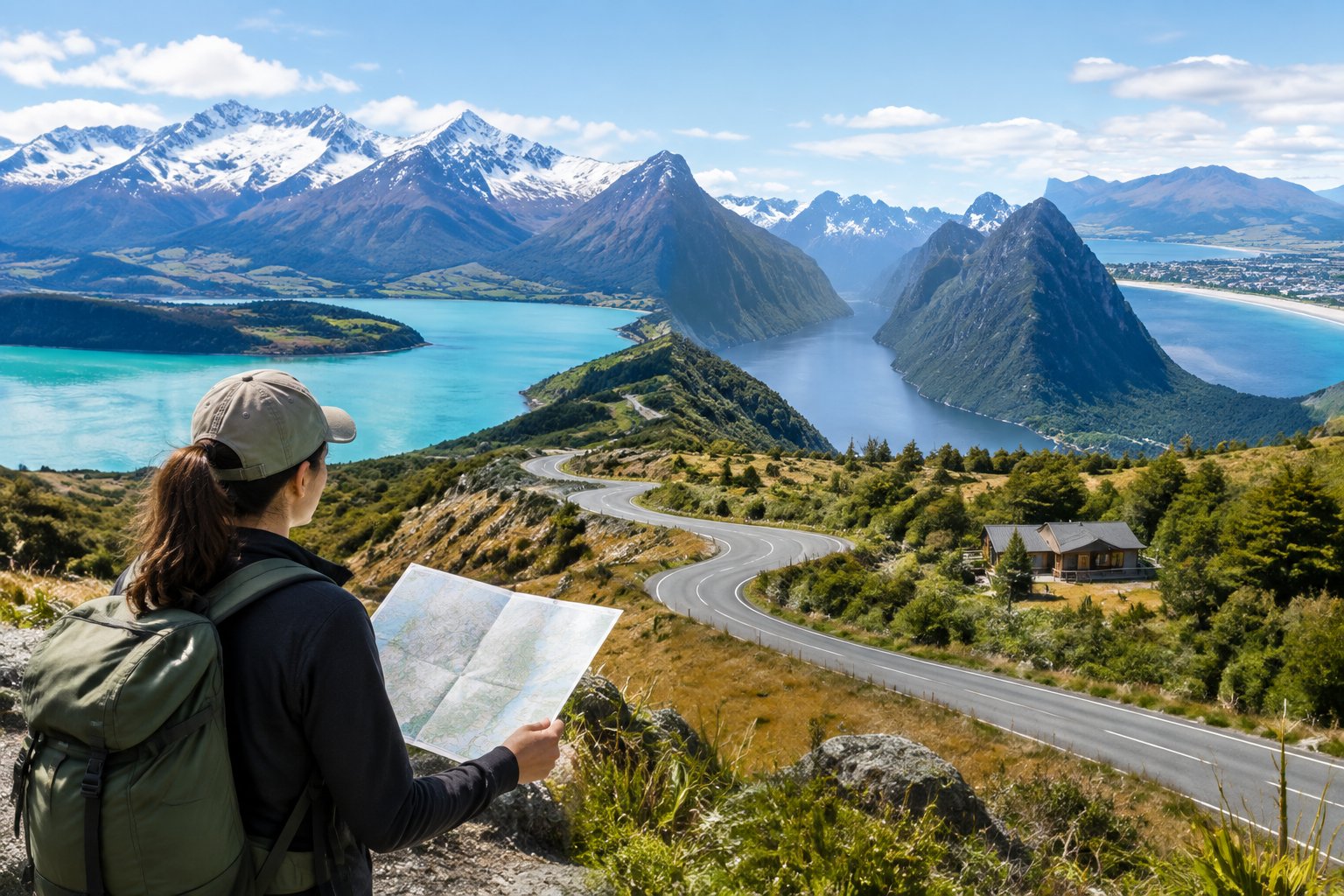
For a shorter trip, focus on one island and use two or three bases. On a longer journey, connect Auckland and Rotorua with Wellington, then cross to the South Island for Abel Tasman, Kaikōura, the Mackenzie region, Queenstown, Fiordland, and Dunedin.
Continuing down to Dunedin and the Otago Peninsula gives you a chance to look for the rare yellow-eyed penguin on protected beaches.
Match your stay to the stop: choose a central hotel for city visits, a lakeside room for Tekapo or Queenstown, or a lodge when you want to sleep within a national park. Book accommodation and transport around the activities that need set times, especially shuttles and cruises.
Frequently Asked Questions
What are the best places to visit in New Zealand for first-time visitors?
For a first trip, consider Auckland, Rotorua, Wellington, Queenstown, and Milford Sound. Cities like Dunedin also add heritage and coastal charm. These stops give you a mix of city life, Māori culture, geothermal features, alpine views, and fiord scenery.
Which part of New Zealand is the prettiest?
The South Island is a strong choice if you want dramatic alpine scenery, turquoise lakes, glaciers, and fiords. The North Island offers its own standout landscapes, including geothermal areas, beaches, and volcanic mountains.
Where do most tourists go in New Zealand?
Many visitors touring Aotearoa include Auckland, Rotorua, Queenstown, and Milford Sound in their itineraries. These places are well-known for city attractions, geothermal experiences, outdoor activities, and scenic cruises.
What are the top five tourist attractions in New Zealand?
Five popular highlights are the Bay of Islands, Rotorua’s geothermal sites, the Tongariro Alpine Crossing, Queenstown, and Milford Sound. They offer a broad mix of coast, culture, volcanic landscapes, adventure, and fiord views.
Is the North Island or South Island better for a first trip?
Choose the North Island for cities, geothermal sites, Māori cultural experiences, and volcanic landscapes. Pick the South Island for alpine scenery, lakes, glaciers, and Fiordland; with enough time, a route through both gives you the widest range.
Comments