If you are picking the top 10 hotspots in Italy for a first or return trip, start with Rome, Florence, Venice, the Amalfi Coast, Cinque Terre, Tuscany, Milan with Lake Como, the Dolomites, Naples with Pompeii, and Sicily. Together they cover ancient ruins, Renaissance art, coastal villages, alpine trails and Italy's best pizza.
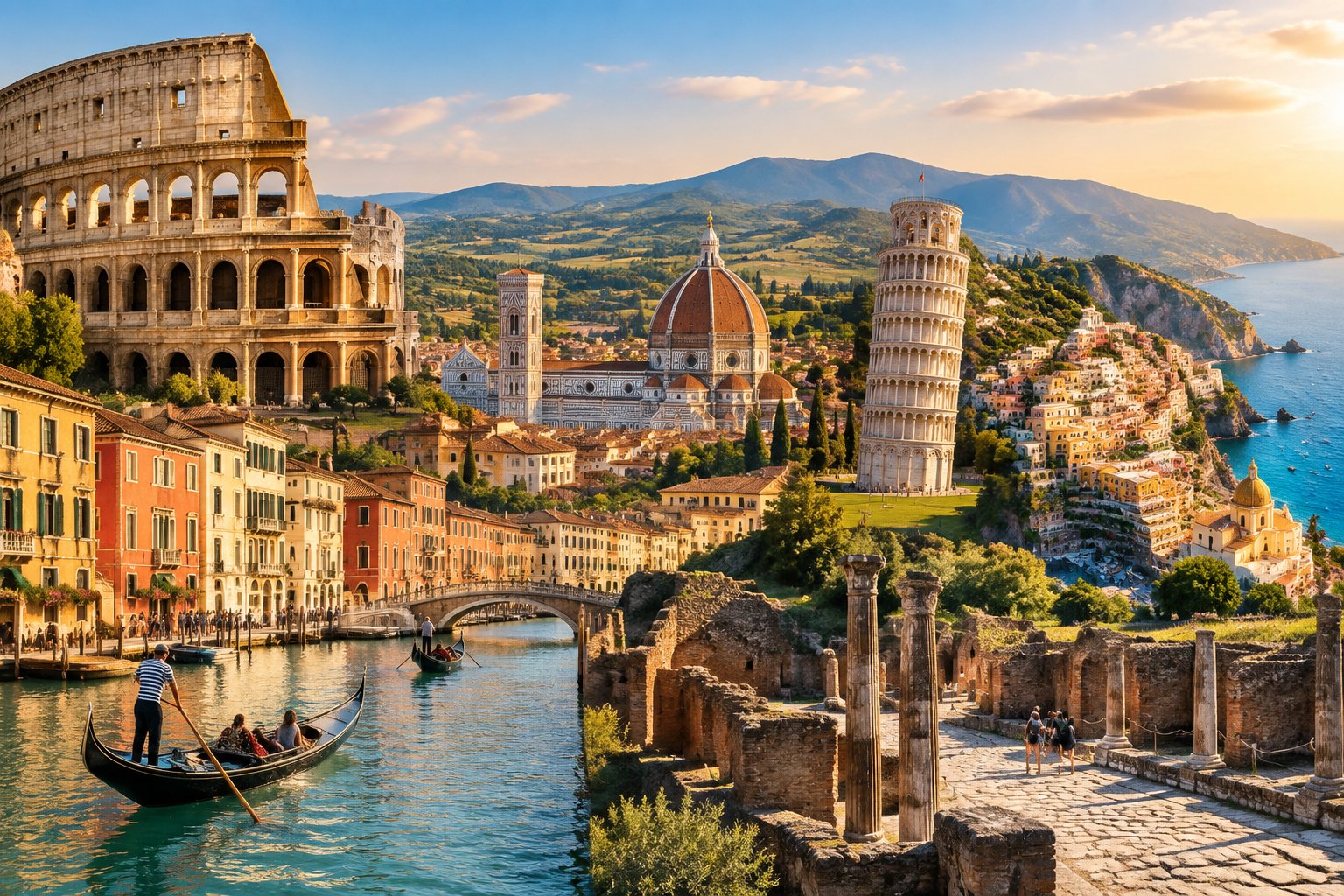
The harder part is choosing which ones fit your days. Some work best as city stays where you walk everywhere. Others need a regional base, a rental car or a ferry schedule.
Each stop below gives you three highlights, a clear base and one or two hotels worth booking. They highlight the most rewarding places to visit in Italy, letting you build an Italian vacation that matches your pace instead of chasing every place on your Italy bucket list.
Key Takeaways
- Core First-Timer Route: Rome, Florence, and Venice form the classic 10-day itinerary connected by high-speed rail.
- Advance Reservations: Major sights like the Colosseum, Uffizi Gallery, Vatican Museums, and Pompeii require timed-entry tickets booked well in advance.
- Transportation Strategy: Rely on trains between urban centers, and reserve rental cars for rural regions like Tuscany, the Dolomites, and Sicily.
- Pacing: Limit yourself to two or three bases per 10 days to maximize time enjoying destinations rather than traveling between them.
Rome: Ancient Landmarks and Lively Neighborhoods
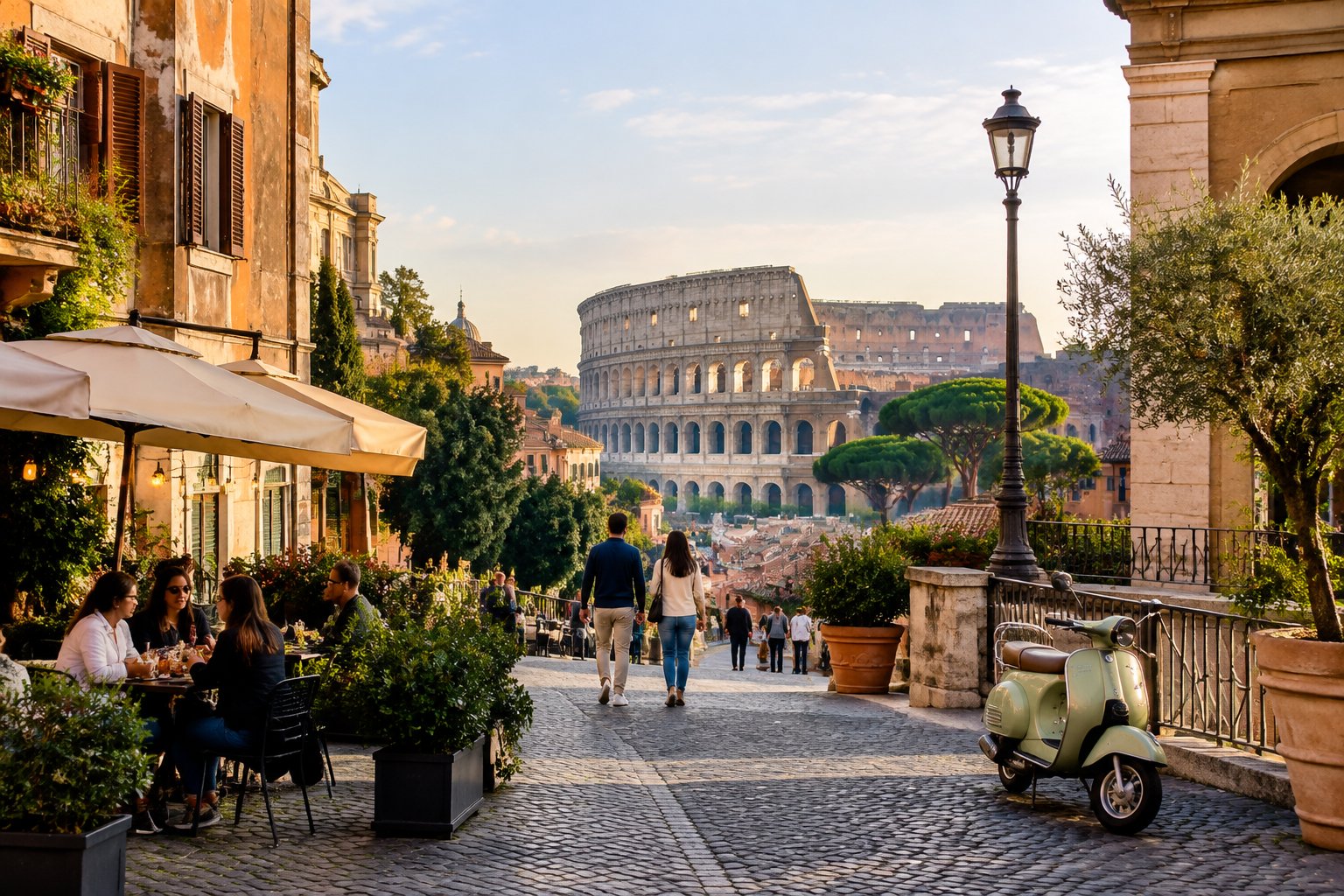
Rome earns its spot because no other city puts 2,000 years of history on your walking route. You can see the Colosseum before lunch and eat cacio e pepe in Trastevere by evening.
Plan at least three full days. Book timed tickets for the Colosseum and Vatican Museums well in advance.
Snag an early morning entry slot to experience the Sistine Chapel before tour groups flood the rooms. Crossing the river brings you directly into Vatican City, home to ancient treasures and papal landmarks.
3 Absolute Highlights
- Colosseum and Roman Forum: One combined ticket covers both. Walk the Forum after the arena, when the crowds thin.
- Vatican City: The Vatican Museums end at the Sistine Chapel, and St. Peter's Basilica is the world's largest church.
- Pantheon, Trevi Fountain and Trastevere: See the Pantheon dome at opening, the Trevi Fountain after dark, then cross the river for dinner in Trastevere's lanes.
Where to Stay in Rome
The historic center between Piazza Navona and the Pantheon is the best base for first-timers. You can walk to most major sights, and taxis to the Vatican are short.
Albergo del Senato sits right on Piazza della Rotonda, with the Pantheon just 48 meters away and the Trevi Fountain 550 meters from the door. Its rooftop terrace overlooks the dome, and breakfast is included in the rate. If you want to sleep closer to dinner spots, Trastevere's small guesthouses trade some convenience for a livelier local feel.
Florence: Renaissance Art at Every Turn
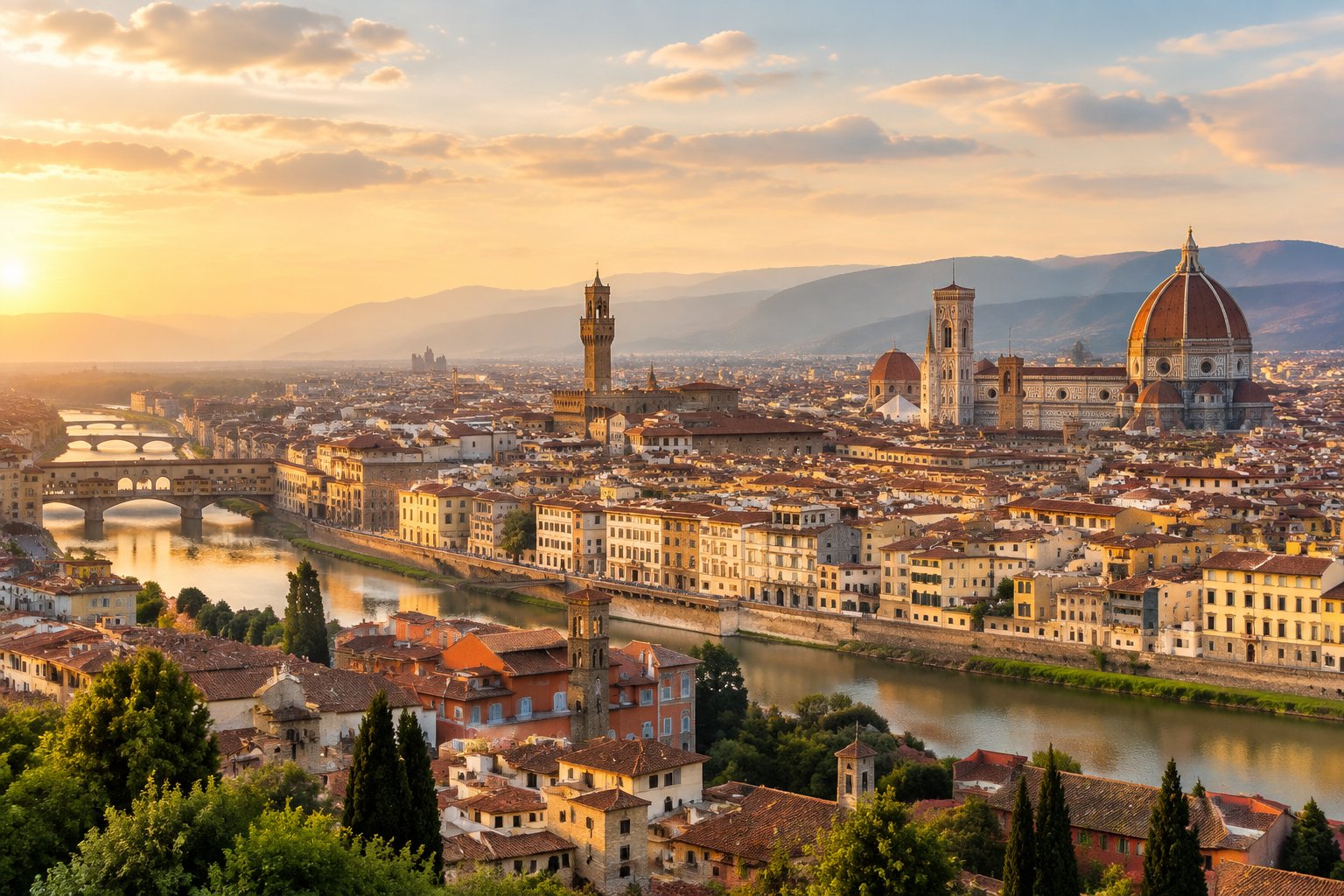
Florence is the place to go if art is the reason you travel. Its compact center packs Brunelleschi's dome, Botticelli's Venus and Michelangelo's David into a few walkable blocks.
Two to three days covers the main sights. Reserve Uffizi Gallery tickets and your Duomo climb weeks ahead to skip summer lines that stretch for hours.
At dusk, head to the Ponte Vecchio for river views as street musicians take over the bridge.
3 Absolute Highlights
- Florence Cathedral: Climb the duomo's 463 steps for the city's best rooftop view.
- Uffizi Gallery: Pace yourself through the Botticelli rooms, then rest at the café terrace.
- Ponte Vecchio and the Oltrarno: Cross the old goldsmiths' bridge into the Oltrarno for artisan workshops and quieter trattorias.
Where to Stay in Florence
Stay near the Duomo or Santa Maria Novella if you arrive by train and want everything on foot. The Oltrarno suits repeat visitors who prefer a neighborhood feel across the Arno.
Tivoli Palazzo Gaddi Firenze occupies a late-1500s palace with 86 rooms and a rooftop terrace facing the Duomo. Santa Maria Novella station is a five-minute walk, and the Uffizi is about 11 minutes away, which makes day trips into Chianti easy.
Venice: Canals, Palaces, and Island Escapes
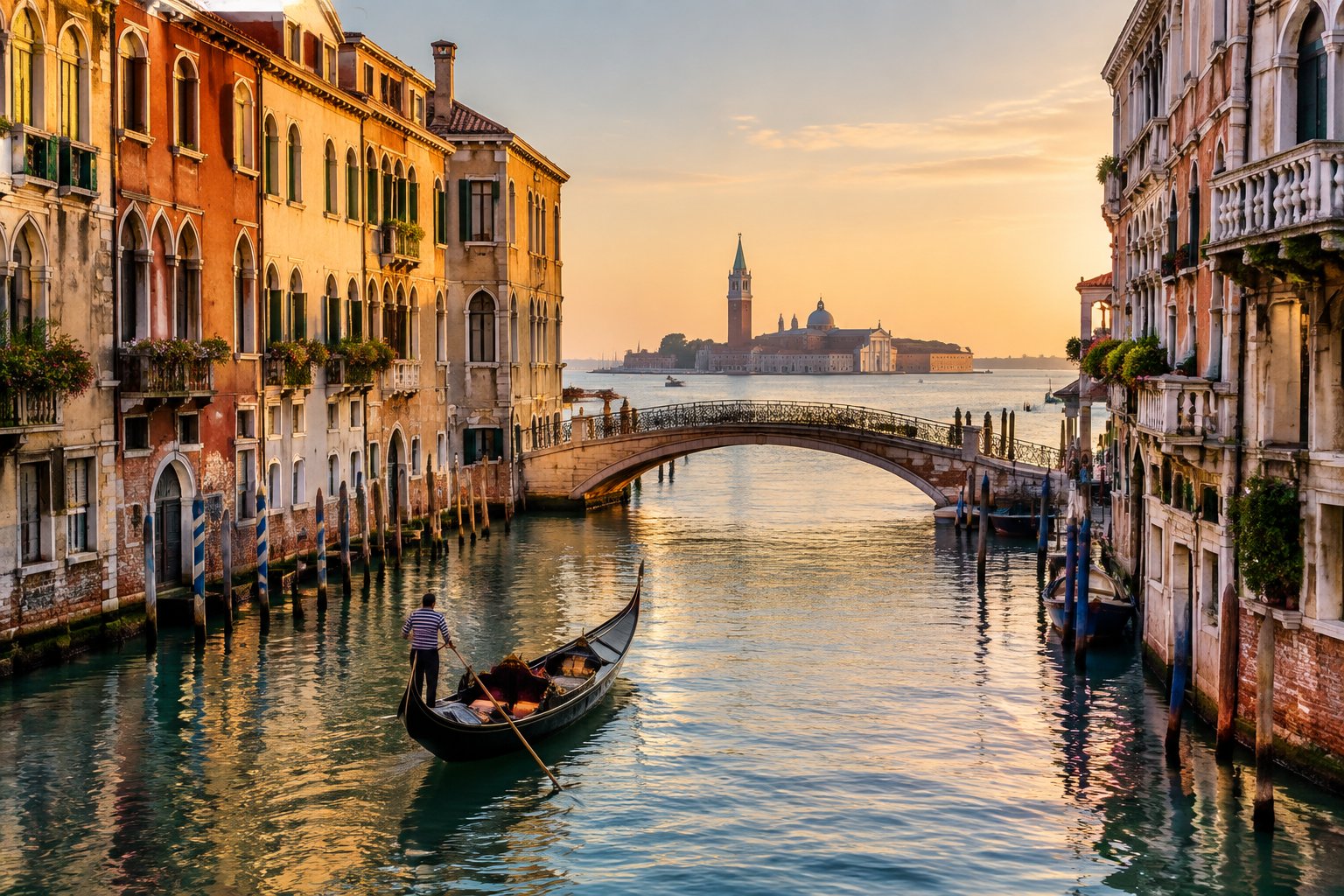
Venice is worth an overnight because the city changes completely once day-trippers leave. Early mornings and late evenings are when you get the canals mostly to yourself.
For 2026, the city's day-tripper charge no longer applies: the Venice Access Fee trial ended on July 27, and you can visit without paying or requesting an exemption. Future years depend on decisions by the City of Venice.
3 Absolute Highlights
- Grand Canal by vaporetto: Ride Line 1 end to end for a slow tour past palaces at a fraction of a gondola's price.
- Rialto Bridge and St. Mark's Basilica: Visit the Rialto market in the morning and marvel at St. Mark’s Basilica right at opening.
- Burano: Take the ferry to the lagoon island for brightly painted houses and a seafood lunch.
Where to Stay in Venice
San Marco and San Polo put you closest to landmarks like St. Mark’s Basilica. Cannaregio and Dorsoduro are quieter and closer to local bacari.
The Rialto Hotel sits directly facing the Rialto Bridge and offers hotel rooms plus a guesthouse option. Packing light helps, since you will drag bags over bridges from the vaporetto stop.
Amalfi Coast: Cliffside Towns and Coastal Views
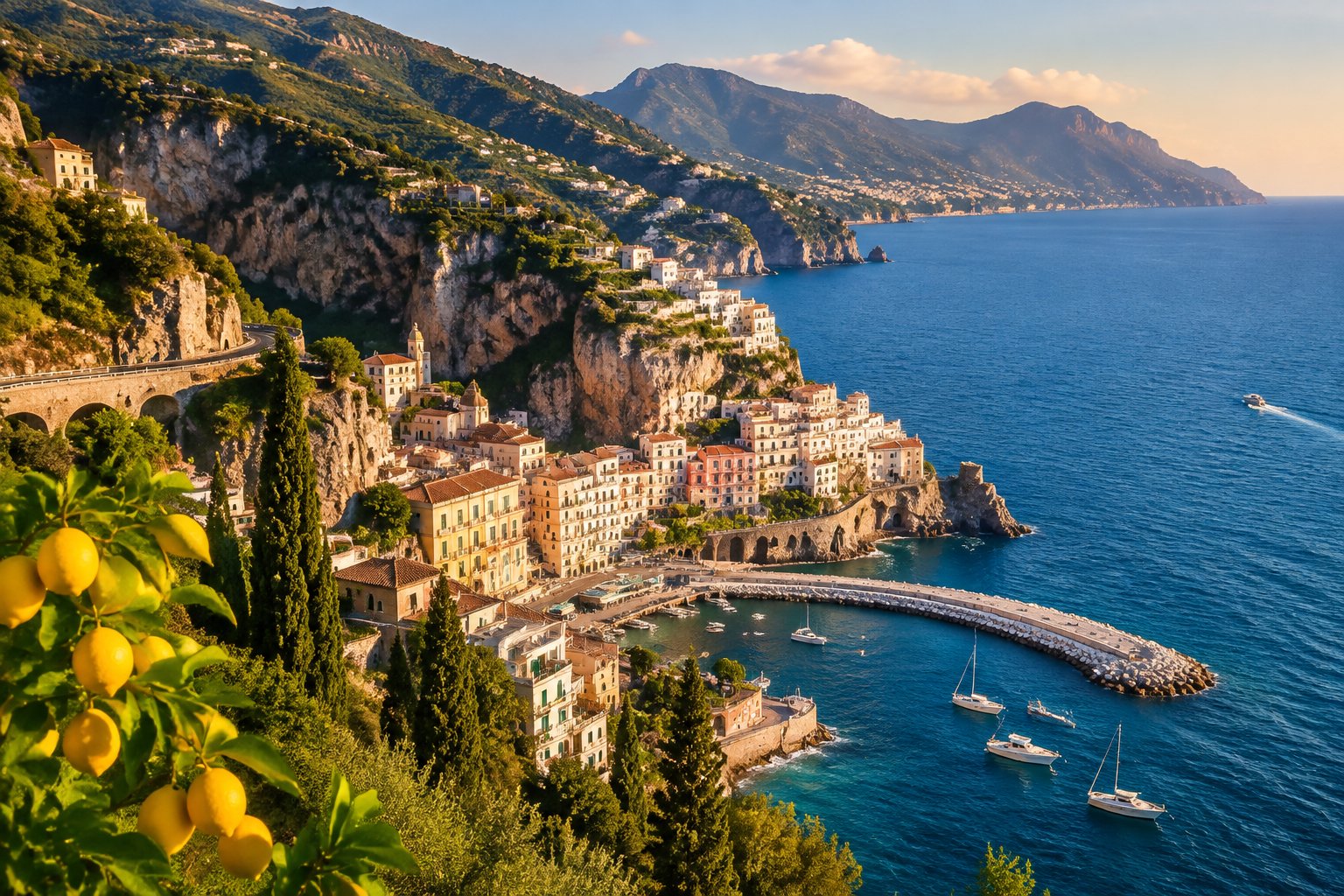
The Amalfi Coast delivers Italy's most dramatic coastal scenery across 13 towns along 30 miles of cliffside roads.
It also presents the trickiest logistics during peak summer months.
The SS163 coastal road jams from June through August, and buses fill fast. Ferries are the better option in season; Travelmar runs fast ferries along the coast all year, linking Amalfi, Positano and nearby ports.
3 Absolute Highlights
- Positano: Walk down to Spiaggia Grande, then take a boat to quieter coves.
- Ravello: Villa Rufolo's cliffside gardens sit high above the crowds, offering sweeping panoramas over the Gulf of Salerno.
- Path of the Gods: Hike from Bomerano toward Positano in the morning for the coast's best trail views.
Where to Stay on the Amalfi Coast
Positano is the splurge base with the best ferry links. Quiet and romantic, Ravello offers peaceful cliffside hotels away from coastal crowds. Sorrento is cheaper, has train service to Naples and Pompeii, and works for travelers combining several regions.
Palazzo Murat is an 18th-century residence in the heart of Positano with a pool set in botanical gardens of citrus and bougainvillea. Its location on the main path to the beach saves you steep stair climbs.
Cinque Terre: Five Villages by the Sea
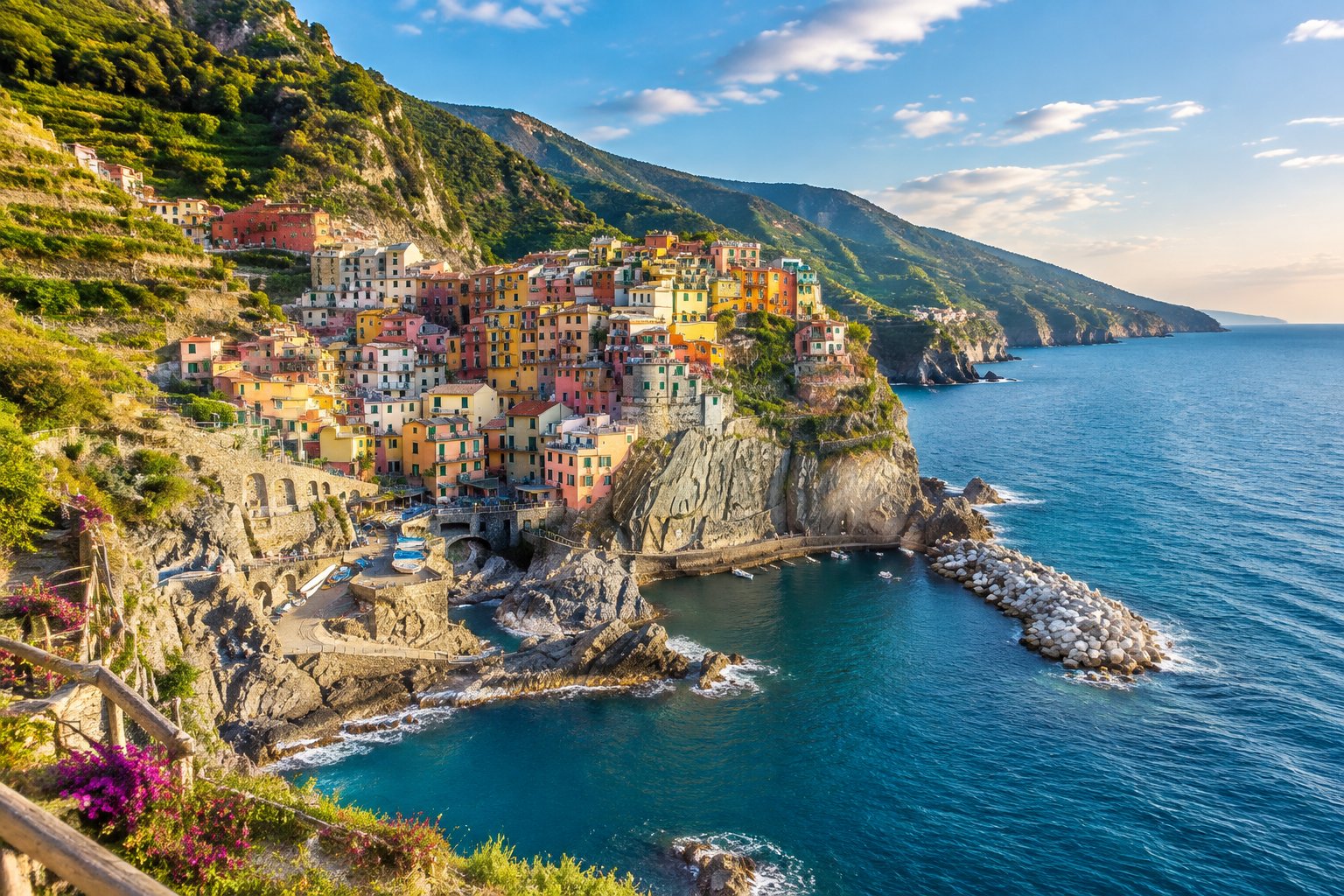
Cinque Terre connects five car-free fishing villages through rugged coastal footpaths and a local train line. Designated as a UNESCO World Heritage Site, the park protects both delicate architecture and ancient seaside terracing.
Riomaggiore, Manarola, Corniglia, Vernazza, and Monterosso al Mare each take just an hour or two to explore, so two nights is plenty.
In Riomaggiore, colorful fishing boats bob in the harbor beneath dramatic cliffs. You can hop between the villages in minutes by boarding regional trains or scenic passenger ferries.
The Sentiero Azzurro trail between Monterosso and Vernazza draws the heaviest crowds. You need a Cinque Terre Card to hike this path.
Park rangers enforce one-way walking during peak dates because over 70% of hikers already walk from Monterosso toward Vernazza. Bring sturdy trail shoes, as rangers actively turn away anyone wearing open sandals.
3 Absolute Highlights
- Monterosso to Vernazza hike: Start early and descend into Vernazza's harbor for lunch.
- Manarola at sunset: The viewpoint path past the vineyards gives you the classic postcard shot.
- Corniglia's terraces: Climb the 382 brick steps from the station to reach this quiet, car-free village perched on a high promontory.
Where to Stay in Cinque Terre
Monterosso al Mare is the easiest base, with the only sandy beach, more hotels and fewer stairs. Levanto or La Spezia work if village rooms are sold out.
If you extend your trip along the coast, picturesque Portofino and the historic maritime city of Genoa are easy train rides away.
Hotel Cinque Terre in Monterosso offers gardens, a lounge bar and limited free parking, which is rare here. Reception staff help plan trips by train or boat.
Tuscany: Hill Towns, Vineyards, and Pisa
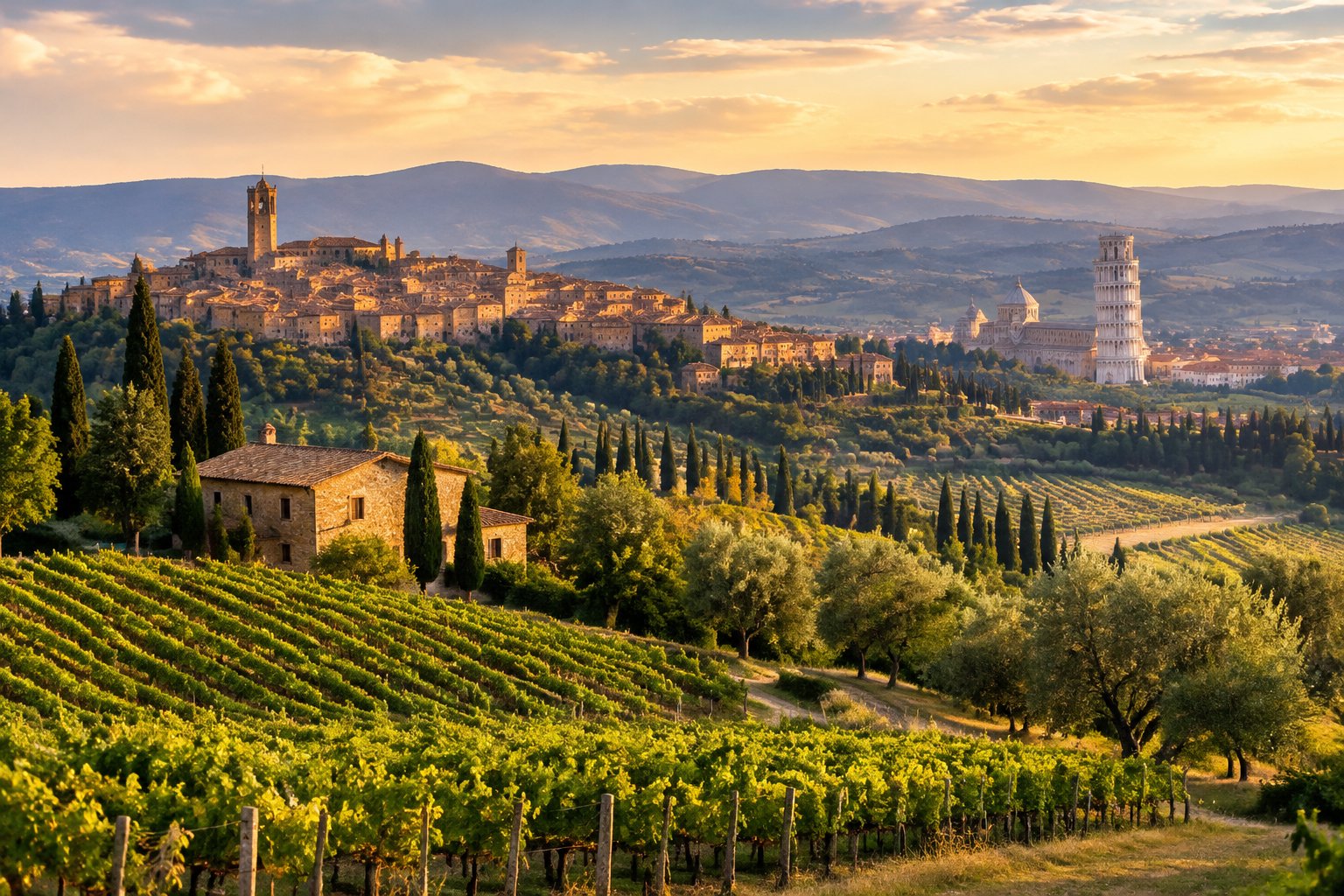
Tuscany is your slow-travel stop, best explored with a rental car and three or more nights in one countryside base. Florence handles the art; the countryside handles the wine and the long lunches.
Drive the Chianti wine region between Florence and Siena, and limit yourself to two towns a day.
3 Absolute Highlights
- Chianti wineries: Taste Chianti Classico at estates around Castellina, Radda and Gaiole.
- Siena and San Gimignano: Climb Siena's Torre del Mangia, then see the medieval towers of San Gimignano at dusk.
- Pisa: Seeing the Leaning Tower of Pisa takes a half day, and it pairs well with a train trip to Cinque Terre or Lucca.
Where to Stay in Tuscany
Pick an agriturismo in Chianti if you have a car. Siena works as a car-free alternative with buses to hill towns.
Drivers can also easily cross into neighboring Umbria. Known as Italy's green heart, Umbria offers quiet olive groves and medieval hamlets without heavy tour crowds.
The hilltop capital of Perugia is famous for its chocolate, medieval streets, and relaxed pace. Nearby Assisi enchants visitors with historic stone alleys and hilltop basilicas.
Chianti agriturismi range from working olive farms to restored wine estates. Rates start from €30 per person per night at Fietri in Gaiole.
Larger estates like Brancaia and Castello La Leccia offer vineyard tours, on-site dining, and easy drives to Siena and Florence.
Milan and Lake Como: City Culture Meets Lakeside Scenery
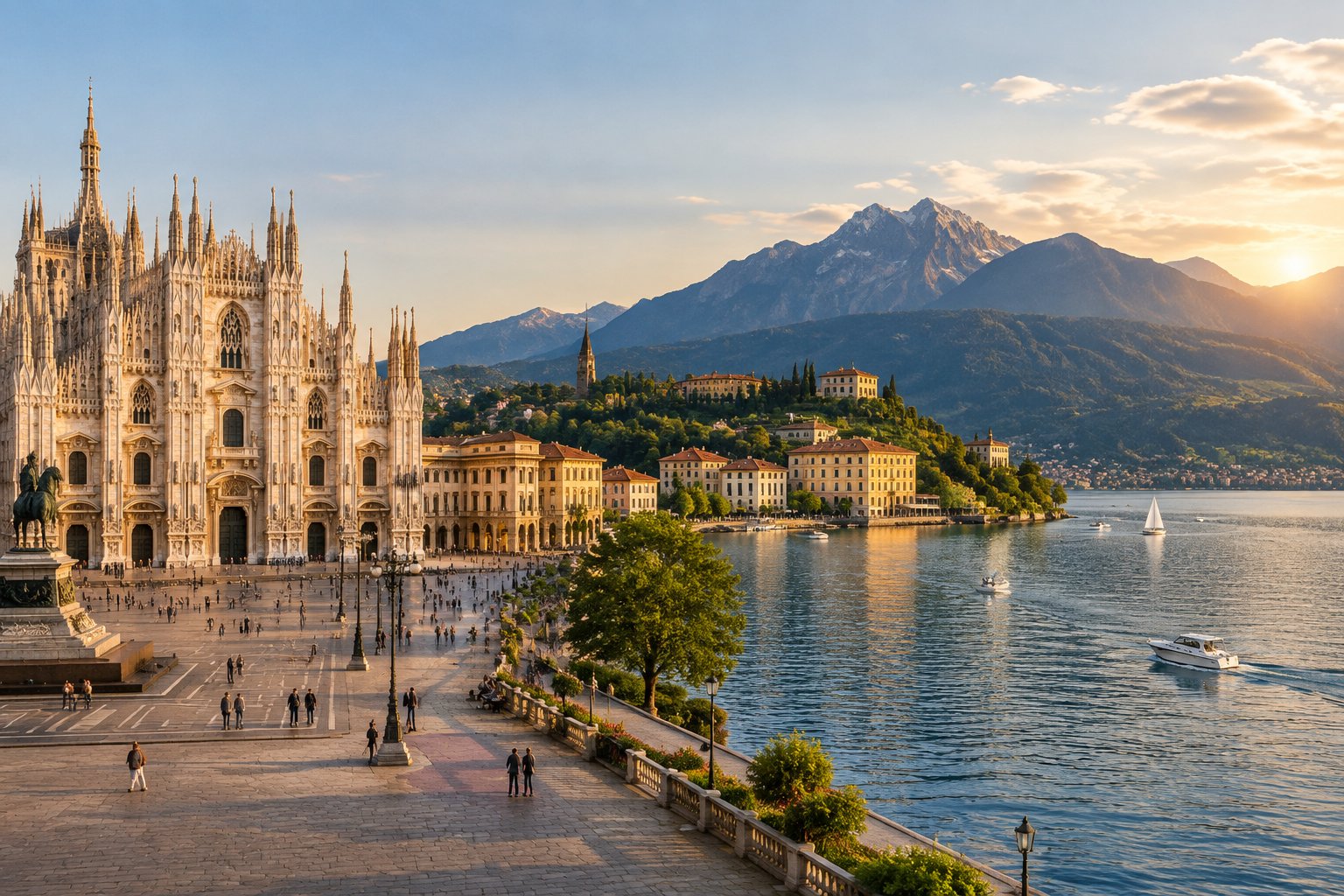
Milan and Lake Como sit just an hour apart by train, uniting world-class city style with alpine waters in Lombardy. It serves as an ideal introduction to the Italian lakes, pairing urban energy with peaceful waterfront towns.
One day in Milan and two or three days on the lake makes an ideal split. You can also add Lake Maggiore to tour historic island villas and botanical gardens.
Book The Last Supper weeks ahead; slots are short and sell out. An afternoon stroll through Galleria Vittorio Emanuele II connects you directly from the cathedral square to luxury fashion houses.
3 Absolute Highlights
- Duomo di Milano and Galleria Vittorio Emanuele II: Admire Milan Cathedral, walk the rooftop terraces, and explore the glass-roofed arcade next door.
- The Last Supper and La Scala Opera House: See Leonardo's mural at Santa Maria delle Grazie and catch a performance or tour at La Scala.
- Bellagio, Varenna and Villa Carlotta: Hop the ferry between the three for gardens and lake views.
Where to Stay in Milan or on Lake Como
In Milan, stay near the Duomo; Park Hyatt Milano sits beside Galleria Vittorio Emanuele II, just steps from Duomo di Milano. On the lake, Varenna has a train station, making it one of the most accessible bases across the Italian lakes.
For a classic grand-hotel stay, Grand Hotel Tremezzo sits on the western shore in Tremezzina, facing Bellagio across the water, with ferry docks nearby.
The Dolomites: Alpine Trails and Mountain Villages
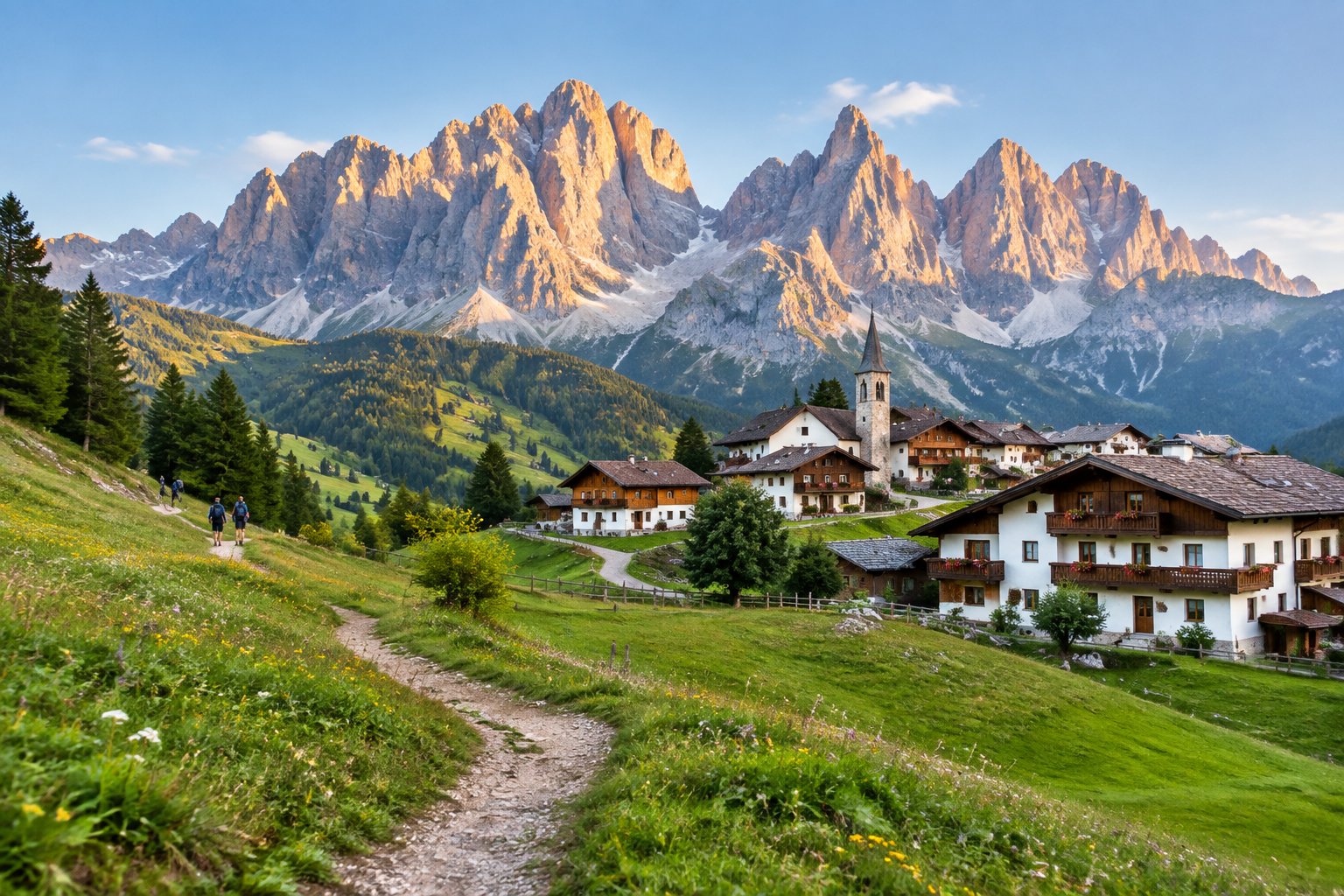
The Dolomites cover 350,000 acres of dramatic limestone spires and green alpine pastures across Northern Italy. Designated as a UNESCO World Heritage Site, this alpine wonderland offers hiking from late June through September, or winter skiing.
Rent a car or map regional bus routes carefully, and allow at least three nights.
3 Absolute Highlights
- Tre Cime di Lavaredo: The loop around the Three Peaks is the region's signature walk.
- Alpe di Siusi: Europe's highest alpine meadow suits easy family hikes.
- Lago di Braies: Arrive early; parking fills by mid-morning in summer.
Where to Stay in the Dolomites
Cortina d'Ampezzo gives you shops, restaurants and fast access to Tre Cime. Val Gardena suits hikers focused on Alpe di Siusi.
Hotel Cortina has hosted guests since 1888 on Corso Italia, with suites looking at the bell tower and peaks plus a small spa.
Naples and Pompeii: Pizza and Roman History
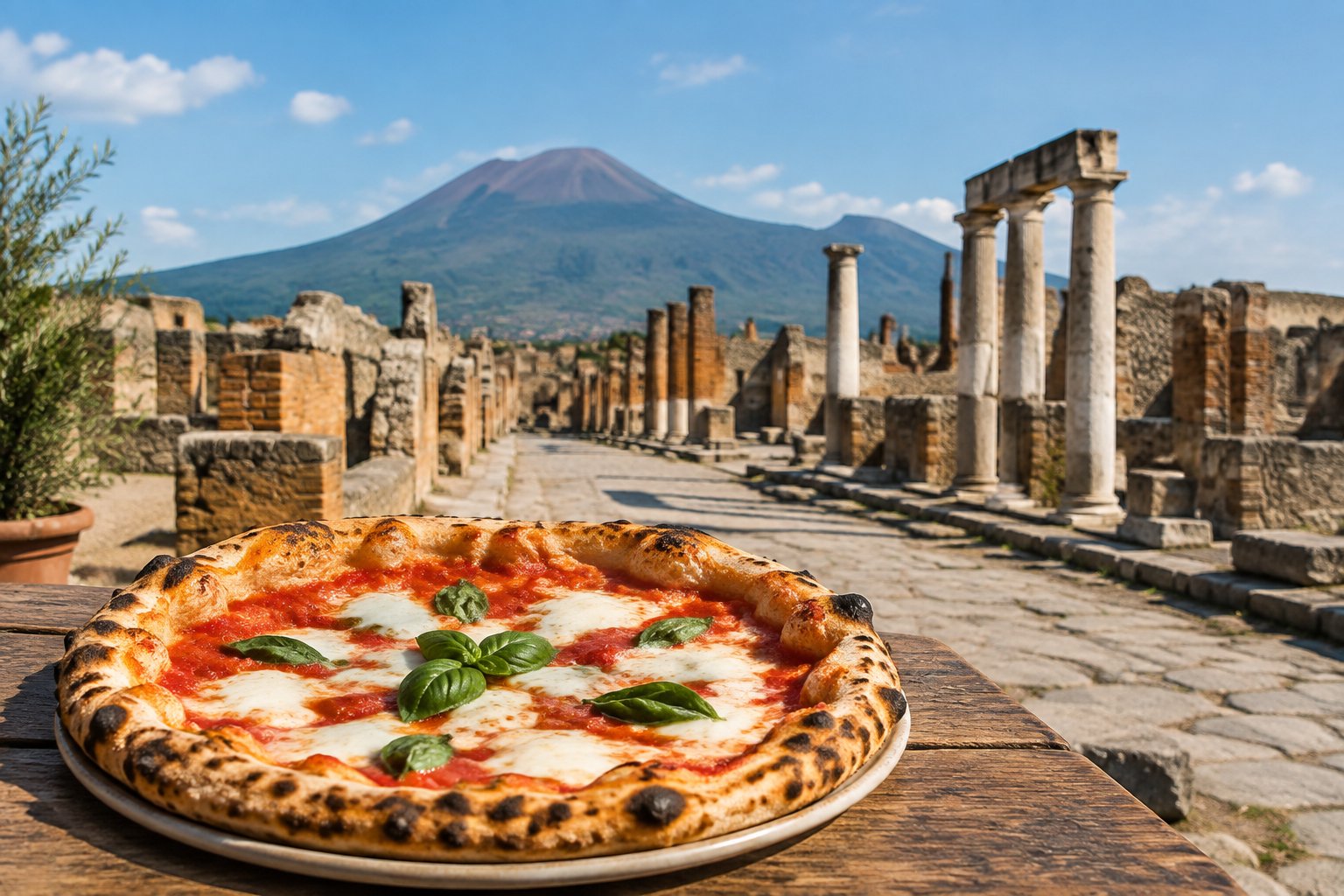
Naples is where you taste Neapolitan pizza at its source and reach Pompeii in about 40 minutes by train. As an energetic hub in southern Italy, it is loud and chaotic, which is part of its appeal for Italian cuisine lovers.
Pompeii caps attendance at 20,000 visitors per day and requires timed entry. Site security also bans bags larger than 30x30x15 cm, so travel light and book well ahead.
3 Absolute Highlights
- Pizza in the Centro Storico: Order a margherita at a classic pizzeria on Via dei Tribunali.
- Pompeii and Herculaneum: Pompeii is vast; Herculaneum is smaller and better preserved.
- Mount Vesuvius, Capri or Ischia: Hike the crater, or ferry to Capri or Ischia from the port.
Where to Stay in Naples and Pompeii
Stay on the Naples waterfront for ferries and food. Sorrento is calmer and doubles as an Amalfi base.
Grand Hotel Vesuvio on the Lungomare looks straight at the bay and Vesuvius.
Sicily: Ancient Ruins, Volcanoes, and Seaside Towns
Sicily is the stop for travelers with a week to spare, packing Greek temples, an active volcano and street food into one island. Fly into Palermo or Catania and rent a car.
3 Absolute Highlights
- Palermo: Eat arancine at the Ballarò market and see the Arab-Norman cathedral.
- Valley of the Temples: Agrigento's Greek temples glow in late-afternoon light.
- Taormina and Mount Etna: Watch the ancient theater views by day, then take a guided Etna excursion.
Where to Stay in Sicily
Split your stay between Palermo in the west and Taormina in the east. Taormina sits about an hour from Etna's main trailheads.
Hotel Villa Schuler sits two minutes from Corso Umberto with a botanical garden over the Ionian Sea. It opens seasonally, from March 14 to November 23, 2026.
Choosing the Stops That Fit Your Trip
With 10 days, pick three bases: Rome, Florence and Venice by high-speed train is the classic first-timer loop. Returning travelers can swap a city for Cinque Terre, the Dolomites or Sicily.
|
Trip length |
Suggested bases |
|---|---|
|
7 days |
Rome, Florence |
|
10 days |
Rome, Florence, Venice |
|
14 days |
Add Amalfi Coast or Lake Como |
|
3 weeks |
Add Sicily or the Dolomites |
Pair nearby places: Naples with Amalfi, Florence with Chianti and Pisa, Milan with Lake Como. Avoid coastal stops in August if you dislike crowds.
High-speed trains unlock quick detours across Northern Italy. Between Florence and Venice, pause in Bologna to walk under medieval porticoes, see the Basilica of San Petronio, and taste fresh handmade ragù in local trattorias.
Food lovers celebrate Bologna for its vibrant food halls and culinary traditions, making it an essential gourmet pause.
Verona offers another rewarding stop for open-air opera, market stalls in Piazza delle Erbe, and romance at Juliet’s House. Travelers love Verona for its well-preserved Roman arena and charming riverside walks.
Lake Garda sits right next door, filled with ancient fortresses and lakeside promenades. Ferries across Lake Garda connect pastel harbor towns with olive groves and alpine views.
As the largest of the Italian lakes, it makes a seamless detour between Venice and Milan for sailing, castle walks, and lakeside dining.
Near the northeastern border, Trieste captivates travelers with grand seaside piazzas and historic literary cafés overlooking the Adriatic.
In the northwest, Turin charms visitors with baroque palaces, the Egyptian Museum, and historic cafés pouring rich bicerin.
With scenic alpine vistas framing its grand plazas, Turin makes a sophisticated base before exploring regional vineyards.
Save regional outliers for a longer return journey. Sardinia draws beach lovers to dramatic granite coves and ancient archaeological wonders.
On the coast of Sardinia, the turquoise waters of the Costa Smeralda offer premier sailing, where operators run catamaran trips to Budelli and Spargi. Luxury resorts and sheltered bays on the Costa Smeralda provide an unforgettable seaside escape.
Puglia brings trulli, Baroque Lecce, and coastal Gallipoli, producing nearly 150,000 tons of olive oil a year. Matera in Basilicata has cave dwellings that became a UNESCO World Heritage Site in 1993.
Venturing deeper into southern Italy, Calabria reveals wild coastlines and dramatic cliffs. There, the village of Tropea boasts spectacular beaches before you cross over into Sicily.
Planning Your Italian Vacation
Choose two to four of these places to visit in Italy, sleep where you can walk to dinner, and book timed tickets early. Start with your top base, reserve the hotel, then build day trips around it.
Frequently Asked Questions
What is the best month to visit Italy?
May, June, September, and October offer the best balance of warm weather and manageable crowds. July and August bring high heat and peak travel volumes.
How many days do you need for a first trip?
Ten days is ideal for a first-time trip. This allows you to explore Rome, Florence, and Venice at a comfortable pace.
Do you need a rental car in Italy?
High-speed trains easily connect major hubs like Rome, Florence, Venice, and Milan. You only need a rental car when exploring rural areas in Tuscany, Sicily, or the Dolomites.
How far in advance should you book tickets?
Book top attractions one to two months ahead. High-demand sites like The Last Supper, the Colosseum, and the Vatican Museums sell out quickly.
Comments