Turkey rewards travelers who plan with intention. Thoughtful Turkey travel means understanding that the country stretches from Istanbul's minaret-studded skyline to Cappadocia and down along the sun-drenched Mediterranean coast.
Whether traveling independently or joining guided Turkey tours, ten days rarely covers it all. When researching the best places to visit in Turkey, picking the right combination of stops matters more than trying to see everything at once.
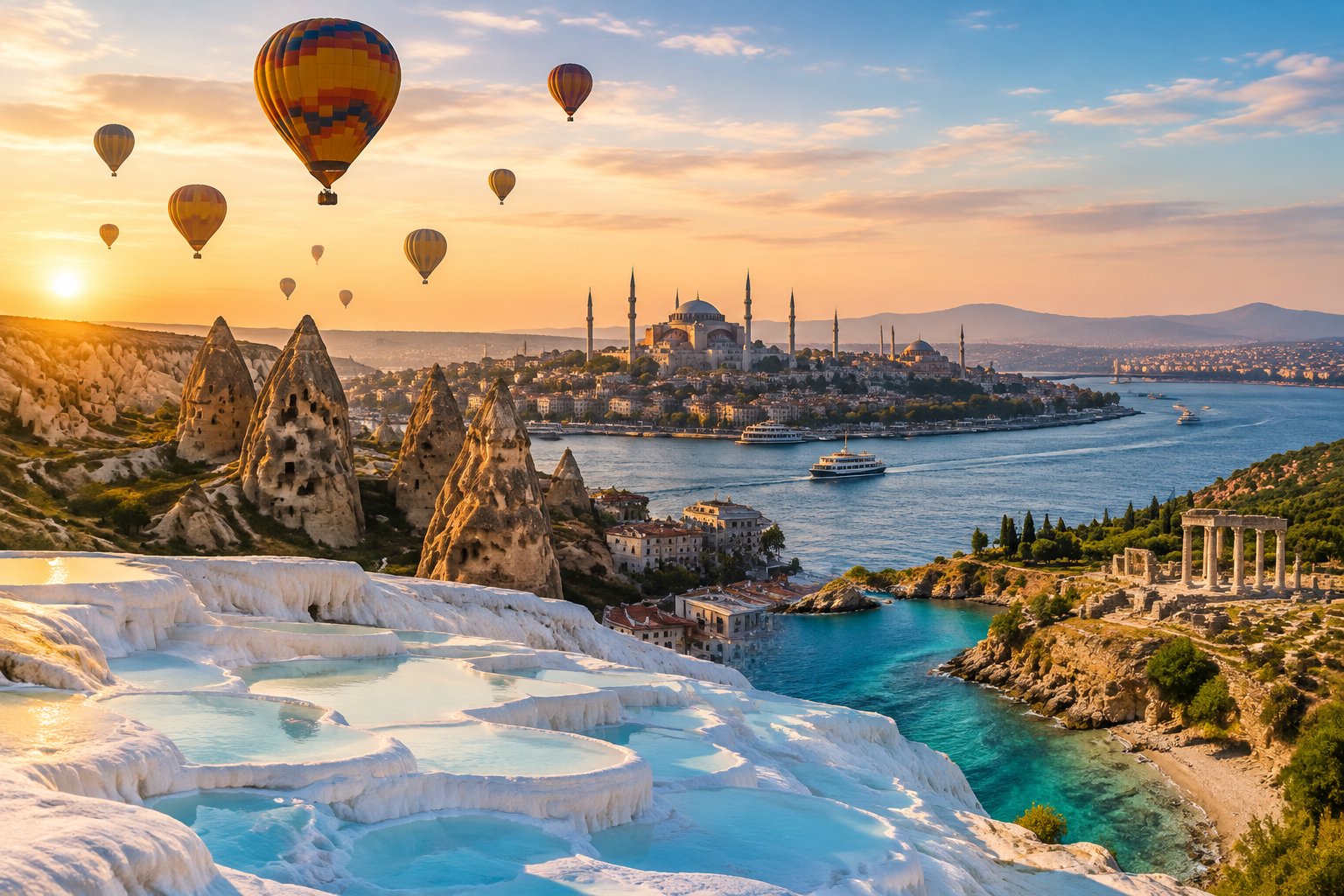
For a first visit, Istanbul, Cappadocia, and the Turquoise Coast form the strongest trio. Travelers with ten days or more can easily add Ephesus, Pamukkale, or Göbekli Tepe.
Each region shows a different side of the country, from imperial landmarks to surreal valleys and coastal towns. This guide highlights ten hotspots for a 2026 itinerary, along with top places to stay.
Key Takeaways
- Core Itinerary: Istanbul, Cappadocia, and the Turquoise Coast form the classic foundation for first-time visitors.
- Trip Length: A 7-day trip suits two to three stops, while 10 to 14 days allows room for Ephesus, Pamukkale, or Göbekli Tepe.
- Advance Planning: Book cave hotels in Cappadocia and balloon rides well ahead, particularly during peak travel months.
- Regional Variety: Turkey ranges from Roman ruins and Byzantine landmarks to Mediterranean lagoons and Black Sea mountain valleys.
Istanbul: Imperial Landmarks and Lively Neighborhoods
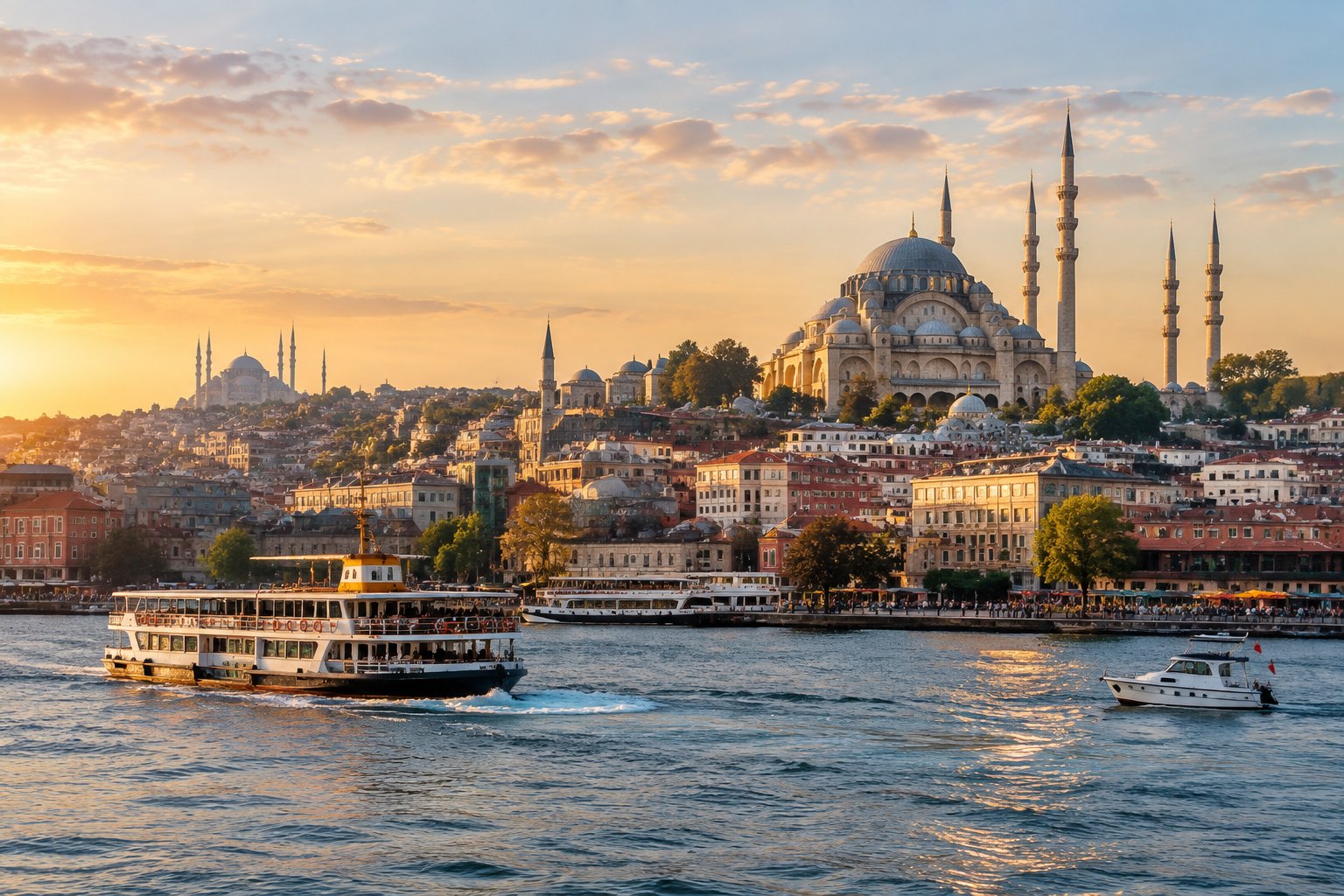
Istanbul serves as the main entry point to Turkey and easily warrants three full days. The Sultanahmet district puts Hagia Sophia, the Blue Mosque, Topkapi Palace, and the Basilica Cistern within walking distance of each other.
Across the water, neighborhoods like Kadıköy and Beyoğlu reveal the city's modern café culture and dynamic street food scene. Sampling authentic Turkish food here provides a delicious introduction to local life.
A short tram ride leads into the bustling Grand Bazaar, one of the oldest covered markets in existence. Exploring the Grand Bazaar offers an immersive atmosphere filled with artisan lanterns, spices, and carpets.
3 Absolute Highlights:
- Hagia Sophia, showcasing 1,700 years of Byzantine and Ottoman history through its shifting roles as church, mosque, and museum, as detailed by the Hagia Sophia History and Experience Museum
- The Blue Mosque, formally called the Sultan Ahmed Mosque, featuring six minarets and over 20,000 handmade İznik tiles with intricate tulip designs, according to Global Highlights
- The Grand Bazaar and Topkapi Palace, which sit close together inside the historic walls
Where to Stay in Istanbul
Base yourself in Sultanahmet for easy walks to major sights. The Sultanahmet Palace Hotel sits directly behind the Blue Mosque and earns a 9.8 out of 10 location score from over 1,200 guest reviews on Booking.com.
Several rooms overlook the mosque or the Marmara Sea. Check current rates on Booking.com or Expedia before finalizing travel dates.
Cappadocia: Fairy Chimneys and Sunrise Balloons
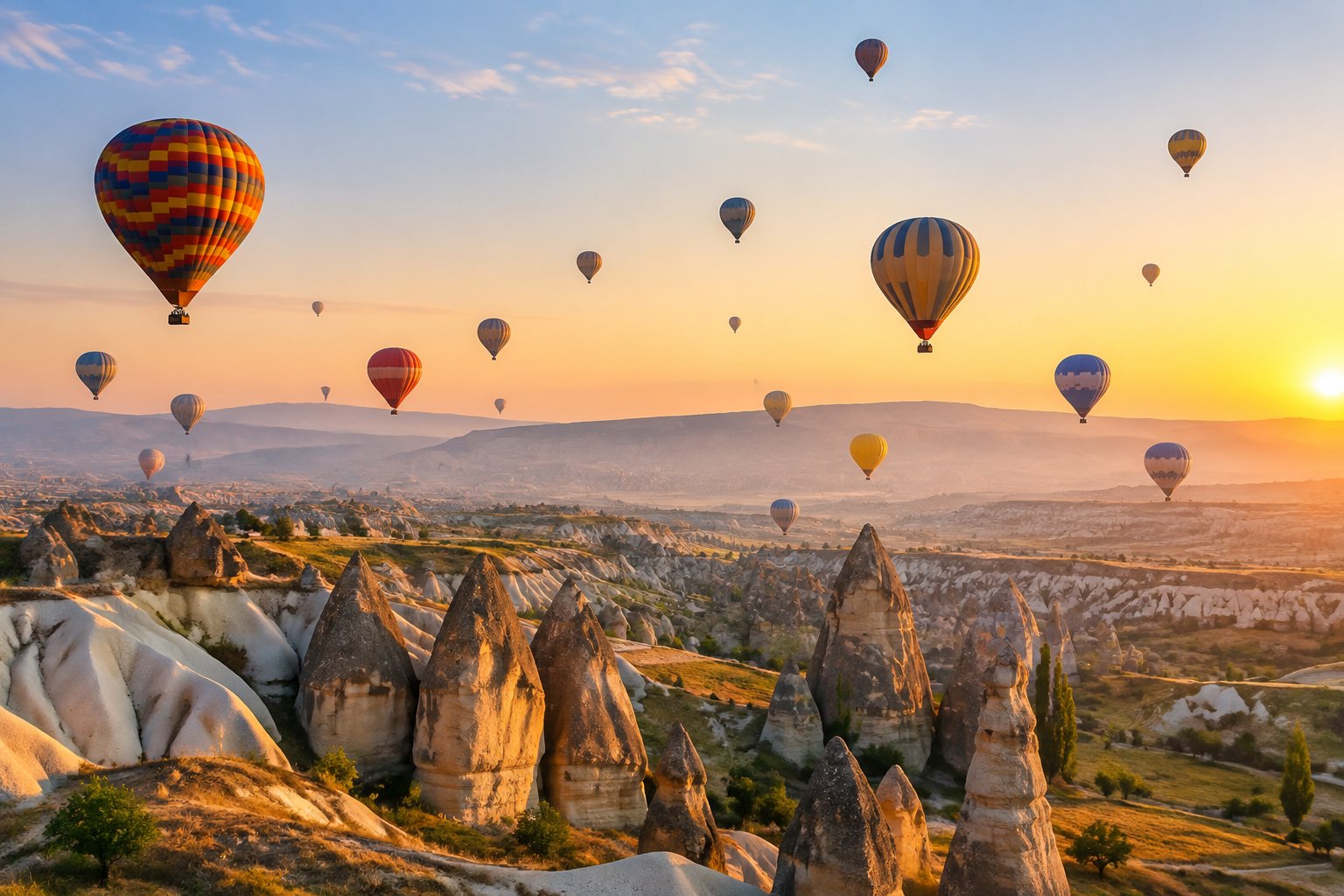
Centuries of wind and rain carved Cappadocia's volcanic rock into iconic fairy chimneys. Spending two nights here leaves ample time for a sunrise balloon flight, underground exploration, and walks through Göreme.
3 Absolute Highlights:
- A hot-air balloon ride over the Göreme valley at sunrise, widely considered the best way to take in the fairy chimney landscape
- The Göreme Open Air Museum, where early Christians carved rock-hewn chapels with vivid biblical frescoes between the 4th and 13th centuries, per the Göreme Archaeological Site
- The underground cities of Derinkuyu and Kaymaklı, where subterranean networks provided shelter during invasions
Where to Stay in Cappadocia
Stay in a cave hotel in Göreme for proximity to balloon launch sites. The Cappadocia Caves Hotel offers 47 stone-carved rooms and a rooftop pool overlooking the valley.
Terraces provide front-row views of morning balloons, per the hotel's website. Compare cave hotel rates in Göreme on Booking.com or Expedia well in advance.
Ephesus: Roman Streets and Ancient Wonders
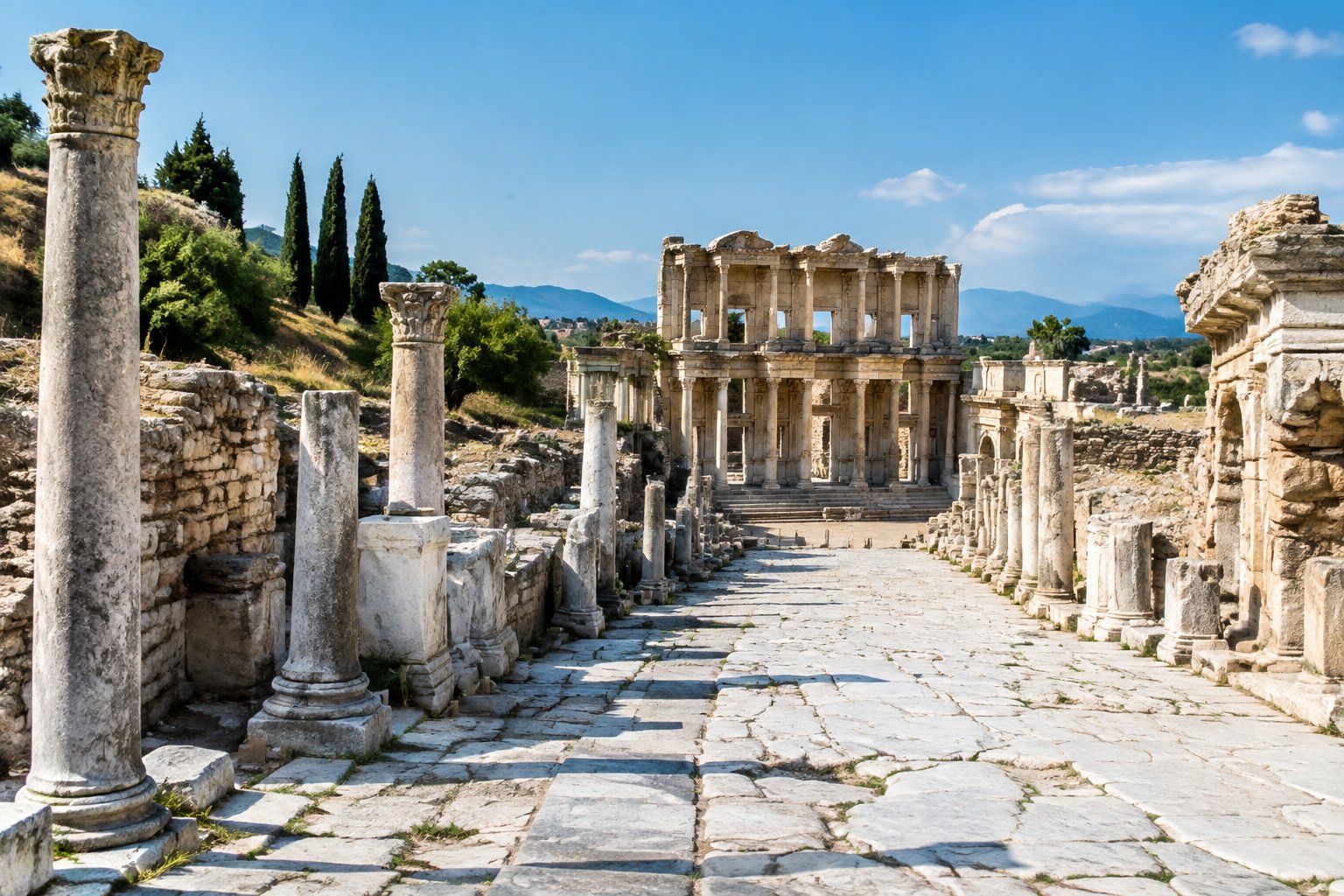
Ephesus ranks among the best-preserved classical cities in the Mediterranean. Walking its marble roads gives an immediate sense of everyday Roman life.
The city flourished as a provincial capital, anchored by the grand Library of Celsus and a 25,000-seat amphitheater, per the Ephesus Archaeological Site.
Standing before the restored facade of the Library of Celsus showcases the sheer ambition of Roman craftsmanship. Sheltered nearby, the Terrace Houses offer a look into ancient domestic luxury with intricate wall frescoes and preserved floor mosaics.
3 Absolute Highlights:
- The Library of Celsus and the nearby Terrace Houses, which preserve mosaics and frescoes from wealthy Roman residences
- The Temple of Artemis site, once one of the Seven Wonders of the ancient world, a short walk from central Selçuk
- A side trip to Pergamon (Bergama), a short drive north near Izmir, for another major Hellenistic and Roman ruin
Where to Stay Near Ephesus
Selçuk is the practical base, sitting 2.1 kilometers from the Ephesus ruins with the Temple of Artemis visible from parts of town, per the Akanthus Hotel. Visiting the ancient foundations of the Temple of Artemis provides valuable context before touring the nearby ruins.
Many travelers also make a day excursion north to Pergamon to marvel at its steep hillside theater and acropolis. Exploring Pergamon alongside Ephesus provides a comprehensive look at classical antiquity in western Anatolia.
The Akanthus Hotel Ephesus holds a 9.8 out of 10 location score from 686 reviews and includes a pool, garden, and buffet breakfast, according to Booking.com. Look up Selçuk hotel availability on Booking.com or Expedia ahead of your Ephesus visit.
Pamukkale: White Terraces and Hierapolis
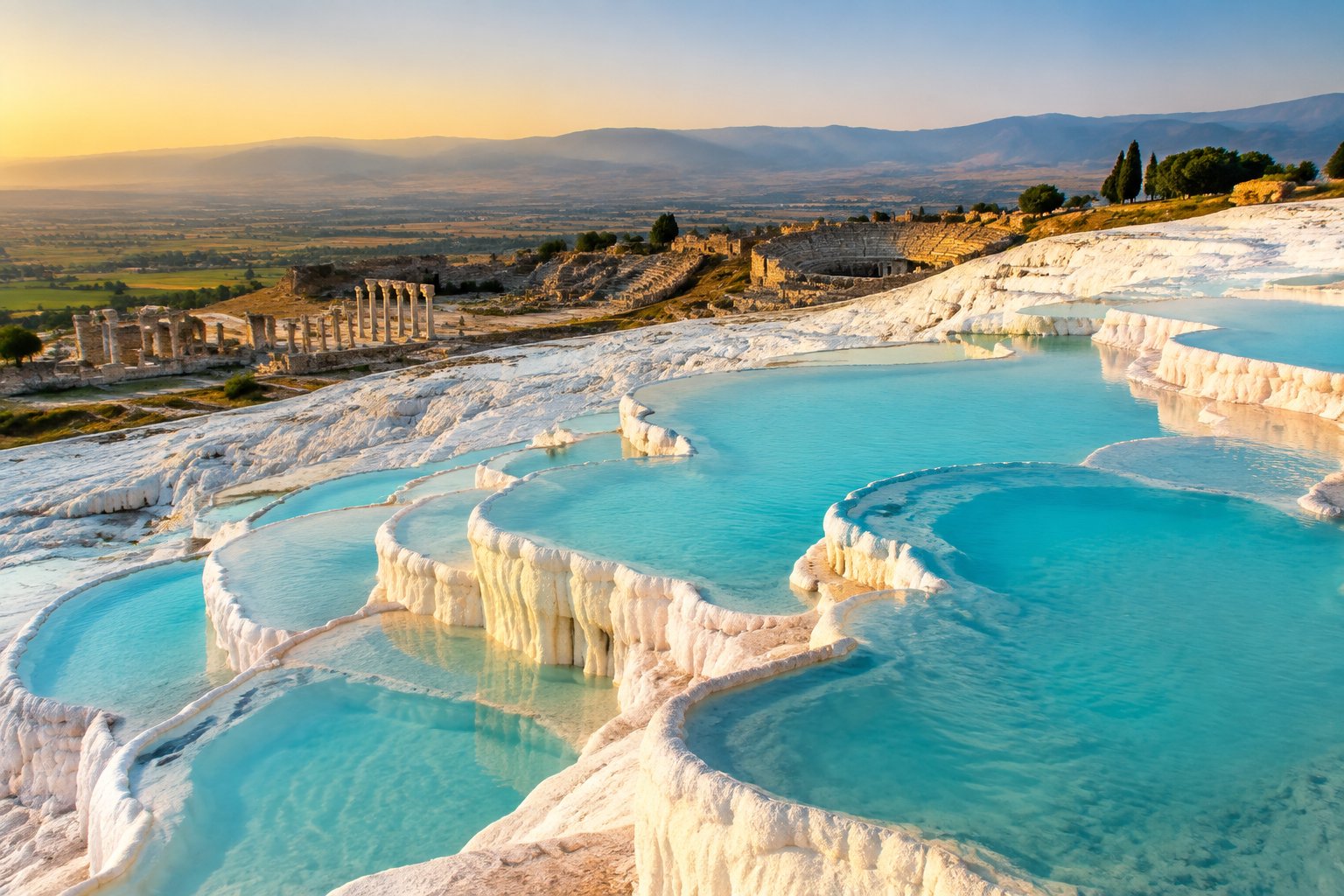
Pamukkale's white travertine terraces, built from mineral-rich hot springs, look almost artificial against the surrounding hills. The ruins of Hierapolis sit directly on top of the terraces, making this one of the few places where a natural wonder and a Roman city share the same hillside.
3 Absolute Highlights:
- The travertine pools themselves, fed by hot springs ranging from 35° to 100°C, per Global Highlights
- Hierapolis, founded in the 2nd century BC and rebuilt after a major earthquake in AD 60, which includes a theater, Roman baths, and the largest necropolis in southwest Anatolia, according to the Hierapolis Pamukkale Travertine Archaeological Site
- The Antique Pool, where you can swim among submerged Roman columns
Where to Stay in Pamukkale
Stay in Pamukkale village itself, a short walk from the travertine entrance. The Venus Suite Hotel is a family-run property with a private pool and rooms offering views of the travertine terraces or surrounding mountains, per Venus Suite Hotel.
The Melrose Viewpoint Hotel offers a similar home-like atmosphere close to the site, according to Melrose Viewpoint Hotel. Check Pamukkale hotel listings on Booking.com or Expedia before your visit.
Antalya: Old-Town Charm on the Mediterranean
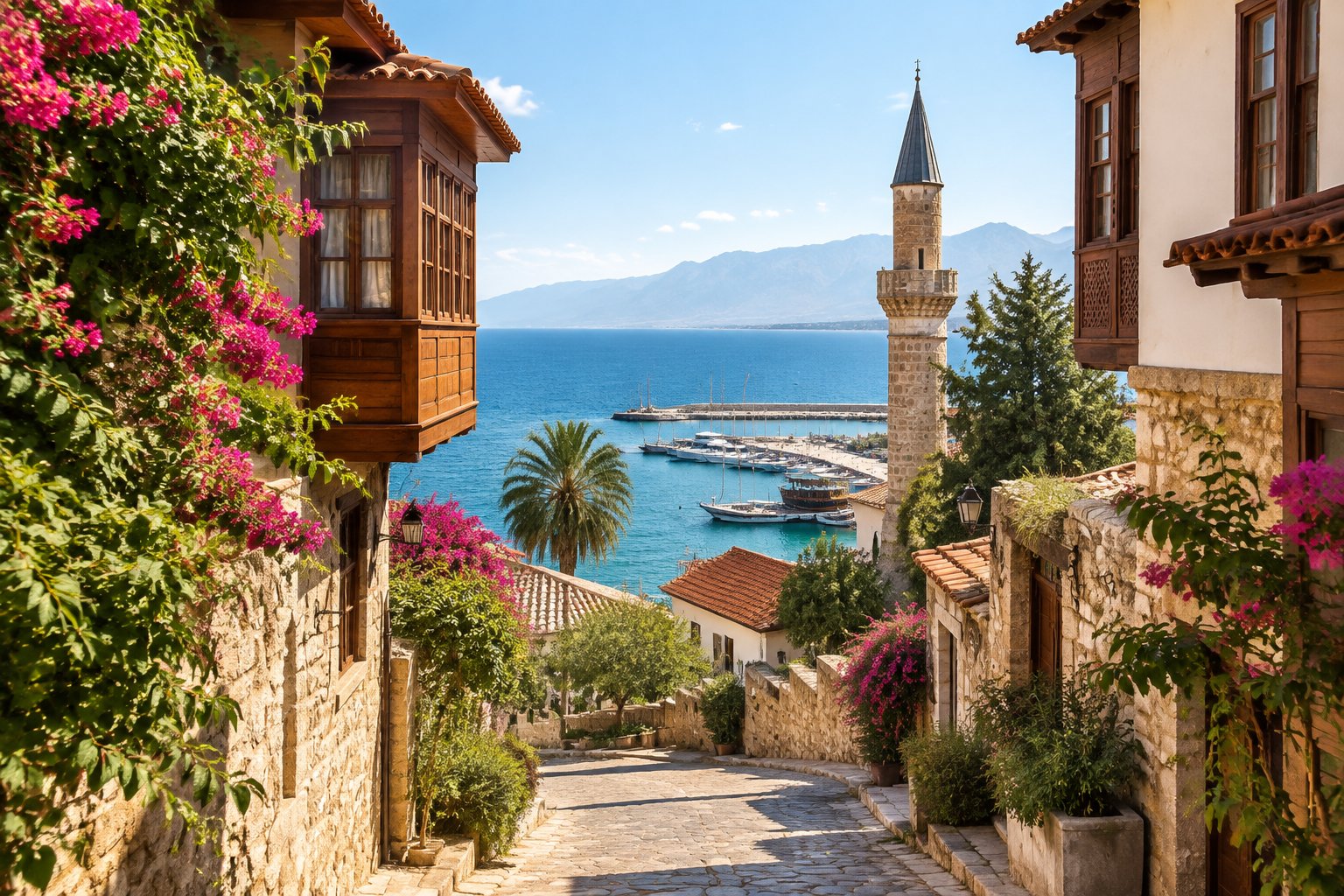
Antalya pairs a walkable old quarter with direct access to southern beaches along the Turkish Riviera. Kaleiçi, the historic harbor district, offers atmospheric dining in the evenings and quick access to nearby Roman ruins during the day.
3 Absolute Highlights:
- Kaleiçi's old town, with its Ottoman-era houses, harbor views, and narrow stone streets
- The Antalya Museum, which houses classical statues from Perge, including the Weary Heracles, noted by the Antalya Museum
- Aspendos Theater, an intact Roman theater from 155 AD that seated 12,000 spectators, per Global Highlights
Where to Stay in Antalya
Kaleiçi puts you within walking distance of the harbor, restaurants, and the Antalya Museum, and gives easy access for day trips to Side and Aspendos along the Mediterranean coast.
Taking a coastal trip to Side allows you to admire the seaside Temple of Apollo against the waves. The ancient monuments in Side sit seamlessly beside sandy beaches and waterfront cafés.
Search Kaleiçi and Antalya city-center hotels on Booking.com or Expedia to compare harbor-view rooms.
Fethiye: Lagoons and the Turquoise Coast
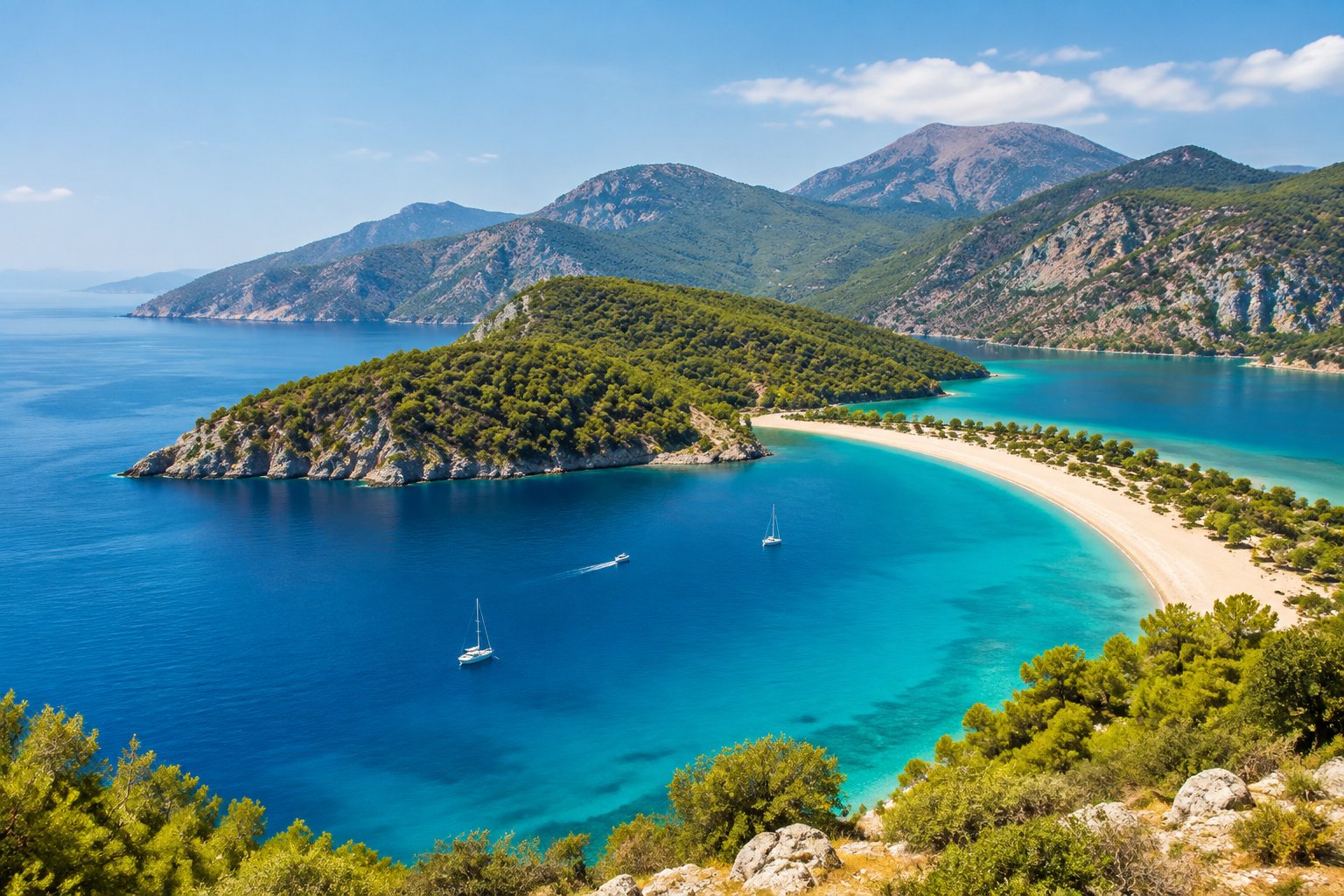
Fethiye anchors the stretch of coastline known as the Turquoise Coast, and the Ölüdeniz lagoon just outside town is the single most photographed beach in the region. This area rewards travelers who want beach time mixed with paragliding, boat trips, and nearby ruins.
Boat excursions heading westward toward Marmaris reveal secluded coves and pine-covered peninsulas. Stopping in Marmaris gives travelers access to lively marinas, coastal castles, and sheltered bays.
3 Absolute Highlights:
- Ölüdeniz lagoon, a protected 3-kilometer beach where the Aegean Sea meets the Mediterranean, with waters warm and calm for 10 months of the year, according to Go Türkiye
- Paragliding from Babadağ mountain, landing directly on the lagoon beach below
- Day trips to Kaş, Dalyan, or Marmaris, all within reach for mud baths, boat tours, or diving
Where to Stay in Fethiye
Stay in Ölüdeniz if you prioritize easy beach access. Hotel Ölüdeniz sits 300 meters from the sand, offering garden rooms and airport shuttles, per the hotel site.
The Ölüdeniz Beach Resort By Z Hotels sits two minutes from the water and rates highly on Booking.com. Check hotel listings early for peak summer dates.
Bodrum: Aegean Beaches and Castle Views
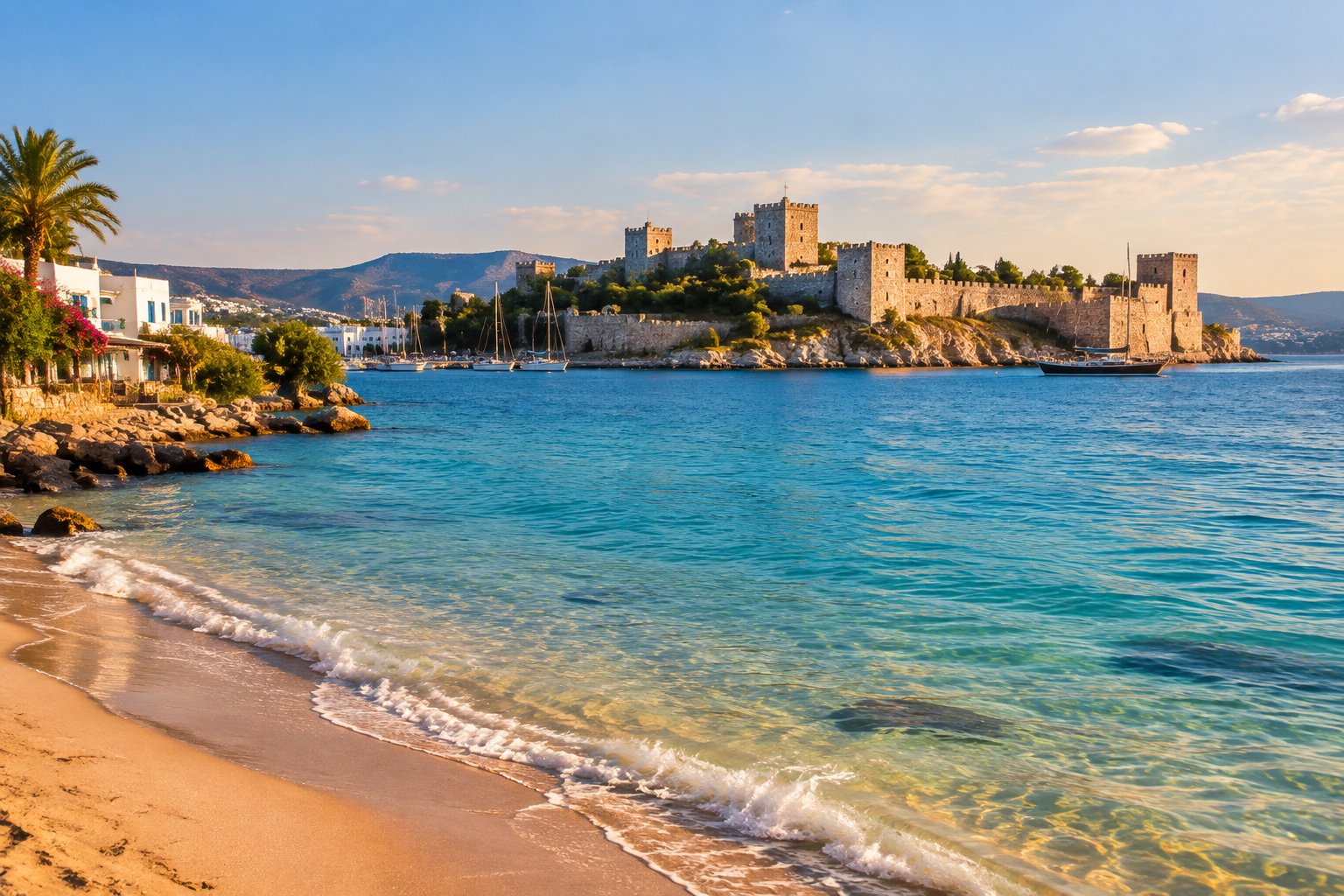
Bodrum combines whitewashed hillside architecture with one of the liveliest harbor scenes on the Aegean Sea. The castle dominates the town's silhouette and houses a museum worth building an afternoon around.
3 Absolute Highlights:
- Bodrum Castle, known originally as the Castle of St. Peter, which the Knights of St. John erected in the 15th century using stones from the Mausoleum of Halicarnassus, per the Bodrum Underwater Archaeology Museum
- The Museum of Underwater Archaeology inside the fortress, showcasing artifacts from the Late Bronze Age Uluburun Shipwreck
- A traditional wooden gület day cruise exploring sheltered Aegean coves
Where to Stay in Bodrum
Stay in Bodrum's town center for walking access to the castle, Bar Street, and the harbor. The Artunç Boutique Hotel has operated in central Bodrum since 1987, with 14 rooms set in a garden a few minutes from the castle and beach, according to Artunç Boutique Hotel.
Bodrum city-center hotels start around $109 to $170 per night for a standard double, based on listings on Booking.com. Check current Bodrum rates on Booking.com or Expedia before booking.
Konya: Seljuk Heritage and Sufi Traditions
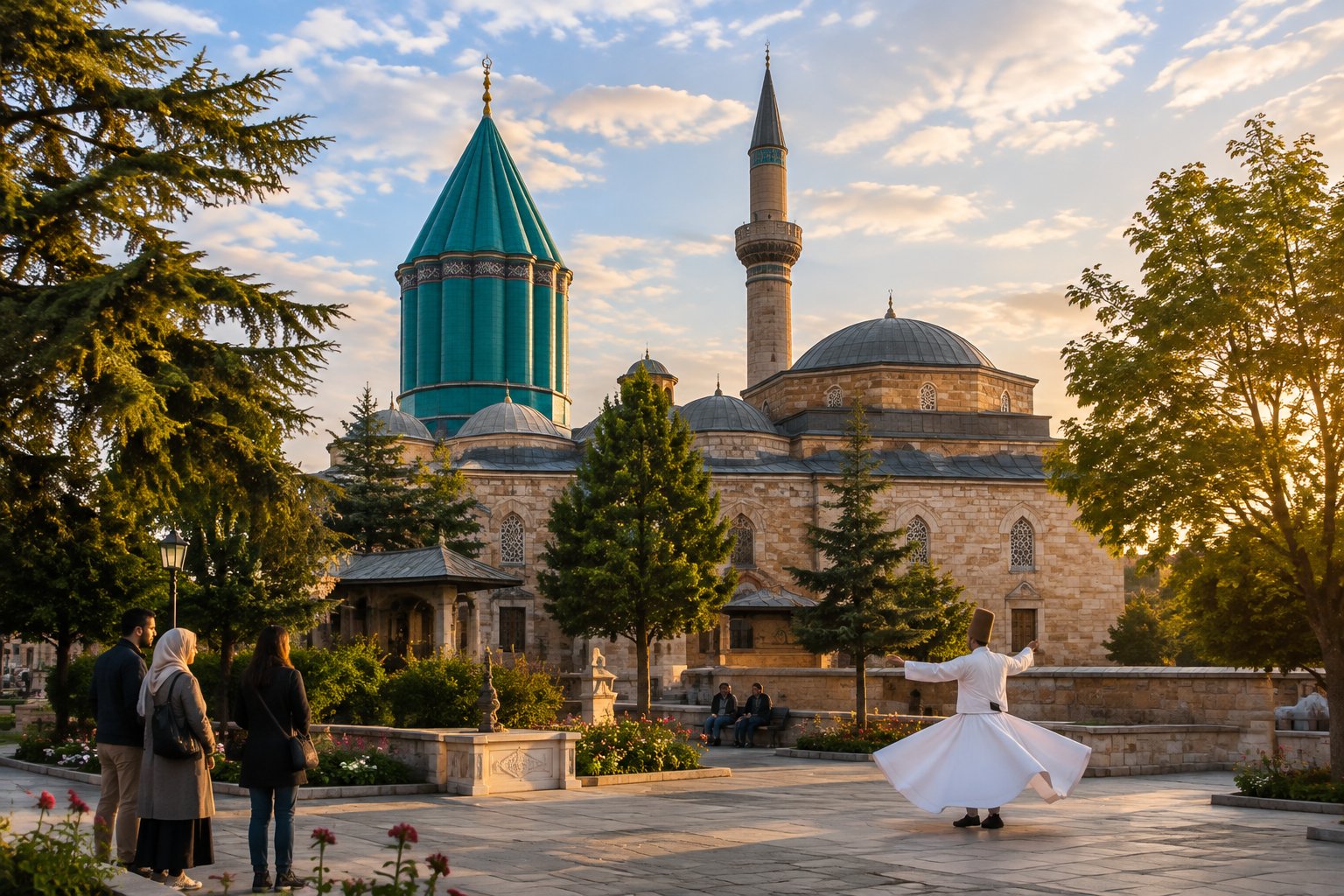
Konya offers a different pace from the coastal stops, rooted in Seljuk architecture and the legacy of the whirling dervishes. It works well as a stop between Cappadocia and Antalya, or as a day trip from Ankara.
3 Absolute Highlights:
- The Mevlana Museum, built around the 1274 shrine of Mevlana (Rumi) and reopened as a museum in 1926 after the Mevlevi lodge's closure in 1925, per the Mevlana Museum
- A Sema ceremony performed by whirling dervishes, held in the Semahane hall adjacent to the shrine
- Turkish kebab and regional dishes at a local lokanta, a good introduction to Anatolian cooking before heading back toward Ankara
Where to Stay in Konya
Stay next to the Mevlana Museum so the Sema ceremony and shrine are a short walk away. The Hich Hotel Konya sits beside the museum's garden walls, a one-minute walk from the entrance, and holds a 9.8 out of 10 location score from over 430 reviews on Booking.com.
Search Konya hotels near the Mevlana Museum on Booking.com or Expedia for your travel dates.
Göbekli Tepe: Prehistoric History in Southeastern Turkey
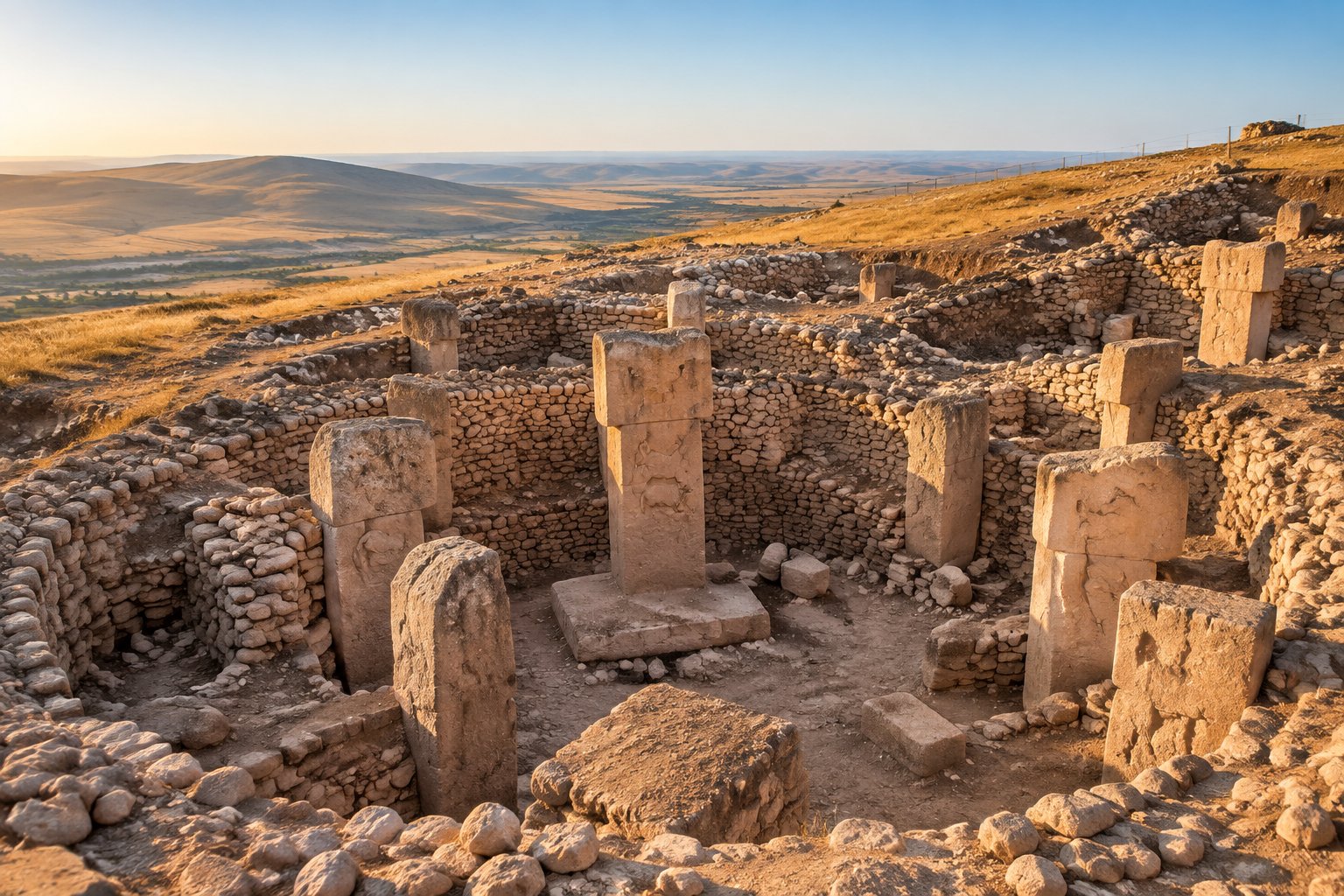
Göbekli Tepe preserves some of humanity's earliest known monumental architecture. Hunter-gatherer communities carved and erected these massive T-shaped pillars thousands of years before Stonehenge.
3 Absolute Highlights:
- The main excavation site, with its circular enclosures of carved limestone pillars decorated with animal reliefs
- Mount Nemrut, several hours away, where giant stone heads believed to mark a 1st-century-BC royal tomb sit scattered around the summit at over 2,000 meters, per Global Highlights
- The old city of Mardin, with its stone architecture and multi-faith history, a worthwhile addition if you have extra days in the southeast
Ascending Mount Nemrut treats travelers to an unforgettable panorama as sunrise highlights monumental stone statues. The monumental summit of Mount Nemrut remains one of the most evocative archaeological landscapes in the country.
Continuing your journey to Mardin reveals ornate stone houses cascading down a rugged hillside. Wandering through Mardin exposes centuries of artful masonry, historic churches, and breathtaking views over the Mesopotamian plains.
Where to Stay for Göbekli Tepe
Şanlıurfa is the practical base, sitting closest to the Göbekli Tepe site and offering the region's airport connections. Compare Şanlıurfa hotel options on Booking.com or Expedia before planning your southeastern Turkey itinerary.
Trabzon: Black Sea Scenery and Sumela Monastery
Trabzon trades Turkey's sunny coastlines for green, mist-covered mountains along the Black Sea. The city serves as the main air hub for a region known for tea and hazelnut production and for the cliffside Sumela Monastery nearby, as described by Lonely Planet.
3 Absolute Highlights:
- Sumela Monastery, carved into a steep cliff face inside Altındere National Park roughly 1,200 meters above sea level, showcasing preserved Byzantine rock frescoes
- Uzungöl, a serene mountain lake framed by pine forests and wooden chalets, along with the panoramic viewpoints from Boztepe overlooking the Black Sea
- Trabzon Hagia Sophia and the Atatürk Pavilion, displaying late Byzantine architecture and early republican history right within city limits
Where to Stay in Trabzon
Base yourself around central Trabzon's Meydan square for quick transit connections, walkable dining, and easy departures for day excursions. Travelers looking for alpine tranquility can split their stay with an overnight lodge in Uzungöl or Maçka near the monastery valley.
Search current Trabzon hotel availability on Booking.com or Expedia, especially if visiting between July and September when mountain trails and plateau roads are clearest.
Choose the Stops That Fit Your Turkey Trip
Building a Turkey itinerary comes down to matching your available time to the right combination of regions. A week suits Istanbul, Cappadocia, and one coastal stop like Antalya or Fethiye; two weeks or more opens room for Ephesus, Pamukkale, and a detour into southeastern Turkey for Göbekli Tepe.
Treat Troy, Gallipoli, Kars, and Mount Ararat as extensions for a second or third trip rather than easy add-ons to a first visit. They sit far from the main western and southern circuits, and reaching them well takes dedicated days rather than a quick detour.
Travelers interested in Troy and Gallipoli often join regional Turkey tours that handle long driving stretches between historic battlefields. Many comprehensive Turkey tours also link distant archaeological sites across Anatolia, making transit straightforward.
Whichever combination you choose, book accommodations in each base town early, particularly in Cappadocia and along the coast during the busier summer months. The variety across these ten regions, from Byzantine domes to Roman libraries to Neolithic pillars, is what makes a second visit to Turkey as compelling as the first.
Frequently Asked Questions
How many days do you need for a first trip to Turkey?
Plan for at least 7 to 10 days. A week allows time for Istanbul and Cappadocia, while 10 to 14 days lets you add coastal stops like Antalya or historical sites like Ephesus and Pamukkale.
What is the best way to travel between regions in Turkey?
Domestic flights are the quickest way to cover long distances between Istanbul, Cappadocia, and coastal hubs. For regional trips between ancient ruins and coastal towns, rental cars, private transfers, and organized Turkey tours are convenient.
When is the best time of year to visit Turkey?
Spring (April to May) and autumn (September to October) offer pleasant temperatures and lighter crowds. Summer brings prime beach weather to the Turquoise Coast, though inland archaeological sites can become quite hot.
Do cave hotels and balloon tours need advance reservations?
Yes. Popular cave hotels in Göreme and sunrise hot-air balloon flights routinely book out weeks or months ahead during the peak spring-to-autumn season.
Comments