Tunisia is one of Northern Africa’s most rewarding destinations for a trip that blends ancient cities, Mediterranean shores, and desert landscapes. The Top 10 Hotspots in Tunisia include Tunis, Carthage, Sidi Bou Said, Kairouan, the Sousse coast, El Jem, Dougga, the Sahara, Matmata and Tatouine, and Djerba. Together, these places to visit in Tunisia give you a clear route through the country’s history and varied scenery. They stand out among the best places to visit in Tunisia for first-time travelers.
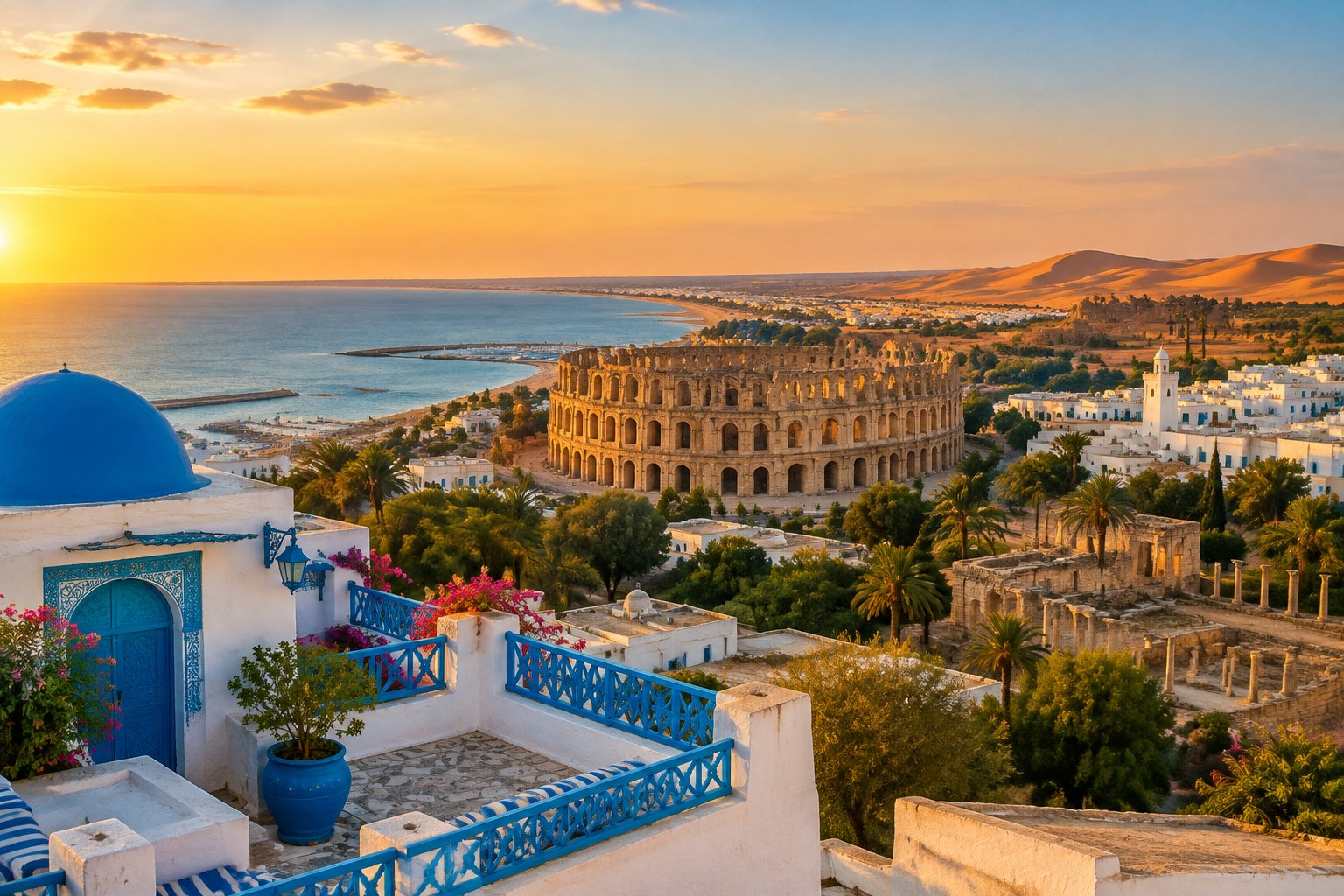
You can start in Tunis, add Roman sites inland, then finish with beaches or a desert stay. Plan for local cash in Tunisian dinar, especially for taxis and small purchases, and leave room in your schedule for long drives between northern cities and the south.
Key Takeaways
- Begin with Tunis, Carthage, and Sidi Bou Said for history and coastal views.
- Add El Jem, Dougga, and Kairouan for major heritage sites.
- Choose a beach, island, or desert stay to shape your route.
Tunis: A Historic Capital and Easy Starting Point
Tunis gives you an efficient first stop, with a walkable historic center and major collections that add context to the country’s past. The Medina of Tunis, Zaytuna Mosque, and Bardo Museum offer distinct ways to explore the capital.
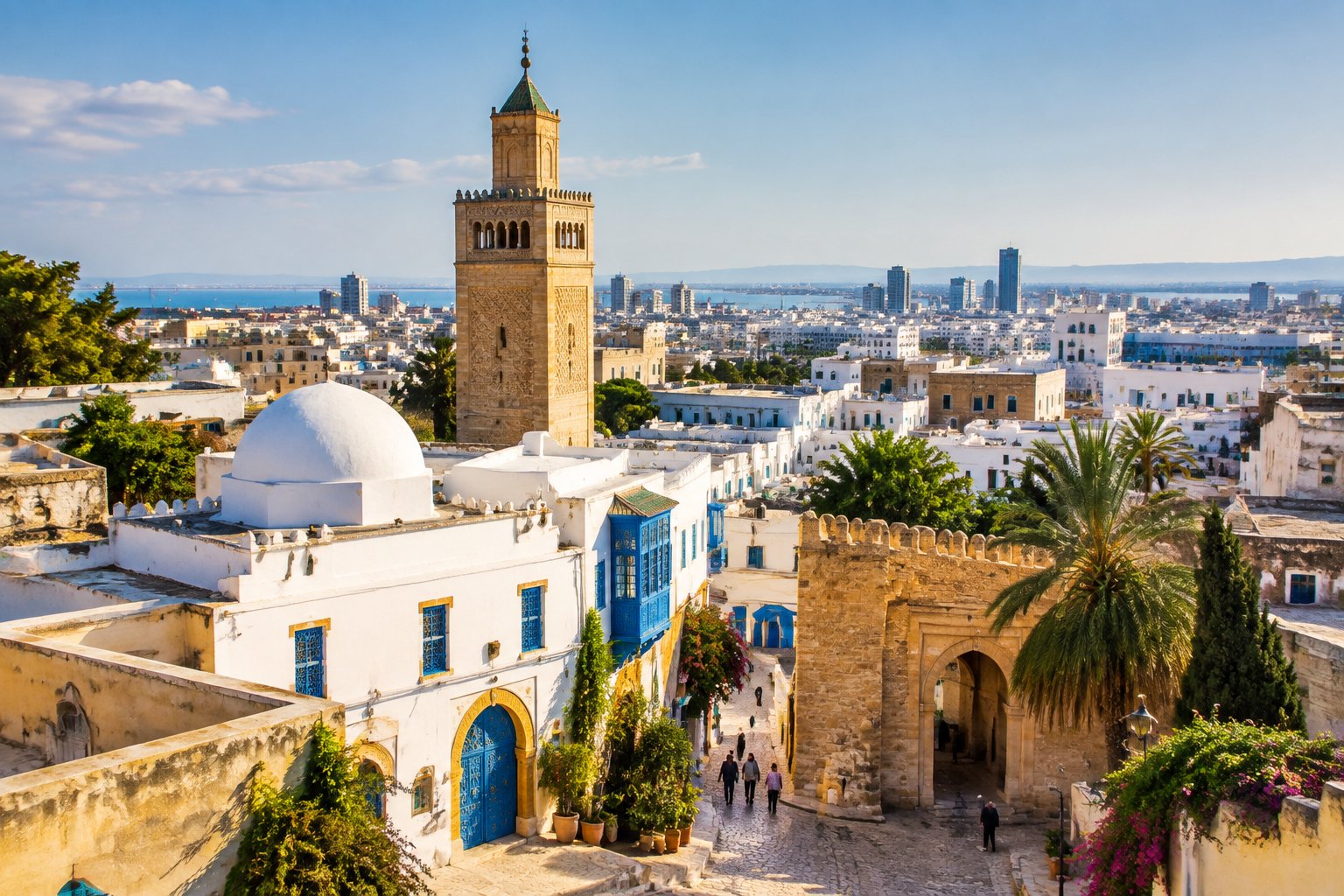
The Medina, Zaytuna Mosque, and Bardo Museum
In the Tunis medina, follow narrow lanes past workshops, souks, and traditional houses. Exploring the historic Medina of Tunis reveals carved doors, shaded courtyards, and bustling artisan stalls. Allow yourself time to browse without rushing.
The Zaytuna Mosque stands at the heart of the old city and remains one of its defining landmarks. Dress modestly and respect prayer times when visiting the surrounding area.
For a broader view of the region’s past, visit the Bardo Museum, known for its collection of Roman mosaics. These landmarks make a strong first-day plan for things to do in Tunis, with the medina best explored on foot.
Carthage: Punic History Beside the Mediterranean
Visiting ancient Carthage pairs the story of an ancient power with open views across the Mediterranean. Its archaeological remains are spread across several locations, so plan enough time to travel between them.
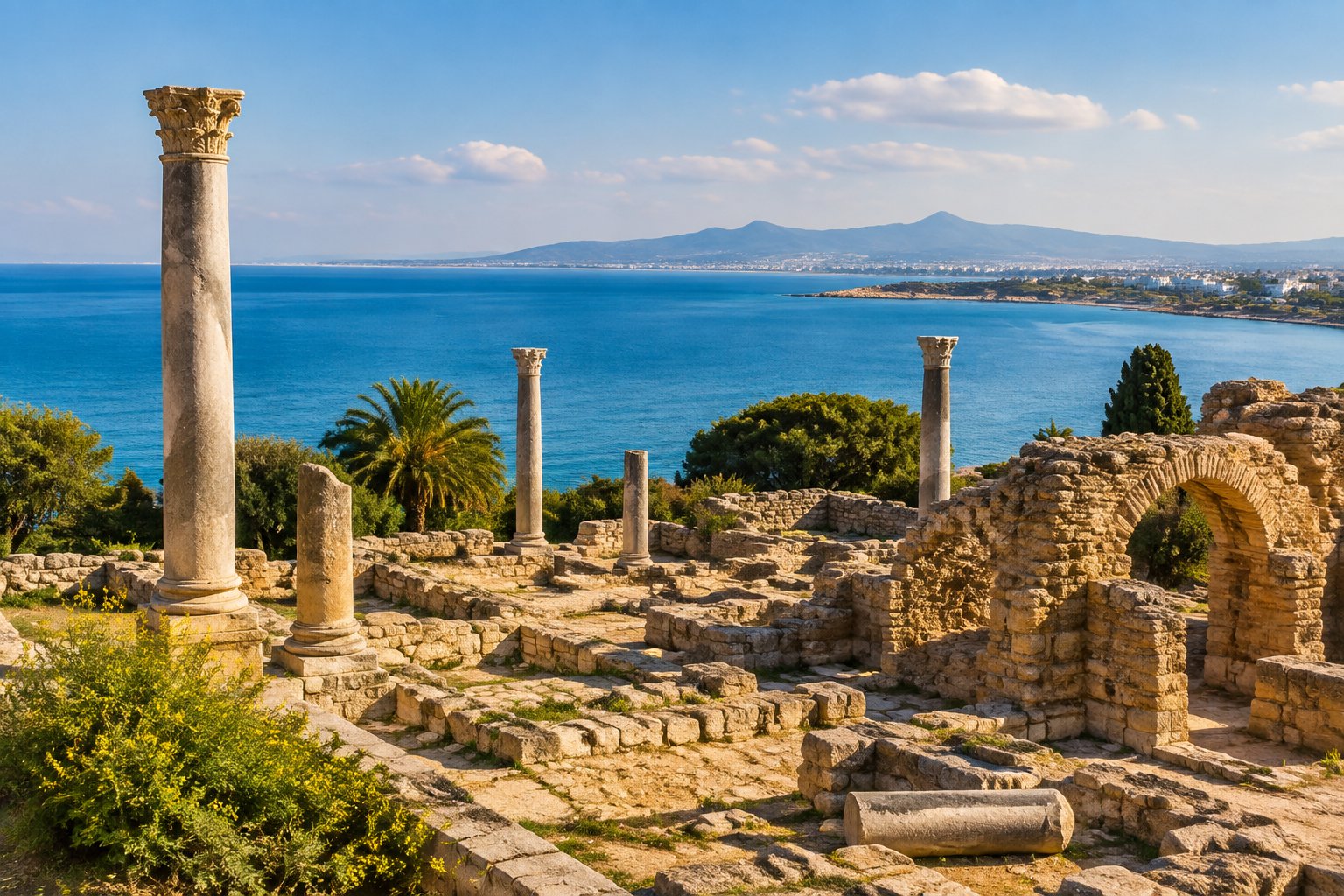
The Archaeological Site and Its Roman Ruins
At the Carthage archaeological site, you can trace layers of Punic and Roman history among ruins set in a modern residential area. These Roman ruins include baths, villas, and other structures that show how the city changed over time.
Wear comfortable shoes and carry water, since the visits involve walking outdoors. Carthage is a UNESCO World Heritage Site and works well as a day trip from Tunis, especially when paired with nearby Sidi Bou Said.
Sidi Bou Said: Blue-and-White Coastal Charm
Sidi Bou Said is a compact hillside town where white walls, blue details, and Mediterranean views define the stroll. Its lanes and cafés make it an easy contrast to Tunis’s busier streets.
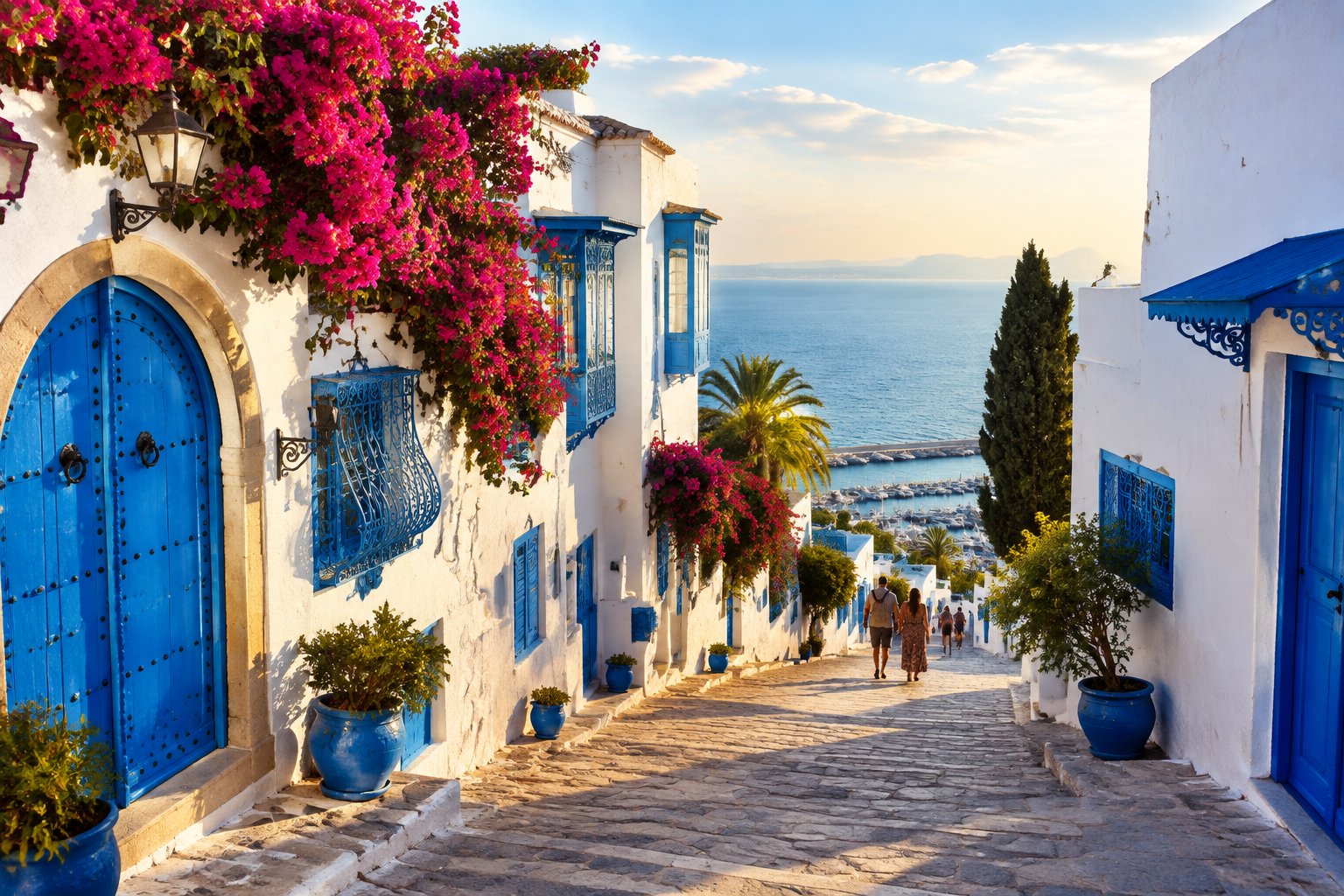
Clifftop Views, Art, and Cafés
Walk toward the clifftop viewpoints for broad coastal views, then explore the town’s galleries and small shops. A café stop gives you time to enjoy the setting before the lanes fill with day visitors.
Sidi Bou Said sits above the sea rather than directly on the sand, so plan a separate trip if swimming at Mediterranean beaches is a priority. Its close location to Carthage makes it easy to combine both stops in one day.
Kairouan: Tunisia’s Spiritual Heart
Kairouan gives you a close look at Tunisia’s religious and architectural heritage. Its Great Mosque and historic medina reward a slower visit than a quick stop between cities.
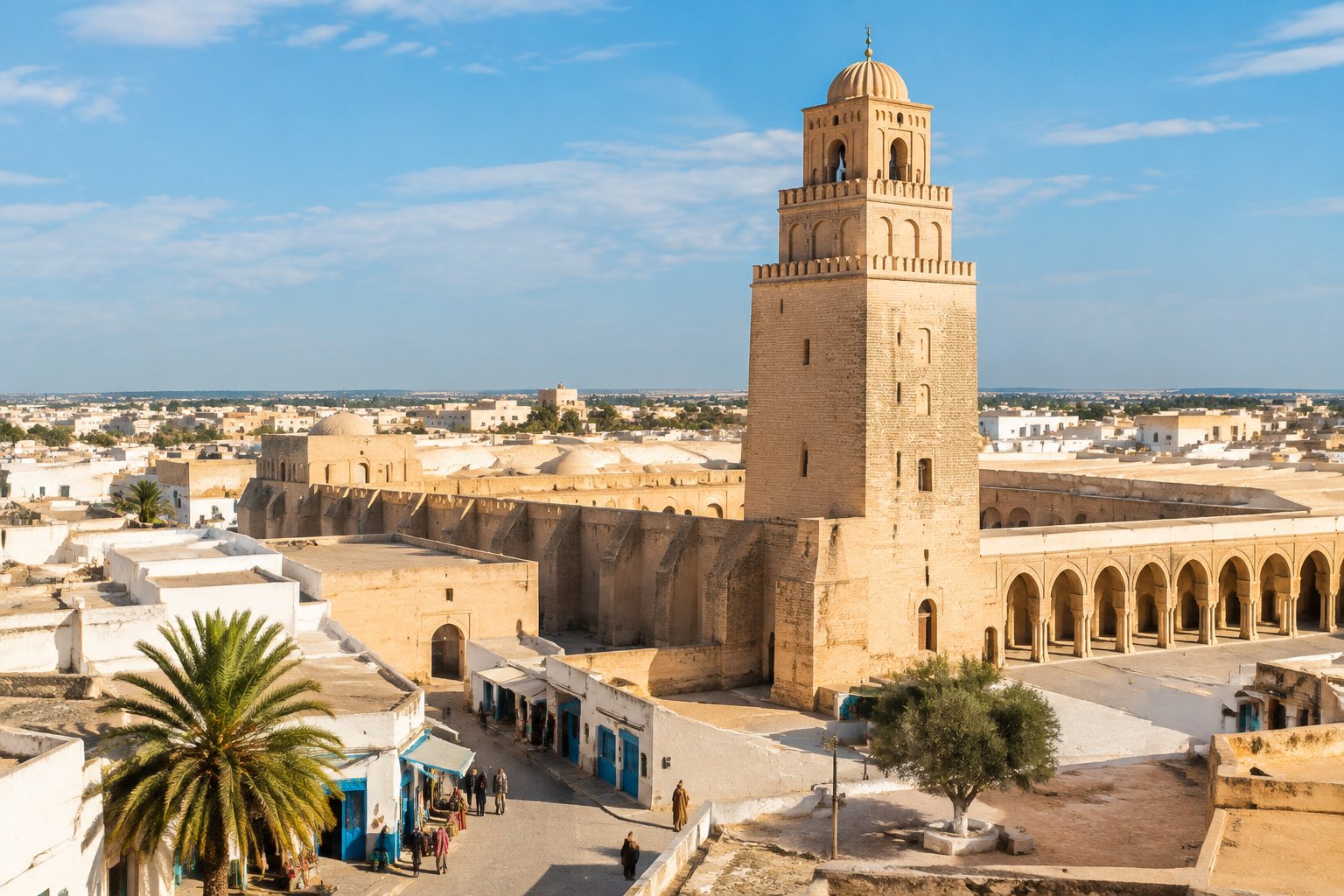
The Great Mosque and the Historic Medina
The Great Mosque of Kairouan is the city’s central landmark, with a broad courtyard and a distinctive square minaret. Check visitor access and local customs before entering, and choose clothing that covers your shoulders and knees.
In the historic medina, browse workshops and traditional goods, including carpets associated with the city. Kairouan is recognized as UNESCO World Heritage, and its compact center suits a full day of walking and cultural visits.
Sousse and the Coast: Medinas, Forts, and Seaside Stays
Sousse combines a historic medina and seaside setting, with coastal towns nearby for a longer stay. You can use it as a base for beach time and visits to Monastir or Hammamet.
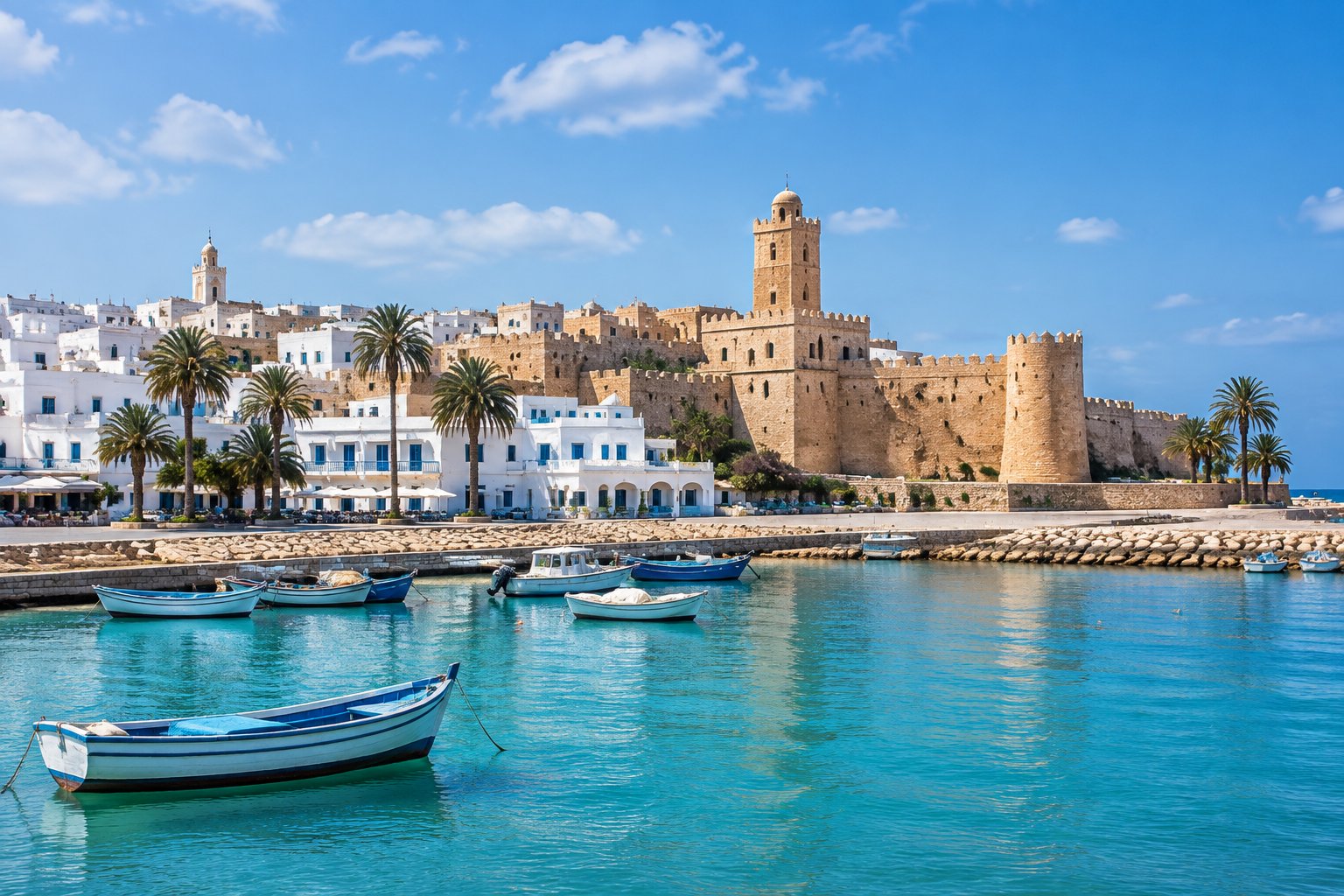
Sousse’s Ribat and Nearby Coastal Detours
Explore the Ribat and the old medina before heading to the coast. The Ribat’s fortified walls and elevated views help explain the city’s historic role along the shore. Nearby, the historic kasbah tower provides an impressive perspective over the medina rooftops.
For a change of pace, visit Monastir’s waterfront or Hammamet’s medina and kasbah. Further north, Bizerte and El Haouaria offer different coastal scenery, while the main resort areas give you easy access to Mediterranean beaches.
El Jem: Tunisia’s Monumental Roman Arena
El Jem is a standout stop for Roman architecture, with an immense arena that rises above the surrounding town. Give yourself time to walk through its interior as well as view it from outside.
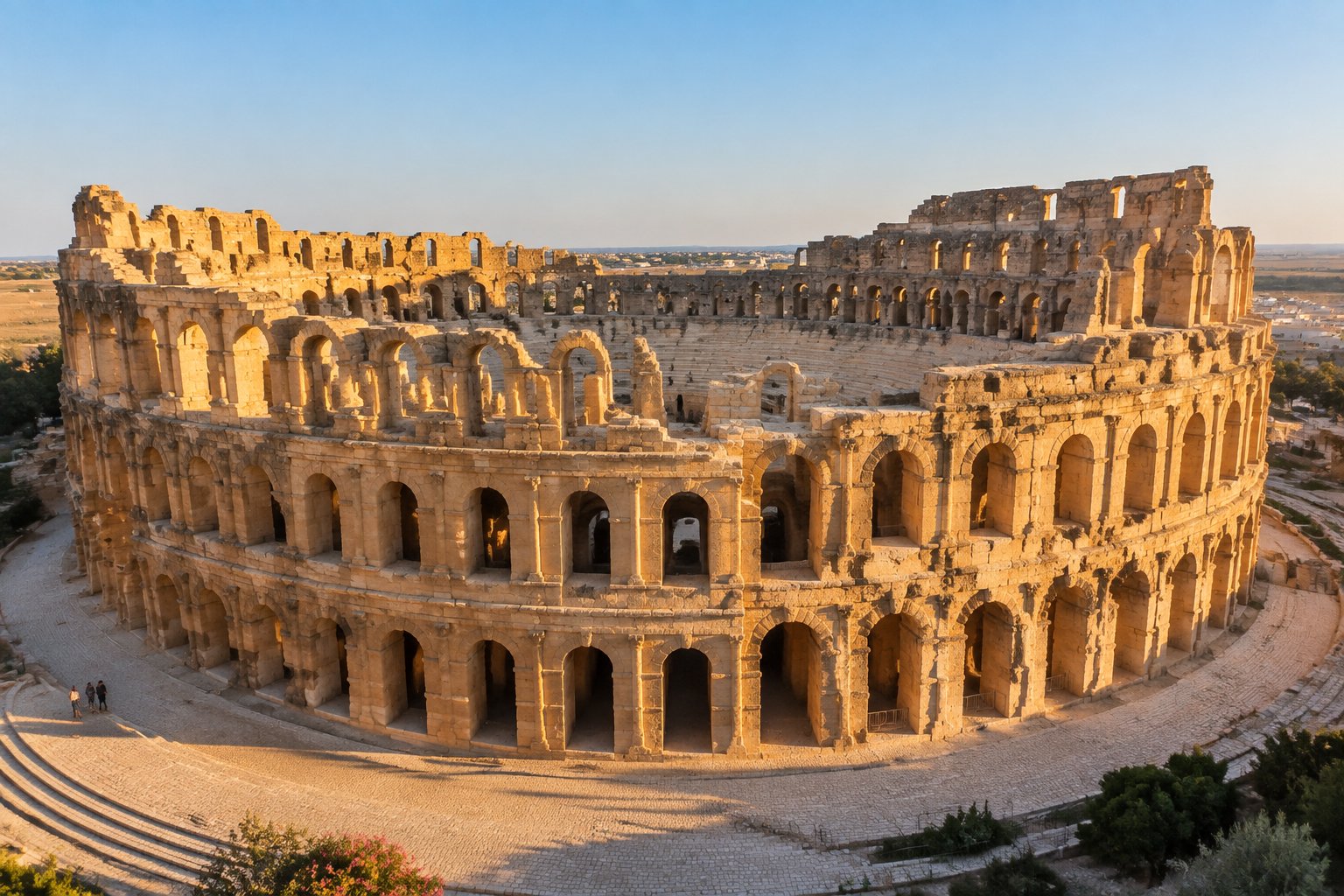
Inside the El Jem Amphitheatre
The El Jem amphitheatre dates to the third century and was built to hold an estimated 35,000 spectators, as UNESCO’s description of the monument records. Its freestanding stone structure and arcades make the scale clear from the surrounding streets.
Inside, explore the arena and underground passages, then look back at the tiers from different levels. The amphitheatre of El Jem is a UNESCO World Heritage Site and an easy addition to a route between Tunis and southern Tunisia.
Dougga: One of the Country’s Best-Preserved Ancient Cities
Dougga offers an extensive ancient city setting, with well-preserved Roman ruins spread across a hillside above a fertile valley. Plan for uneven ground and a long outdoor walk among its public buildings.
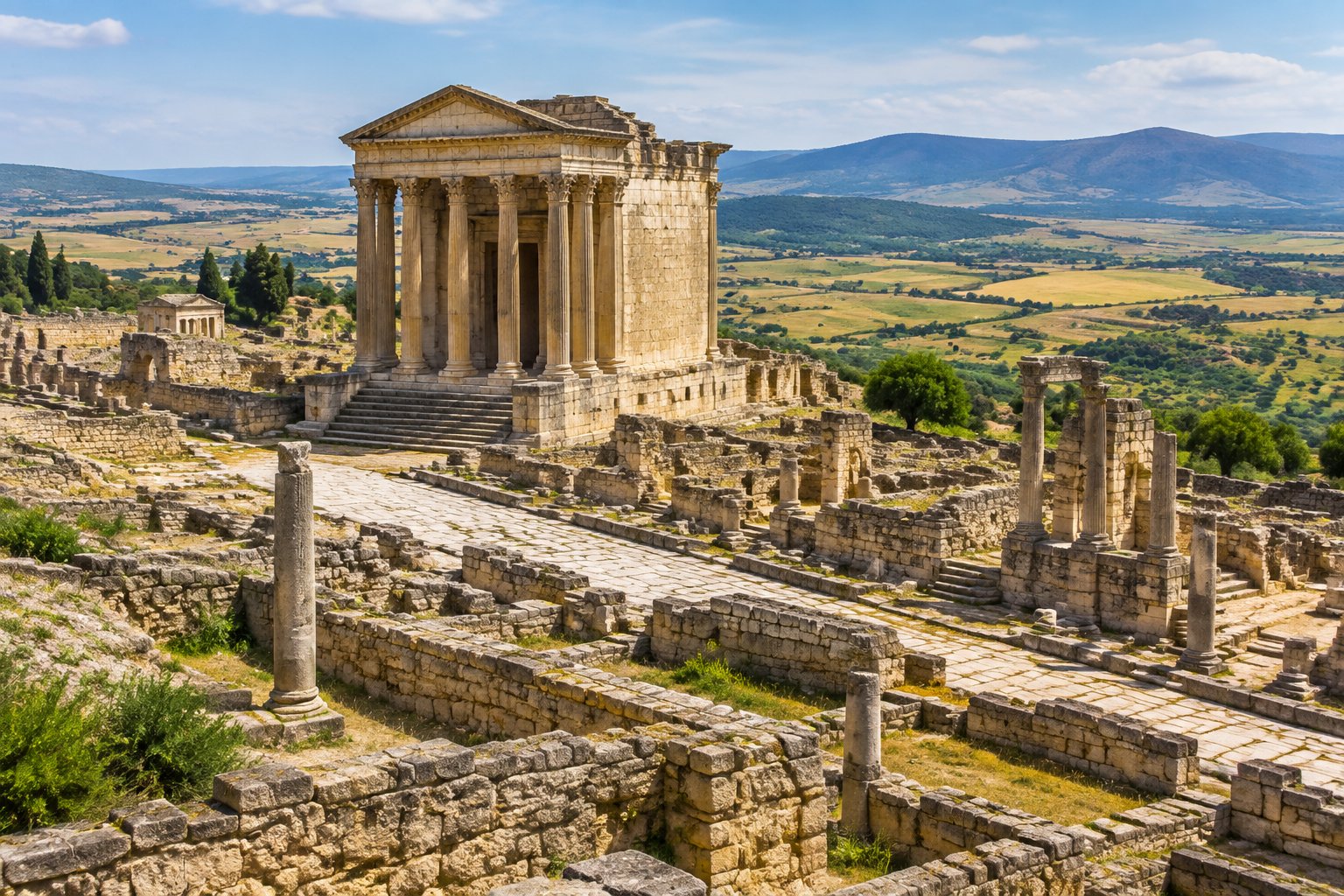
The Theatre, Temples, and Nearby Bulla Regia
At Dougga, visit the theatre and Capitol, then follow the old streets past temples and other remains. The site’s buildings reflect Numidian and Roman influences across a long period of settlement.
UNESCO describes Dougga as a well-preserved ancient city covering about 75 hectares. If you have time for another stop, Bulla Regia adds a different view of the archaeological sites in Tunisia; its underground villas and Roman mosaics are a notable contrast to Dougga’s hillside layout.
The Sahara: Oases and Desert Adventures
The Tunisian Sahara offers a change from the coast, with dunes, salt flats, and mountain oases shaping the journey. Experiencing the Sahara Desert allows you to explore rolling sand dunes and dramatic valleys. Tozeur and Douz are useful bases for guided desert outings.
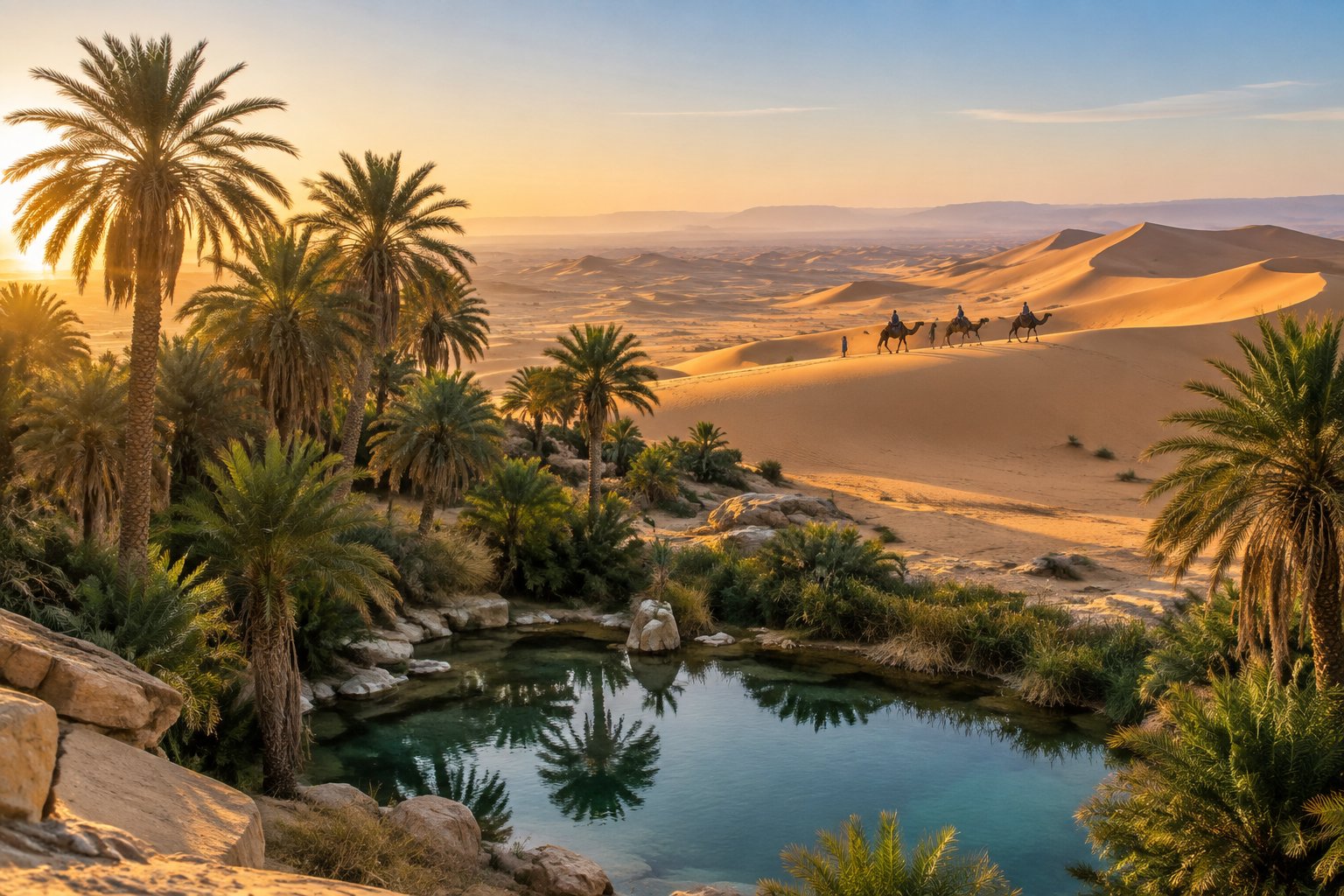
Douz, Tozeur, and the Mountain Oases
Douz is a gateway to the Sahara Desert, while Tozeur gives you access to palm groves and the salt lake landscape. Nearby Chott El Jerid is an expansive salt lake where mirages shimmer across white crusts.
From Tozeur, excursions take you toward Chebika, Tamerza, and Mides. A visit to Chebika Oasis reveals crystal-clear springs and rocky gorges that differ sharply from the open dunes.
In nearby Tamerza, you can view scenic mountain waterfalls and ruins of an abandoned old village. Walking trails around Chebika Oasis and Tamerza showcase some of the country’s most striking geological formations.
Choose a licensed guide for remote routes and plan transport in advance. Desert conditions and long distances call for water, sun protection, and a reliable way to stay in contact; cell reception can be limited in remote areas.
Matmata and Tatouine: Troglodyte Homes and Desert Ksour
Matmata and Tatouine reveal southern Tunisia’s earthen architecture and fortified ksour. You can see homes carved into the ground in Matmata and explore historic granaries around Tatouine.
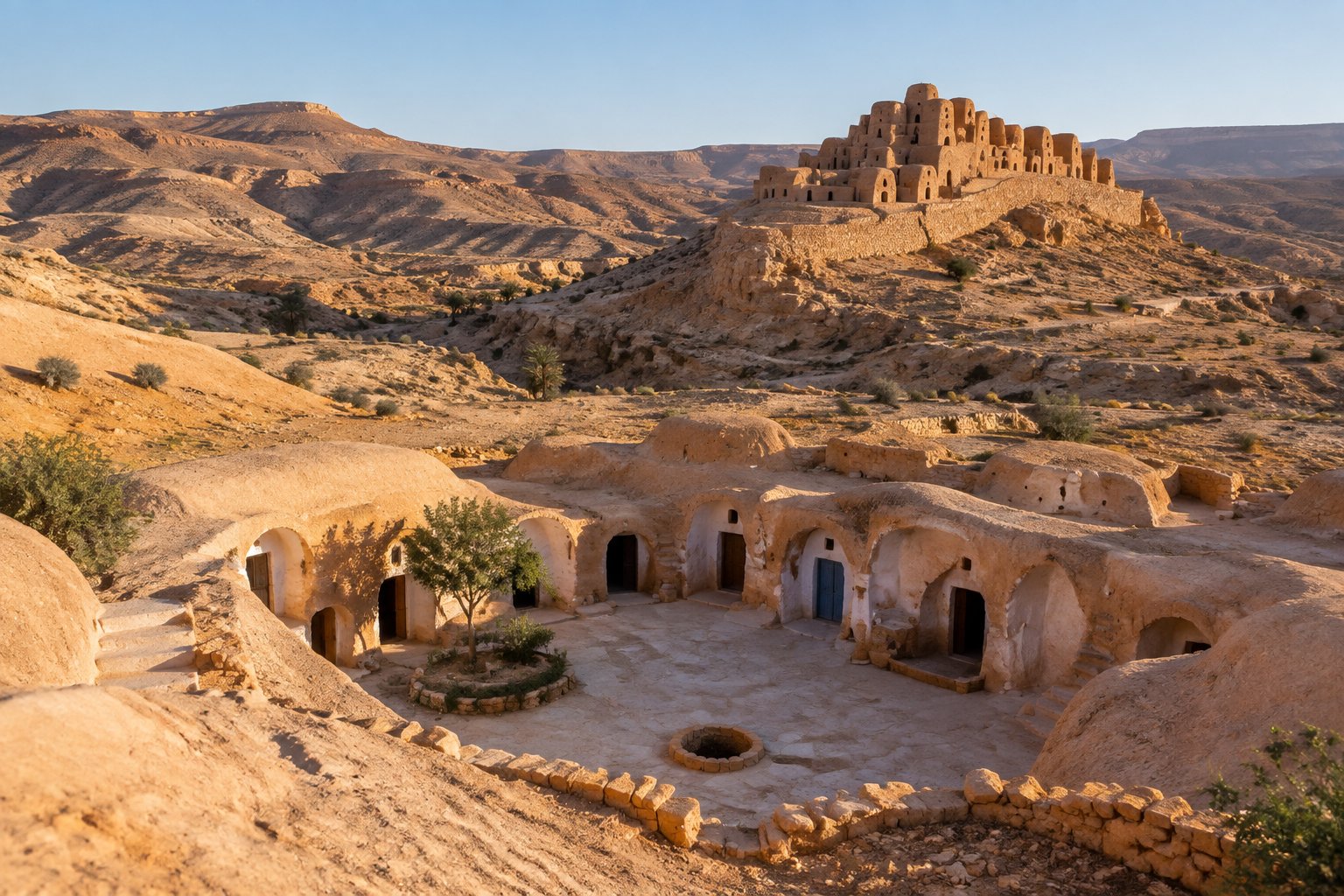
Ksar Ouled Soltane and the Southern Ksour
Ksar Ouled Soltane is known for its tiers of storage cells arranged around courtyards. Walk through the structure with care and respect any areas that are closed or marked off.
Ksar Beni Barka and other southern ksour offer more examples of fortified storage architecture. In Matmata, a stay in a troglodyte hotel gives you a direct experience of underground rooms carved into the earth.
Djerba: Island Beaches and Living Heritage
Djerba Island combines sunny shores with a distinct cultural landscape. Houmt Souk, Djerbahood, and El Ghriba Synagogue give you three strong reasons to leave the resort strip and explore.
Houmt Souk, Djerbahood, and El Ghriba Synagogue
Start in Houmt Souk, where the covered souks, seaside kasbah, and harbor offer a lively view of island life. Touring Djerba Island also brings you to Erriadh, where Djerbahood turns village lanes into an open-air display of murals.
El Ghriba Synagogue is a place of worship, so dress modestly and follow local guidance on entry and photography. Pair a visit with time for the island’s craft villages or Mediterranean beaches, and choose a licensed taxi or arranged transport for getting around.
Choose a Route That Matches Your Travel Style
A focused route helps you make the most of Tunisia travel without spending the trip in transit. Connecting these highlights lets you explore the best places to visit in Tunisia at a comfortable pace. For a first visit, base yourself in Tunis and add Carthage, Sidi Bou Said, and one inland heritage stop.
If ancient history is your priority, connect Kairouan, El Jem, and Dougga with enough time for long drives and site visits. For a beach holiday, choose Sousse, Hammamet, or Djerba; for desert scenery, journey into the Sahara Desert around Tozeur and Douz. Keep Tunisian dinar in cash for small purchases and local transport.
Pair Tunisia’s Heritage With a Stay You’ll Remember
Choose stays that fit the landscape you want to explore, from a medina guesthouse to an island resort or desert retreat. In Tunis, Dar El Jeld Hotel & Spa sits in the medina and offers a rooftop overlooking the old city. In Tozeur, Dar Tozeur has courtyards and a roof terrace with views toward the palm grove and Chott El Jerid.
For a desert-focused stay, The Mora Sahara Tozeur offers accommodation near the region’s salt lake and trips to Chebika Oasis. On Djerba, a beachfront hotel gives you time to enjoy the coast between cultural visits; the island’s historic towns and villages make a worthwhile counterpoint to resort days.
Frequently Asked Questions
What are the top 10 places to visit in Tunisia?
The top ten are Tunis, Carthage, Sidi Bou Said, Kairouan, Sousse and the coast, El Jem, Dougga, the Sahara, Matmata and Tatouine, and Djerba. Recognized among the best places to visit in Tunisia, they cover major historic sites, coastal towns, and desert landscapes.
Which part of Tunisia is best for a first-time visit?
Start in the Tunis area, where you can explore the capital, Carthage, and Sidi Bou Said with short transfers between them. Add one inland destination such as Kairouan or El Jem if you have extra days.
What is the best place in Tunisia for a beach holiday?
Djerba suits a classic island beach stay, while Hammamet and Sousse offer mainland resorts with historic centers nearby. Choose your base by the mix of beach time and sightseeing you want.
Where should couples stay in Tunisia?
For a city break, choose a boutique stay in the Tunis medina; for a coastal escape, look at Hammamet or Djerba. A desert stay near Tozeur gives you a different setting, with oasis and salt-lake excursions close by.
What is the hottest place in Tunisia?
The south, including the Tunisian Sahara around Douz and Tozeur, has the country’s most intense desert heat. Plan outdoor visits for early morning or late afternoon, and carry water and sun protection.
Comments