Pick the right base in Germany, and your favorite sights are just a short morning walk away. Sleep too far from the action, and you will waste hours riding regional trains.
This Germany travel guide highlights ten top destinations across the country, from Berlin's layered streets to the sandstone cliffs south of Dresden. Each spot pairs standout attractions with a practical place to stay.
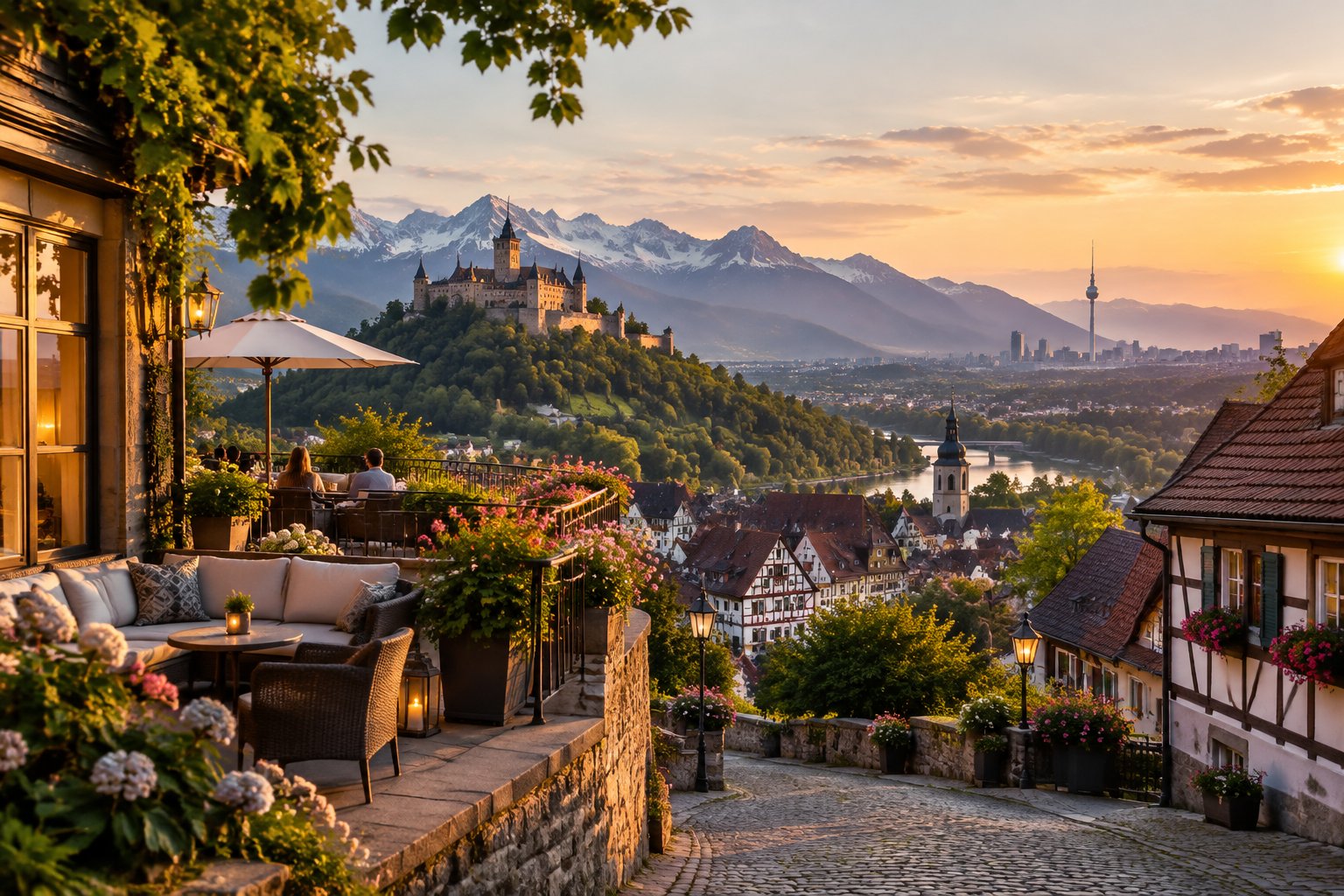
Germany runs on an efficient rail network. You can reach Gothic cathedrals, Alpine lakes, Baroque palaces, and Cold War landmarks without renting a car.
These ten picks stand out among the best places to visit in Germany. Each one combines major attractions with walkable lodging so you can explore without the rush.
Key Takeaways
- Ten German hotspots pair major sights with vetted, centrally located lodging.
- Staying overnight in castle towns, river valleys, and mountain villages beats rushing through on day trips.
- Rooms near ticket gates, trailheads, and rail hubs save hours of travel time.
Berlin: Landmark History and Creative Neighborhoods
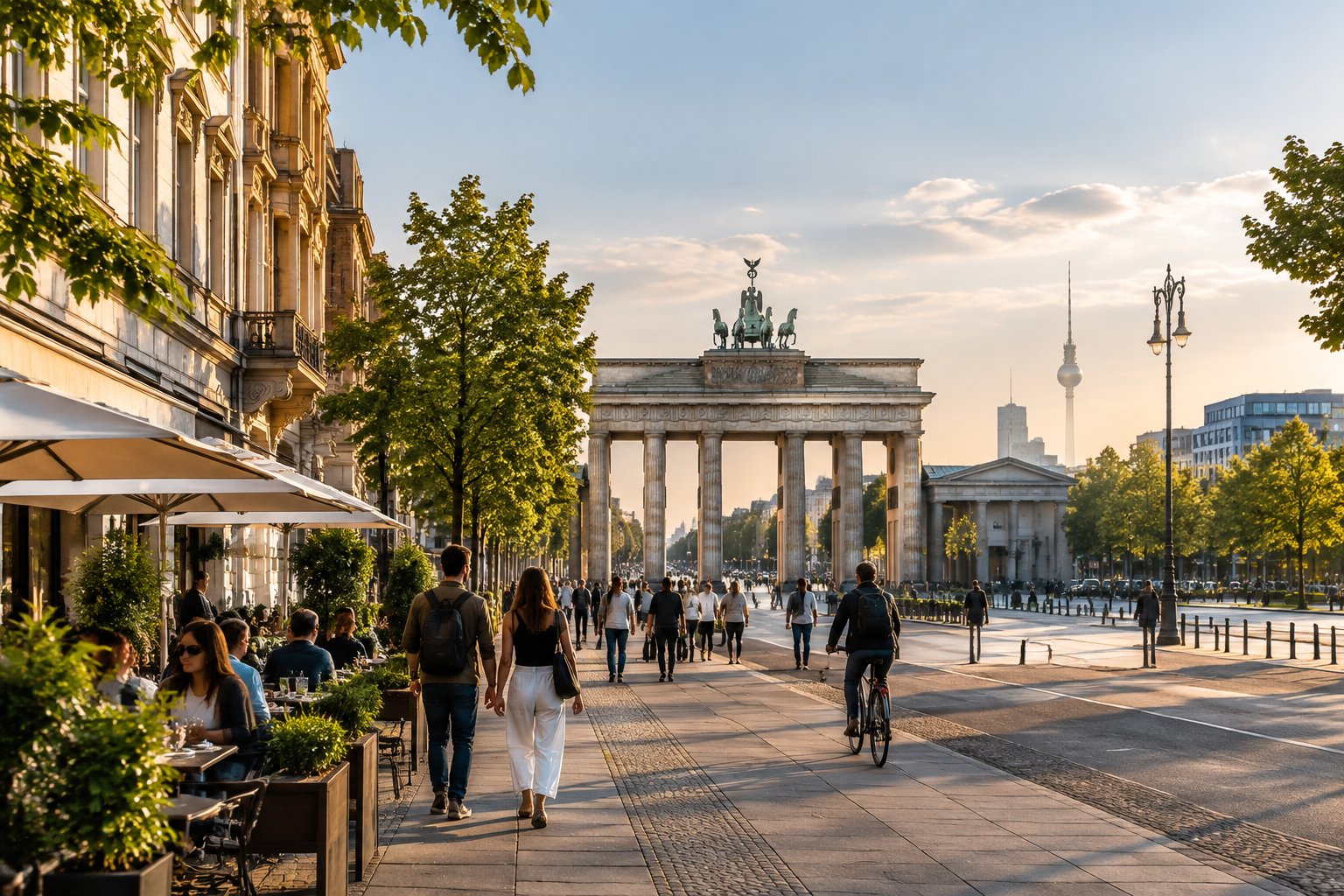
Berlin rewards anyone who gives it three or four full days. You can easily bounce between monumental twentieth-century history and lively arts hubs in former industrial quarters.
What Should You See in Berlin?
Start at the Brandenburg Gate, the city's iconic eighteenth-century landmark. From there, walk north to the Reichstag Building.
You can tour the Reichstag's glass dome for free with an advance reservation. Note that the dome closes briefly for maintenance on select dates in late September and October 2026, according to the German Bundestag's visitor information.
Museum Island clusters five world-class collections along the Spree River. Farther east, the open-air East Side Gallery preserves colorful murals directly on remaining slabs of the Berlin Wall.
At the Berlin Wall Memorial on Bernauer Strasse, preserved border strips show the harsh reality of a divided city. Walking the grounds of the Berlin Wall Memorial provides a sobering look at original guard towers and border installations.
South of Unter den Linden, Checkpoint Charlie marks where American and Soviet tanks once faced off. Stopping at Checkpoint Charlie gives visitors a direct connection to Cold War history.
If you have extra time, take the S-Bahn to Potsdam to tour Sanssouci Palace, the summer home of Frederick the Great. A day trip to Potsdam also reveals quaint Dutch quarters and historic lakeside palaces.
3 Absolute Highlights
- The Reichstag dome's panoramic view of the government district
- Museum Island's historic halls, including the Pergamon Museum
- The murals along the East Side Gallery
Where Should You Stay in Berlin?
Book a room in Mitte or near Museum Island. That keeps the Brandenburg Gate, transit hubs, and key museums within easy walking distance.
Strolling past the illuminated Brandenburg Gate at night provides a magical view without daytime crowds.
Check rates on Booking.com or Expedia before finalizing your travel dates.
Munich: Bavarian Culture and Easy City Stays
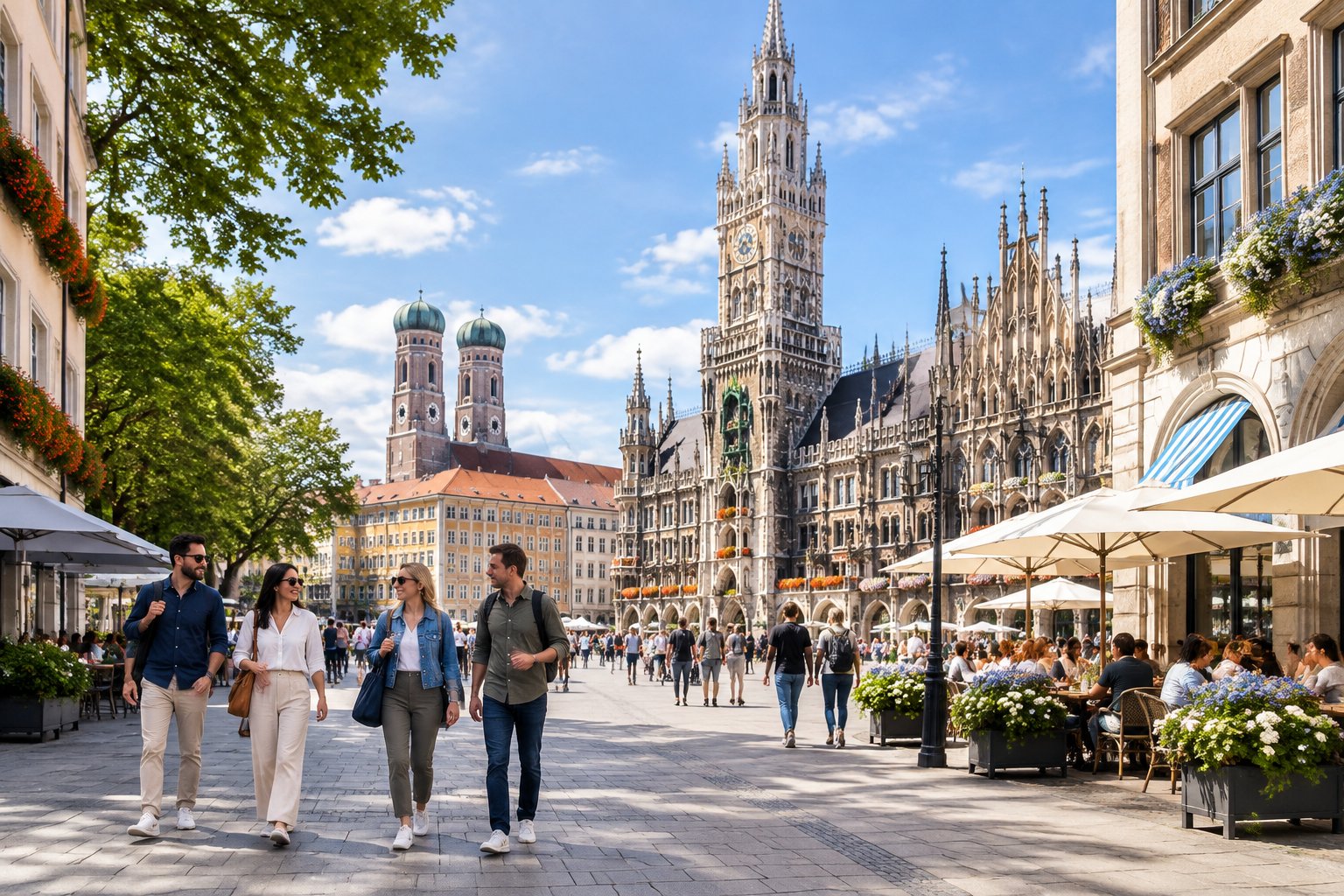
As the capital of Bavaria, Munich serves as a walkable base for exploring regional culture and taking day trips south toward the Alps. The Old Town packs its core attractions into a small, pedestrian-friendly footprint.
What Makes Munich Worth Visiting?
Marienplatz centers the city. Crowds gather daily to watch the historic Glockenspiel chime from the New Town Hall facade, according to Trip.com's roundup of top Munich attractions.
A short walk brings you to the English Garden, an urban park larger than New York's Central Park. Here, surfers ride a permanent river wave year-round, while paths wind past beer gardens around the Chinese Tower.
Spending a sunny afternoon in the English Garden lets you enjoy Munich's relaxed outdoor lifestyle alongside locals.
The Deutsches Museum showcases vast collections of science and engineering. Adult day tickets run €16, and the museum opens daily from 9:00 a.m. to 5:00 p.m., per the Deutsches Museum's admission page.
Sample street foods at the outdoor Viktualienmarkt, which has traded since 1807. Afterwards, grab a table under the painted ceilings of the Hofbräuhaus, pouring beer since 1589.
The historic Hofbräuhaus serves classic regional dishes and steins of beer accompanied by traditional brass band music.
In autumn, visitors gather for Oktoberfest, filling festival tents with folk music and Bavarian cheer. Even outside of Oktoberfest season, Munich's beer halls keep that lively tradition going year-round.
Regional trains run direct day trips north to Nuremberg, Bamberg, and Regensburg, or west to historic Augsburg. A side trip to Bamberg features scenic canal houses, while Regensburg delights visitors with medieval stone architecture.
Inside the city, you can tour the Baroque rooms of Nymphenburg Palace or check out vintage cars at the BMW Museum.
3 Absolute Highlights
- Marienplatz and the Glockenspiel chimes
- The Deutsches Museum's aerospace and engineering halls
- Viktualienmarkt's market stalls and beer garden
Where Should You Stay in Munich?
Motel One München-Sendlinger Tor sits inside the Old Town. It puts you a ten-minute walk from both Munich Central Station and Marienplatz.
The hotel earns a 9.5 location rating from over 1,200 reviews on its Booking.com listing, while guests give it 9.6 out of 10 on Motel One's official site.
Neuschwanstein and the Romantic Road: Castles and Medieval Towns
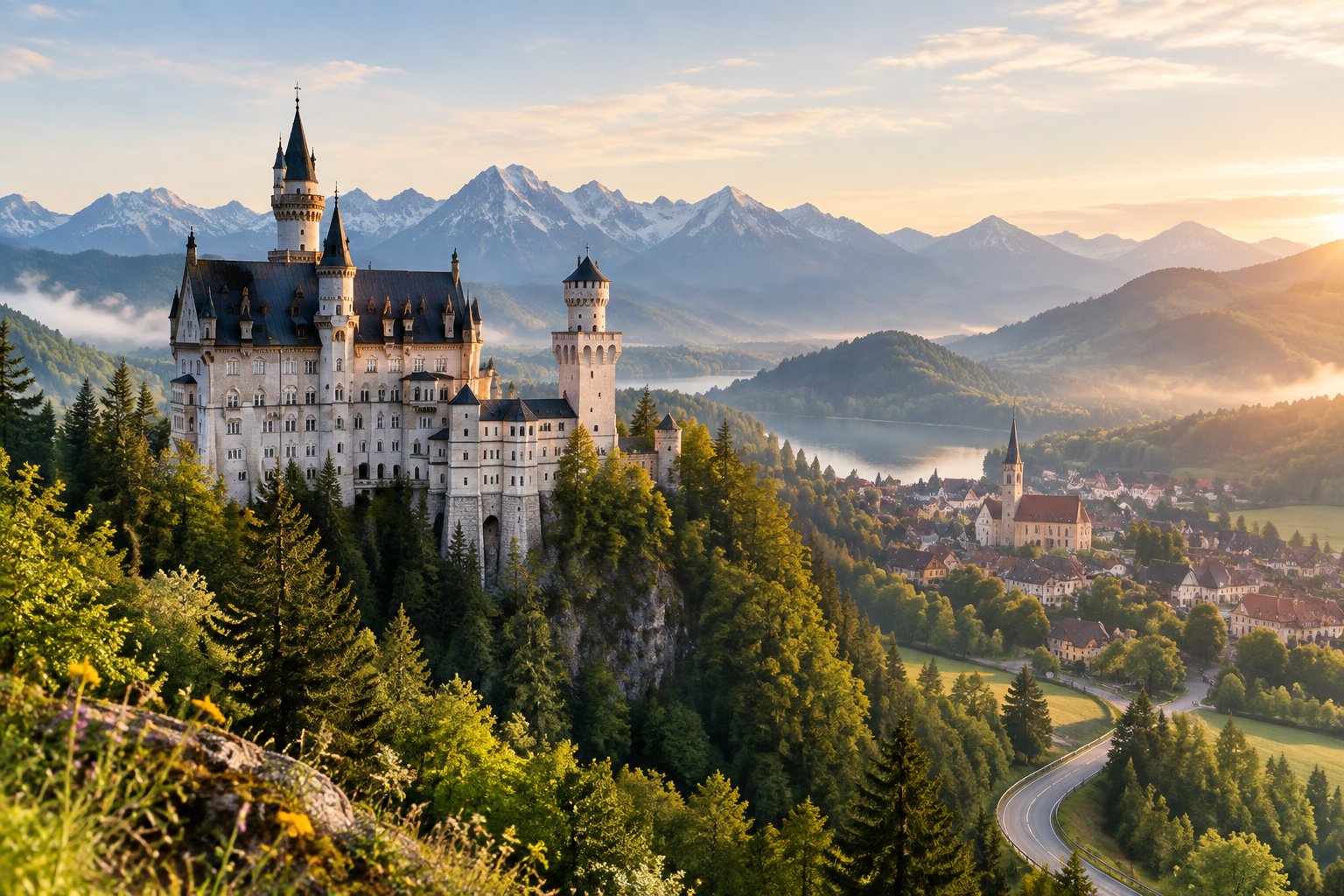
The Romantic Road links storybook towns across Bavaria, from Würzburg down through the rolling Allgäu to the Bavarian Alps. While driving the whole scenic route takes several days, an overnight stay near Schwangau lets you beat the tour buses to Germany's most famous castle.
Which Castles and Towns Are the Highlights?
Neuschwanstein Castle towers over Hohenschwangau near Füssen. You can only tour the interior on a timed guided visit, and tickets often sell out weeks ahead.
Reserve slots directly through the official ticket portal. Down in the valley, Hohenschwangau Castle was the childhood home of King Ludwig II and sits an easy walk from the trailhead.
North along the route, Rothenburg ob der Tauber features intact medieval ramparts. In Würzburg, the UNESCO-listed Residenz palace displays grand Baroque fresco ceilings.
3 Absolute Highlights
- A guided tour through Neuschwanstein Castle
- Rothenburg ob der Tauber's walkable town walls
- The Würzburg Residence palace grounds
Where Should You Stay along the Romantic Road?
Sleeping in Schwangau or Hohenschwangau places you steps from ticket queues before day-trippers arrive from Munich.
Hotel Müller sits right between both castles, roughly 35 minutes on foot from Neuschwanstein. It holds a 9.8 location score from over 1,500 reviews on Booking.com, with carriage departures right out front.
Staying in nearby Füssen provides another practical option, offering picturesque streets, family-run guesthouses, and quick bus rides to the castles.
The Black Forest: Waterfalls, Spa Towns, and Woodland Trails
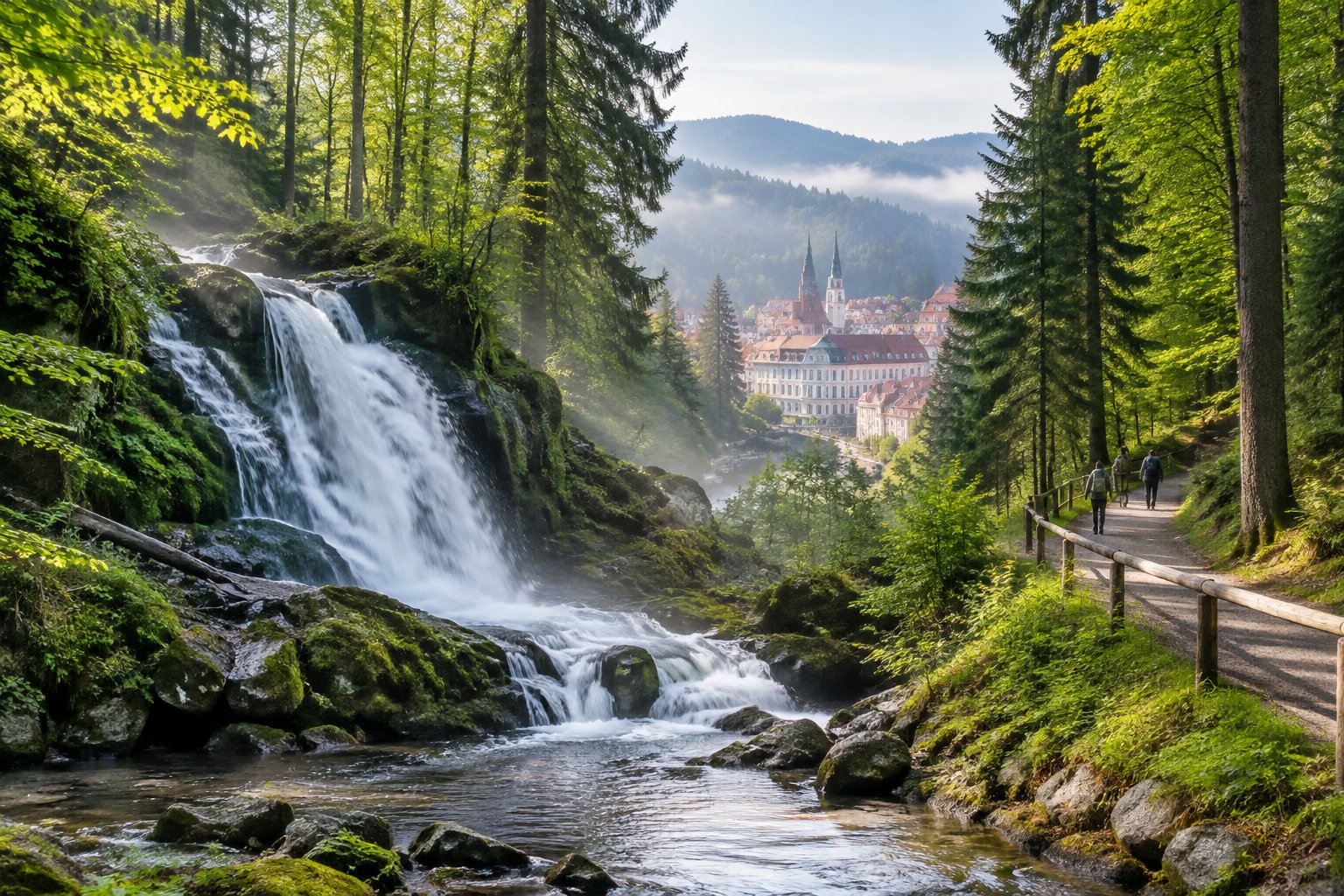
The Black Forest spans more than 2,000 square miles of dense evergreens, quiet valleys, and mineral baths in southwest Germany. It takes top honors on U.S. News Travel's Best Places to Visit in Germany.
Where Are the Black Forest's Best Stops?
The Triberg Waterfalls plunge 163 meters across seven cascades along the Gutach River, according to the Triberg tourism site. The trail stays open daily and features nighttime floodlights until 10:00 p.m.
Baden-Baden anchors the northern hills with grand thermal bathhouses like Caracalla and Friedrichsbad. Strolling through Baden-Baden reveals elegant Belle Époque architecture, manicured parklands, and casino history.
To the south, Lake Titisee offers quiet boat rides and lakeside loop trails.
Freiburg serves as an ideal regional gateway, featuring a red-sandstone cathedral, sunny squares, and fast rail links.
3 Absolute Highlights
- Triberg Waterfalls illuminated after dark
- Thermal soaking pools in Baden-Baden
- Quiet woodland hiking loops around Lake Titisee
Which Black Forest Town Makes the Best Base?
Triberg puts hiking trails and the cascades right outside your door.
Family-run Hotel Café Adler sits within walking distance of the falls and bakes traditional Black Forest cherry tortes, according to the hotel's official site. Accommodations across Triberg average an 8.5 guest score on Booking.com.
The Rhine and Moselle Valleys: Castles, Wine, and River Views
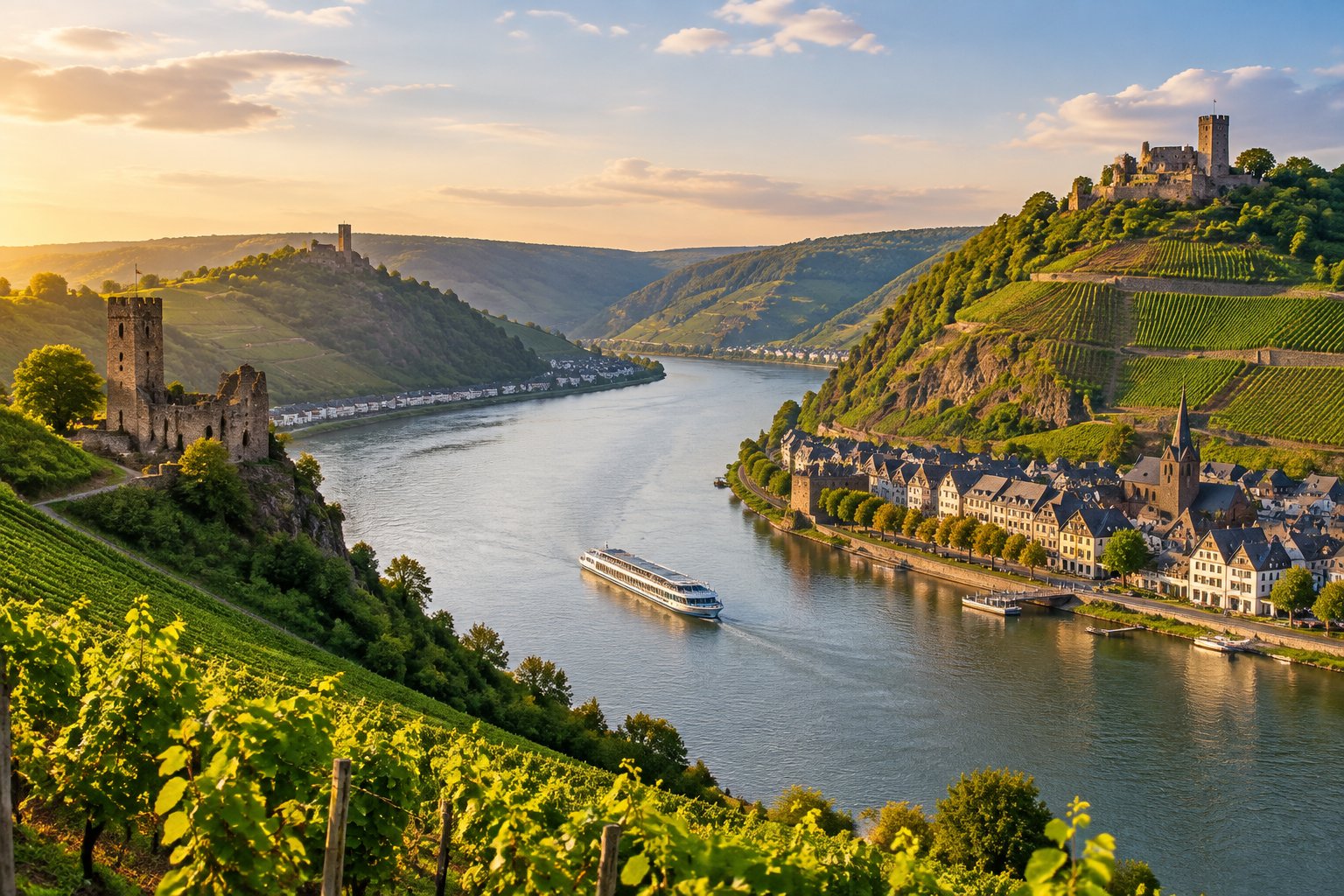
Terraced Riesling vineyards rise sharply above the Rhine and Moselle rivers, framed by ruined medieval fortresses. This UNESCO World Heritage corridor in the Upper Middle Rhine Valley suits anyone who prefers a relaxed pace by ferry, train, or bike.
A cruise through the romantic Rhine Valley reveals storybook castles atop nearly every forested bend.
Exploring the Upper Middle Rhine Valley lets you hop between historic castle ruins, riverfront promenades, and local tasting rooms.
What Should You See along the Rivers?
Marksburg Castle stands near Braubach as the only hilltop fortress on the Middle Rhine that escaped wartime destruction. Along the quieter Moselle, Burg Eltz hides inside a forested valley and retains its original medieval furnishings.
Farther up the Moselle, Trier preserves the Porta Nigra, an imposing Roman city gate dating to 170 AD.
Scenic passenger boats run throughout the year. The winter timetable between Rüdesheim and St. Goarshausen operates from October 19, 2026 through April 2, 2027, according to Köln-Düsseldorfer's schedule.
3 Absolute Highlights
- Marksburg Castle's preserved medieval armory and ramparts
- Burg Eltz surrounded by Moselle woodland
- Trier's ancient Roman Porta Nigra
Where Should You Stay for Castles and Cruises?
Boppard provides an ideal base right along the scenic river bend, perfect for exploring the wider Rhine Valley. Rheinhotel Lilie borders the river promenade two minutes from the historic center, holding a 9.4 location rating on Booking.com.
Nearby, the Belle Époque Bellevue Rheinhotel has hosted guests since 1887 with waterfront balconies, per the hotel's website.
Hamburg: Waterfront Architecture and Hanseatic Charm
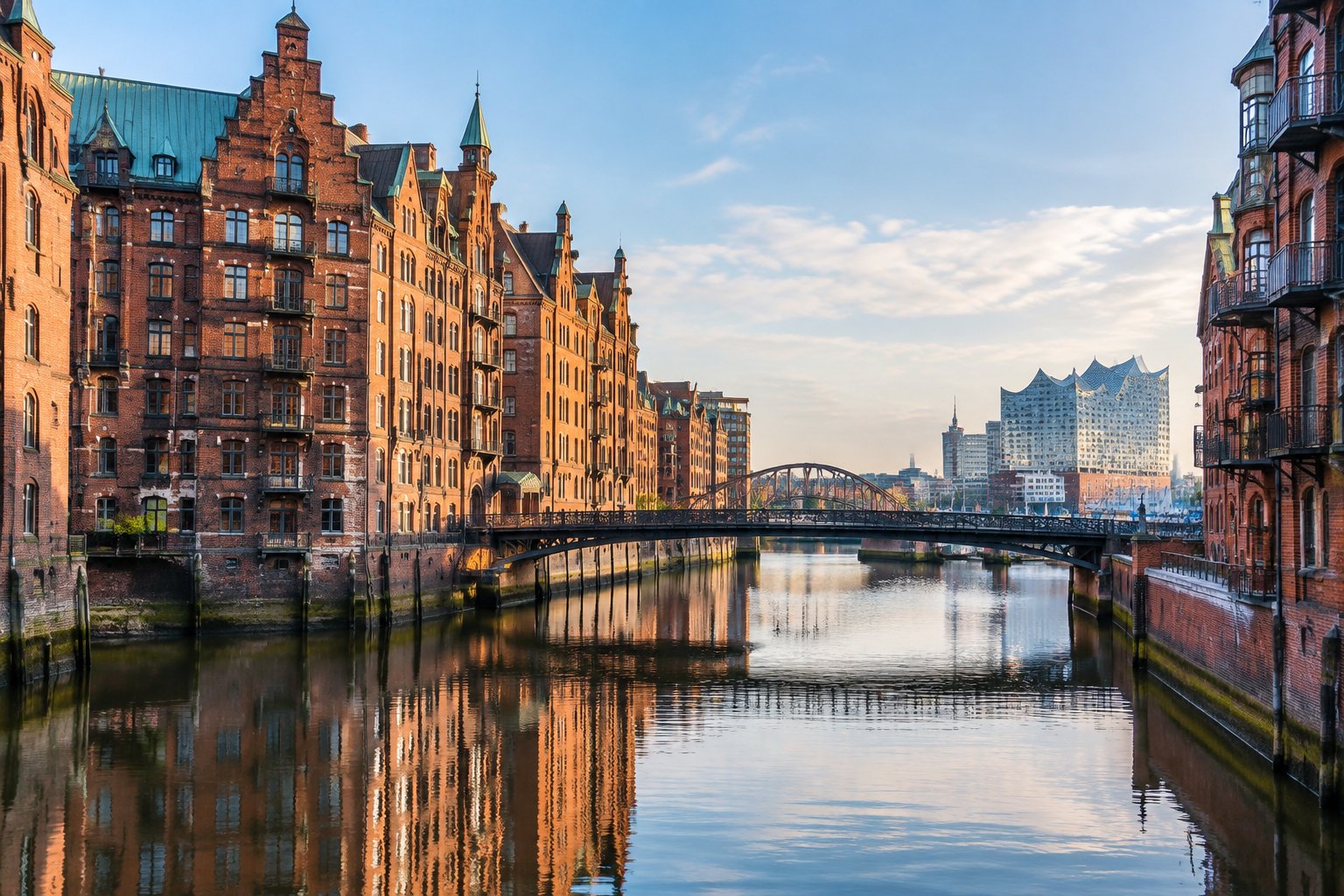
Hamburg balances centuries of shipping heritage with modern glass architecture across a busy port. You can explore historic warehouse canals and contemporary harbor piers over two or three days.
What Are Hamburg's Standout Sights?
The Elbphilharmonie concert hall anchors HafenCity. Its outdoor Plaza terrace sits 37 meters high, welcoming thousands of daily visitors for harbor views, according to the Elbphilharmonie visitor page. Standard Plaza tickets cost €5 (€3 reduced).
Strolling through HafenCity gives travelers a look at innovative harbor architecture alongside waterfront promenades and cafes.
Just inland, the red-brick Speicherstadt forms the world's largest integrated warehouse complex. A walking tour across the bridges of Speicherstadt showcases striking neo-Gothic canal warehouses.
Inside one historic warehouse, Miniatur Wunderland runs thousands of scale trains through intricate miniature landscapes. Reserving timed tickets for Miniatur Wunderland in advance is essential due to high demand.
For lively nightlife, head toward the Reeperbahn in St. Pauli. Legendary clubs, historic music venues, and neon-lit bars along the Reeperbahn keep the district buzzing after dark.
You can also take a 45-minute train ride to Lübeck to tour Gothic brick city gates.
A day trip to Lübeck lets you wander preserved merchant streets famous for traditional marzipan confectioneries.
3 Absolute Highlights
- The 360-degree harbor panorama from the Elbphilharmonie Plaza
- Canal walks through the brick-lined Speicherstadt
- The interactive model networks inside Miniatur Wunderland
Where Should You Stay in Hamburg?
Hotel Hafen Hamburg sits on the hillside above St. Pauli's landing bridges, steps from the port and metro lines.
The hotel brings over forty years of hospitality and holds a 4.4 rating from 7,400 reviews, per the property's official site.
Cologne: Gothic Grandeur on the Rhine
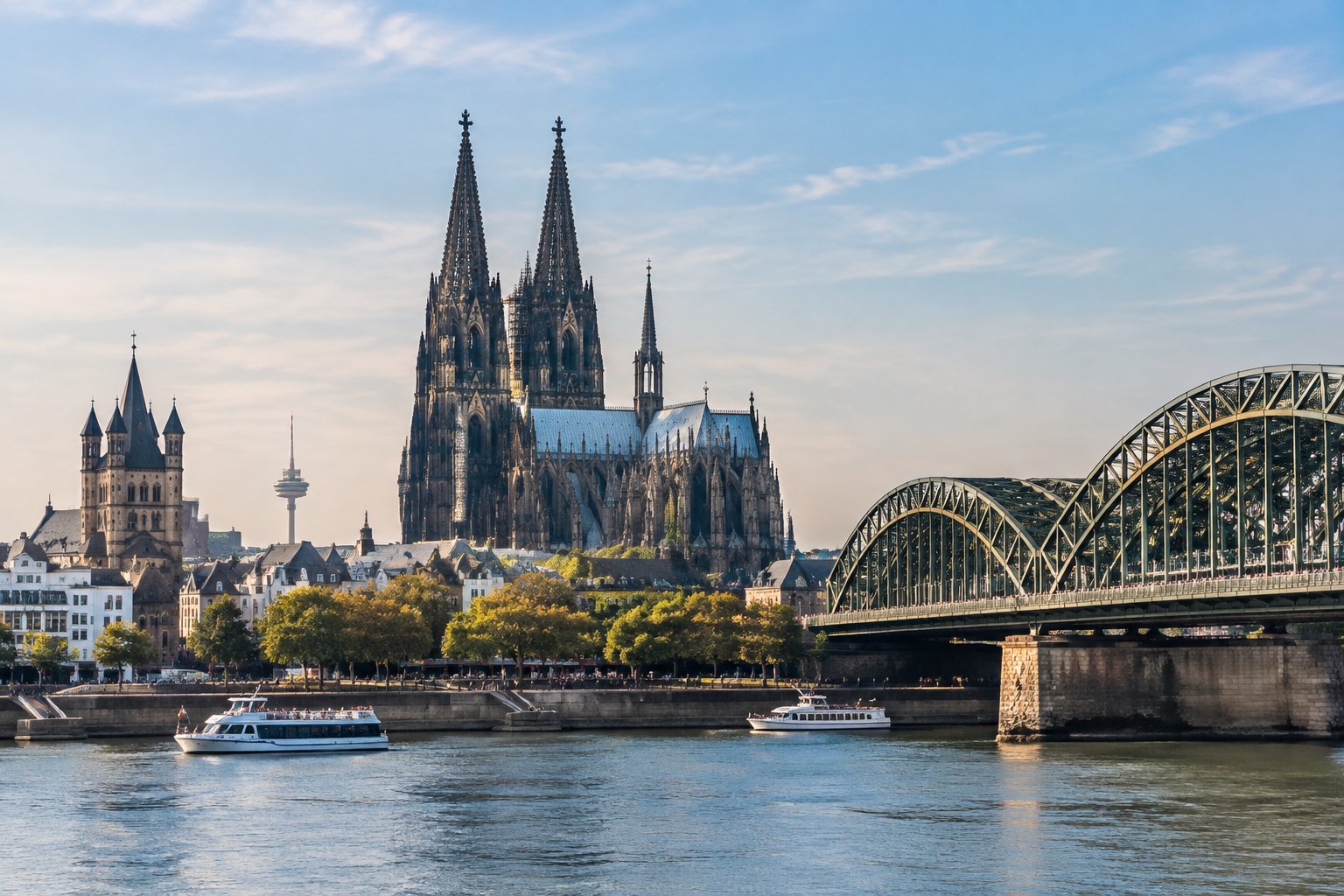
Cologne Cathedral rises right outside the central train station, dominating the city skyline. The surrounding streets let you explore Roman roots, quiet plazas, and river paths on foot.
What Can You See beyond Cologne Cathedral?
The twin spires of Cologne Cathedral soar over 157 meters high. The cathedral opens daily from 6:00 a.m. to 8:00 p.m., while tourist visits follow designated daytime hours, according to Cologne Cathedral's official site.
Expect a small ticket fee for general interior tourist visits in 2026. If you have the energy, climb the 533 stone steps up the South Tower for sweeping views of the Rhine River.
Next door, the Romano-Germanic Museum showcases Roman mosaics and artifacts. Visiting the Romano-Germanic Museum reveals Cologne's ancient foundation as an imperial Roman settlement.
Down along the riverbank, the Chocolate Museum walks visitors through centuries of cocoa production.
3 Absolute Highlights
- The Gothic interior and South Tower climb at Cologne Cathedral
- Ancient Roman artifacts at the Romano-Germanic Museum
- Interactive tastings at the Chocolate Museum
Where Should You Stay in Cologne?
Hotel Mondial am Dom Cologne MGallery sits in the historic district right behind the cathedral. Many rooms look out at the Gothic spires.
The property holds a 9.8 location score from over 3,600 reviews on Booking.com and sits a three-minute walk from the main rail concourse, per the official Accor listing.
The Bavarian Alps: Peaks, Lakes, and Mountain Villages
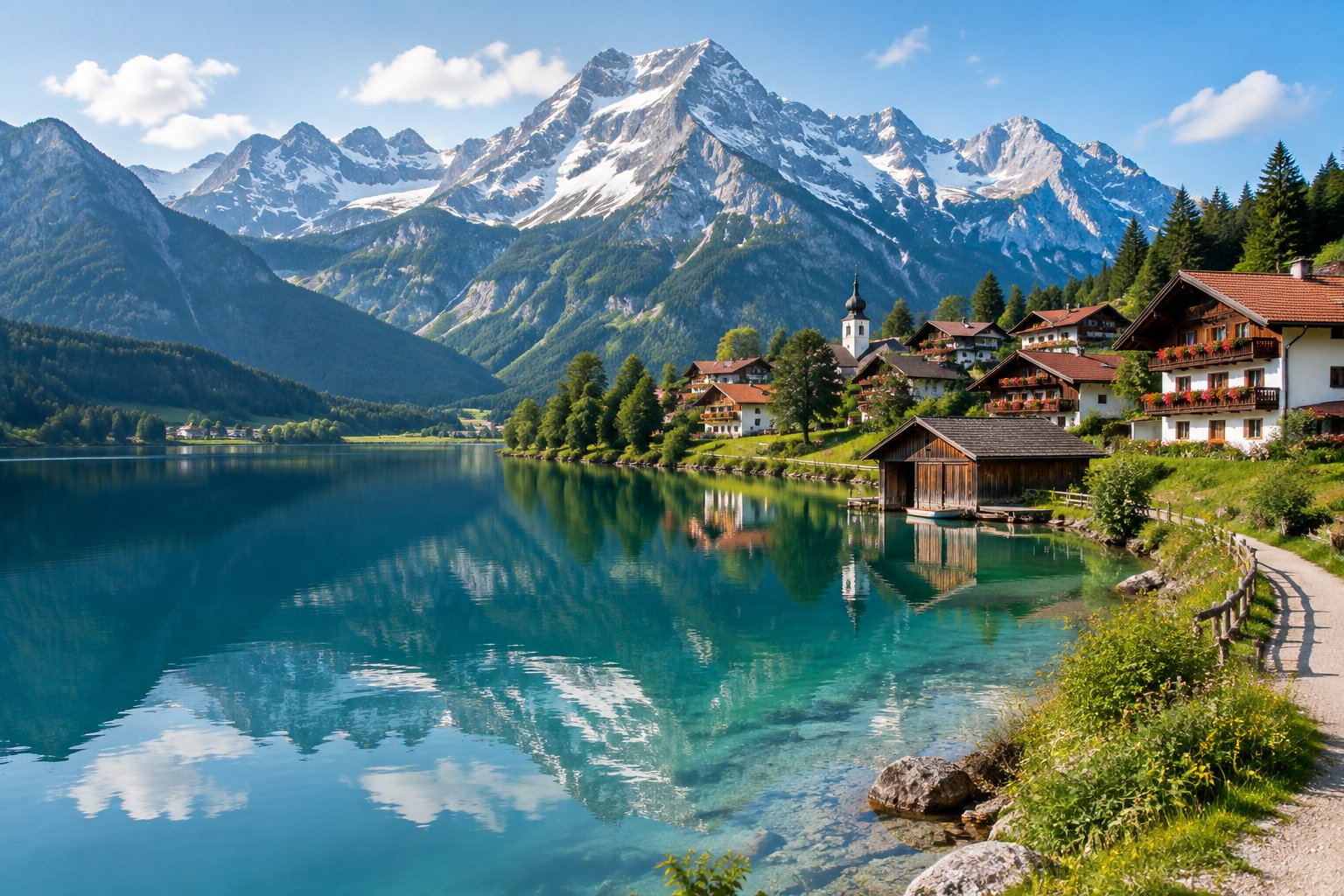
Nestled across southern Bavaria, the Bavarian Alps offer Germany's highest peaks, glacial lakes, and traditional mountain hamlets. Garmisch-Partenkirchen and Berchtesgaden anchor the best alpine outdoor routes.
Which Alpine Experiences Are Worth the Trip?
Garmisch-Partenkirchen sits beneath the 2,962-meter Zugspitze, Germany's highest peak. A round-trip ticket for the cable car and cogwheel train costs €78 for adults, valid through November 22, 2026, according to the Zugspitze ticket page.
Check the Zugspitze timetable beforehand, as lifts close briefly in November 2026 for scheduled cable inspections.
Further east near the Austrian border, Berchtesgaden National Park cradles Lake Königssee. Electric passenger boats glide across crystal waters flanked by sheer rock faces toward the red onion domes of St. Bartholomä church.
3 Absolute Highlights
- Riding the cable car to the Zugspitze summit
- Electric boat tours across Lake Königssee
- Alpine hikes through Berchtesgaden National Park
Where Should You Stay for Mountain Access?
Hotel Zugspitze in central Garmisch-Partenkirchen offers a 1,000-square-meter spa area with mountain views.
The hotel holds a 9.2 rating and a 9.6 location score on Booking.com, along with a Michelin-recommended dining room, per the hotel's site.
Dresden and Saxon Switzerland: Baroque Sights and Sandstone Peaks
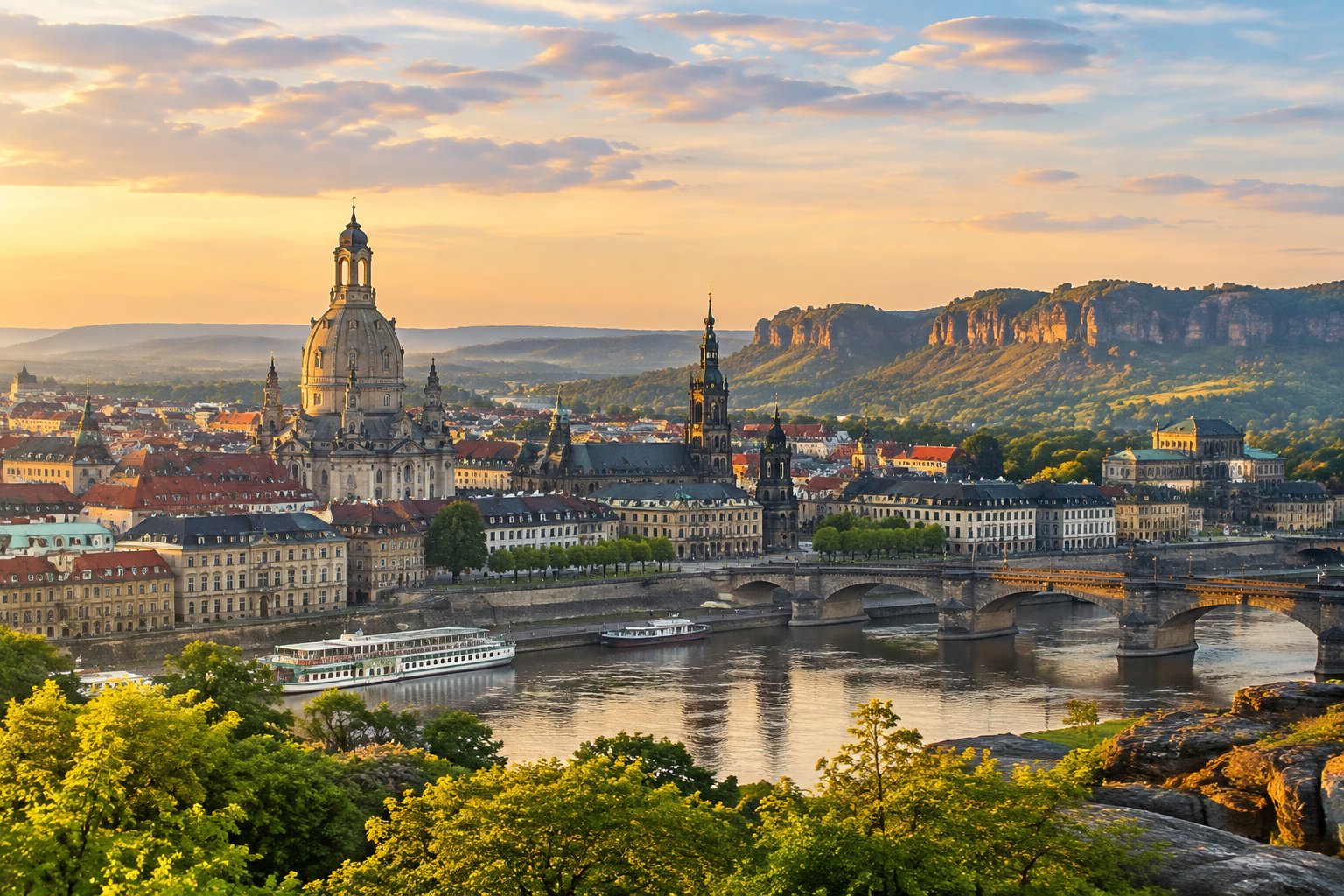
Dresden pairs restored Baroque landmarks with dramatic sandstone formations less than an hour away. You can spend one day admiring grand architecture and the next hiking rocky gorges.
What Should You See in Dresden and the Park?
The rebuilt Frauenkirche anchors Dresden's historic square beside the Zwinger Palace, a complex of Baroque pavilions and art galleries.
A stroll through the Zwinger Palace reveals manicured courtyard gardens, elegant fountains, and world-class Old Masters paintings.
S-Bahn trains run south into Saxon Switzerland National Park. Here, the stone Bastei Bridge arches over rocky pillars nearly 200 meters above the Elbe River.
Rail lines also connect Dresden to Leipzig in an hour if you want to explore lively music and art scenes.
3 Absolute Highlights
- The dome of the reconstructed Frauenkirche
- Art galleries inside the Baroque Zwinger
- The stone Bastei Bridge over the Elbe river valley
Where Should You Stay for City and Trail Access?
Choose a hotel in Dresden's Altstadt or near the Dresden Hauptbahnhof. This location lets you walk to city landmarks and catch direct trains into the national park.
Heidelberg: Castle Views and a Walkable Old Town
Heidelberg charms visitors with red-sandstone castle ruins rising above the Neckar River. The university town keeps things lively with independent cafés, student pubs, and scenic trails.
What Makes Heidelberg a Memorable Stop?
The Heidelberg Castle funicular climbs the hillside, offering sweeping views over the tiled roofs below, according to U.S. News Travel. Trails lead higher up to the Königstuhl summit for even broader regional views.
Cross the Old Bridge to reach the Philosopher's Walk. This sunlit hillside path winds past vineyards and gardens with castle panoramas.
Down in the Old Town, Germany's oldest university fills the streets with lively energy, keeping the city vibrant and lived-in.
Just an hour south in Stuttgart, automobile enthusiasts can spend an afternoon touring the sprawling Mercedes-Benz Museum.
Fast trains make visiting Stuttgart an easy day trip for modern architecture, urban parks, and automotive history.
3 Absolute Highlights
- Heidelberg Castle and its funicular railway
- Views from the Old Bridge over the Neckar
- The Philosopher's Walk terrace trail
Where Should You Stay in Heidelberg?
Stay inside the Old Town near the Old Bridge or the castle funicular station. You will have dinner spots, morning bakeries, and river paths right outside your door.
Choose the Stops That Fit Your Trip
Ten hotspots provide plenty of choices. Focus on the stops that fit your style rather than trying to visit every corner of the country.
City lovers should start with Berlin, Munich, Hamburg, and Cologne. Exploring these major German cities gives you a deeper look at regional culture, vibrant nightlife, and distinct architecture.
Adding rail excursions to smaller German cities like Nuremberg or Leipzig reveals distinctive local heritage and quieter squares.
Nature lovers can head south to the Black Forest and Bavarian Alps, or take a scenic detour to Lake Constance near the Swiss border. You can also cruise the Rhine and Moselle valleys for historic river panoramas.
Coastal escapes offer scenic contrasts. Along the North Sea, the vast Wadden Sea provides unique tidal mudflats beside Sylt, while the Baltic Coast features sunny shores on Usedom and Rügen Island.
Trips to the Baltic Coast also treat travelers to breezy seaside promenades and pristine white-sand dunes.
If you prefer quiet trails, consider the Harz Mountains in central Germany. Historic steam trains climb through dense forests, connecting quiet trails to the preserved timbered houses of Quedlinburg.
Trekking across the Harz Mountains offers rugged granite cliffs, mystical woodland paths, and panoramic valley views.
Following practical Germany travel tips will keep your journey smooth. Travel by train whenever possible, as Deutsche Bahn connects every major stop on this list quickly and reliably.
The nationwide Deutschlandticket covers local buses, trams, and regional trains, keeping regional side trips affordable. Planning fewer stops with more nights per city creates a far more memorable trip.
Frequently Asked Questions
What are the most popular tourist hotspots in Germany?
Berlin, Munich, the Black Forest, Cologne, and the Bavarian Alps rank consistently as Germany's most popular destinations, according to U.S. News Travel.
Neuschwanstein Castle and the Middle Rhine Valley also draw heavy crowds. Coastal getaways on Sylt and Rügen offer great seaside alternatives.
Which German city is best for a first-time visitor?
Berlin suits travelers interested in twentieth-century history, museums, and distinct creative quarters. Munich works well if you want a compact Old Town, traditional beer gardens, and quick access to the Alps.
Both German cities offer reliable rail links across the country, making either one an ideal jumping-off point.
Where should you stay for a first trip to Germany?
Pick a central, walkable district near major transit stations. In Munich, look near Sendlinger Tor; in Berlin, stay in Mitte near Museum Island.
Centering your hotel near a major rail hub cuts transfer times and makes day trips easy.
Can you visit Germany's top hotspots by train?
Yes. The Deutsche Bahn network serves every destination on this list without requiring a car.
The Deutschlandticket covers regional routes between smaller towns. Mountain summits and hillside castles require only a short local bus or cable car from the nearest rail station.
When should you book hotels for Germany in 2026?
Book several months in advance for peak periods like Oktoberfest in Munich and summer along the Rhine and Bavarian Alps.
Small towns like Schwangau and Triberg have limited rooms near top attractions, so early reservations secure the most convenient locations.
Comments