France rewards travelers who slow down. When choosing among the top places to visit in France for 2026, ten regions stand out, each with its own rhythm—from Paris galleries to Alpine trailheads, Atlantic oyster villages to lavender-scented markets across the South of France.
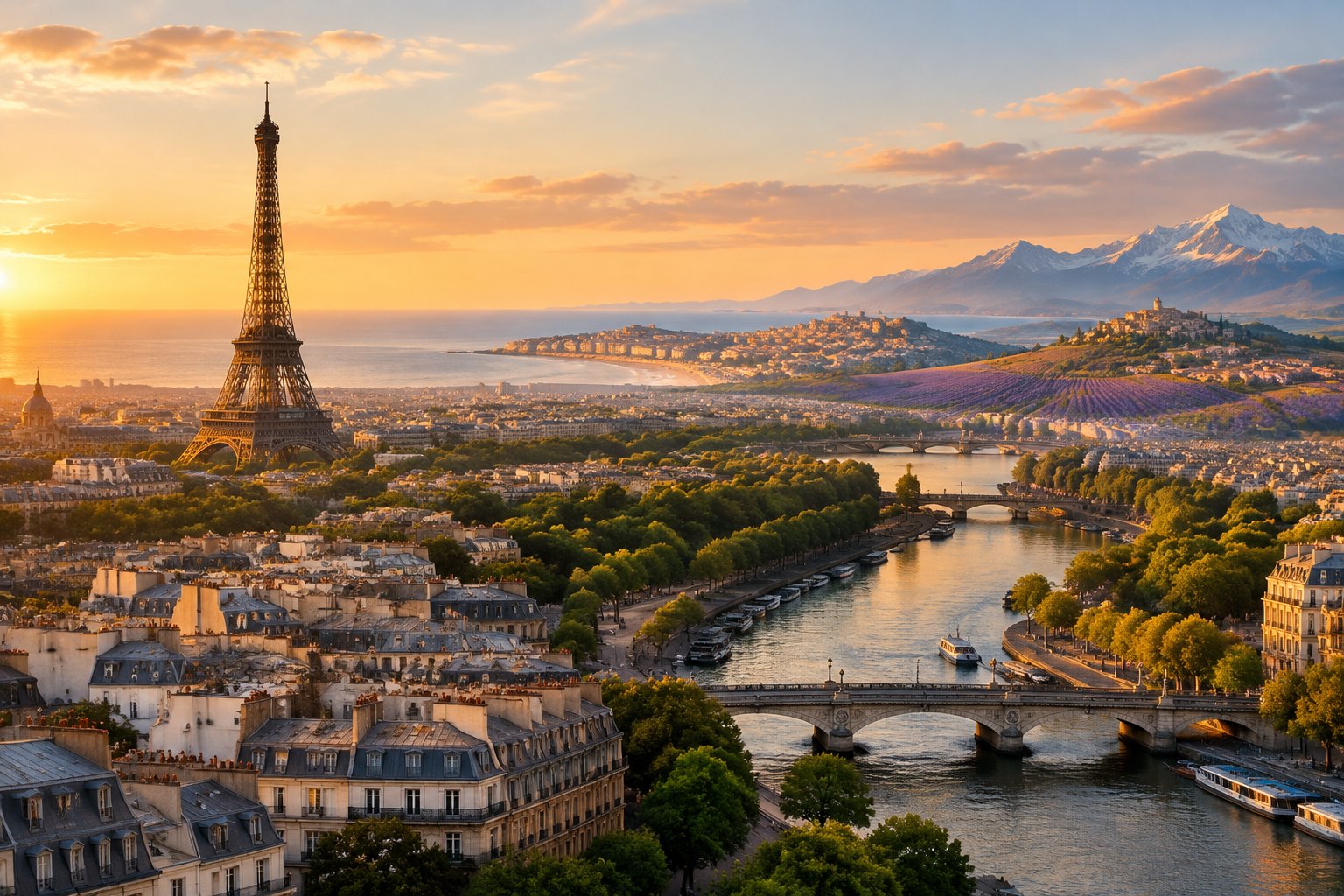
Paris anchors most France itineraries, but pairing it with the Loire Valley, Provence, or the French Riviera gives you contrast between city energy and slower regional pace. Normandy and Mont-Saint-Michel deserve separate visits rather than a single rushed day, since their histories and landscapes differ sharply. Bordeaux, Lyon, and Strasbourg bring food and architecture into focus, while the French Alps and the Pyrenees offer mountain escapes for different seasons and skill levels.
Each destination below includes practical notes on timing, standout sights, and where to stay, so you can build a trip around what actually interests you instead of a checklist.
Key Takeaways
- Balance cities with regions: Pair Paris with one or two contrasting areas, such as the Loire Valley or Provence, rather than rushing through the whole country.
- Watch seasonal requirements: Key sights like Mont-Saint-Michel and Provence's Calanques require tide planning or advance permits during peak months.
- Take advantage of rail: High-speed and regional trains make Paris, Lyon, Strasbourg, and the Côte d’Azur easy to navigate without a car.
Paris: Art, Landmarks and Neighborhoods
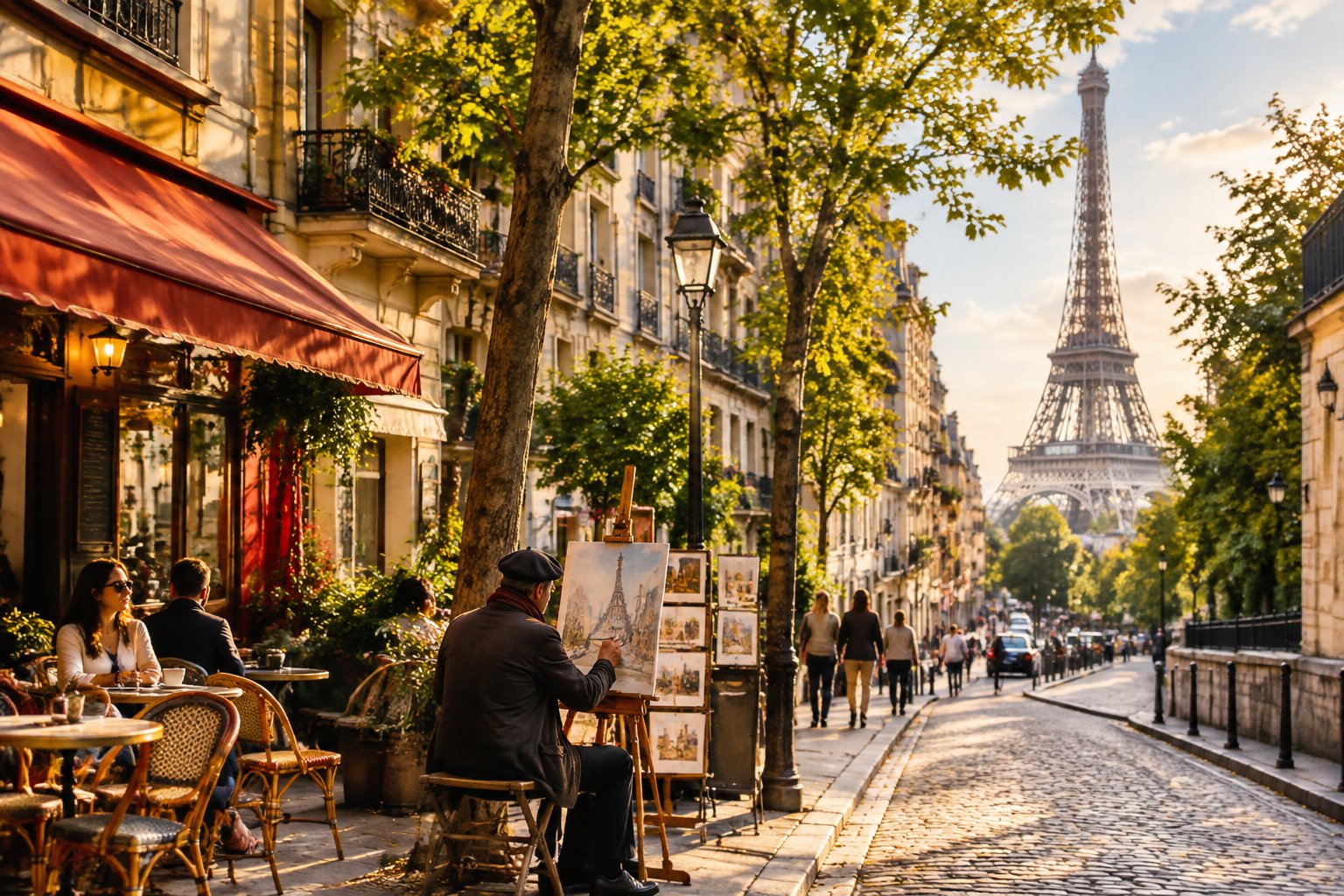
Paris rewards visitors who split their time between major landmarks and neighborhood wandering. The Louvre, Notre-Dame, and the Eiffel Tower anchor most first visits, but Montmartre and the Latin Quarter show you the city's daily rhythm.
3 Absolute Highlights:
- The Louvre's collection, including the Mona Lisa and the Winged Victory of Samothrace
- Montmartre's hilltop streets around Sacré-Cœur and the Place du Tertre
- A half-day trip to the Château de Versailles outside the city center
A Paris base near a metro line saves significant time, since the city's neighborhoods each have a distinct character worth exploring on foot. The Montparnasse district, once home to painters and writers in the 1930s, still carries that café culture today, and staying there puts you near the Montparnasse train station for day trips, according to the Central Hotel Paris.
What Should You See Beyond the Eiffel Tower?
Notre-Dame's exterior and surrounding Île de la Cité are worth a dedicated walk, especially paired with a stroll through the Latin Quarter's narrow streets and bookshops. Montmartre offers a different pace entirely, with artists' squares and views over the rooftops.
Versailles makes an easy half-day or full-day trip by train, and seeing the palace gardens in addition to the state rooms gives a fuller sense of the scale Louis XIV built.
For a central stay, consider the Central Hotel Paris in Montparnasse, which puts you near rail connections and the area's long-standing café scene.
Book a Paris hotel on Booking.com or Expedia to secure a central location before peak season fills up.
Loire Valley: Châteaux and Riverside Towns
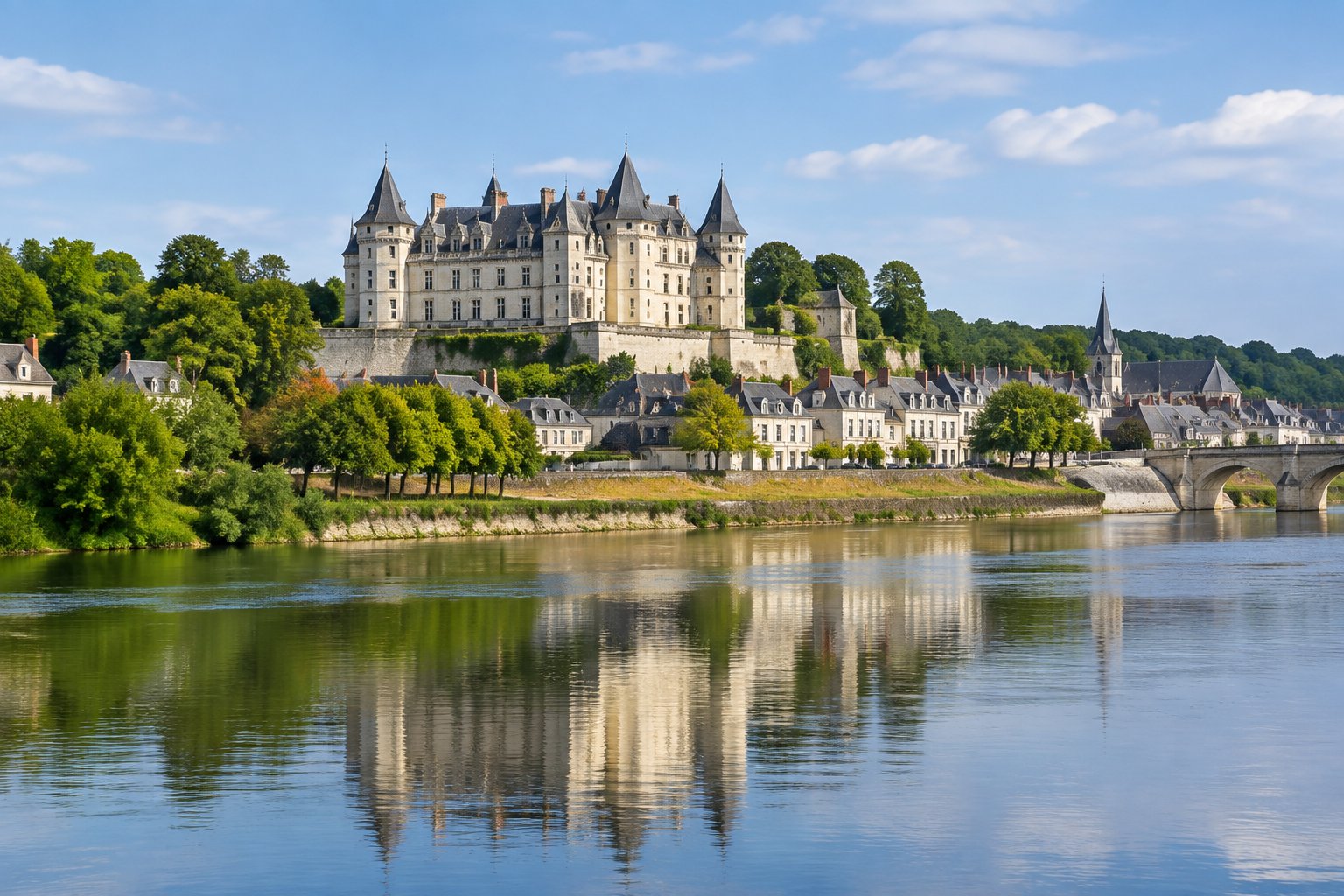
The Loire Valley pairs Renaissance architecture with quiet river towns, making it one of the easiest regions in France for a relaxed multi-day drive. Château de Chambord and Château de Chenonceau represent two very different approaches to château design, and visiting both gives useful contrast.
3 Absolute Highlights:
- Château de Chambord's rooftop terraces and double-helix staircase
- Château de Chenonceau's gallery spanning the Cher River
- Riverside towns like Montbazon for overnight stays between castles
Which Loire Castles Should You Prioritize?
Chambord and Chenonceau cover the two styles most visitors want to see: Chambord's hunting-lodge grandeur with its 5,440-hectare UNESCO-listed estate, and Chenonceau's more intimate, feminine architectural history. Chambord's admission runs on a tiered pricing structure introduced in January 2026, with a standard rate of €31 and a preferential €21 rate for European Economic Area residents, according to the Château de Chambord's official visitor information. The château is closed on January 1 and December 25, and operates shorter hours in low season from January through late March.
Base yourself in Montbazon, about 15 kilometers from Tours, for easy access to multiple châteaux. The Domaine de la Tortinière, a 4-star château-hotel set on 15 hectares, offers rooms in the historic château itself or in garden pavilions, along with a restaurant serving seasonal regional cuisine, according to the Domaine de la Tortinière's official site.
Book a Loire Valley château stay on Booking.com or Expedia to lock in a room near Chambord and Chenonceau.
Normandy: D-Day History and Coastal Scenery
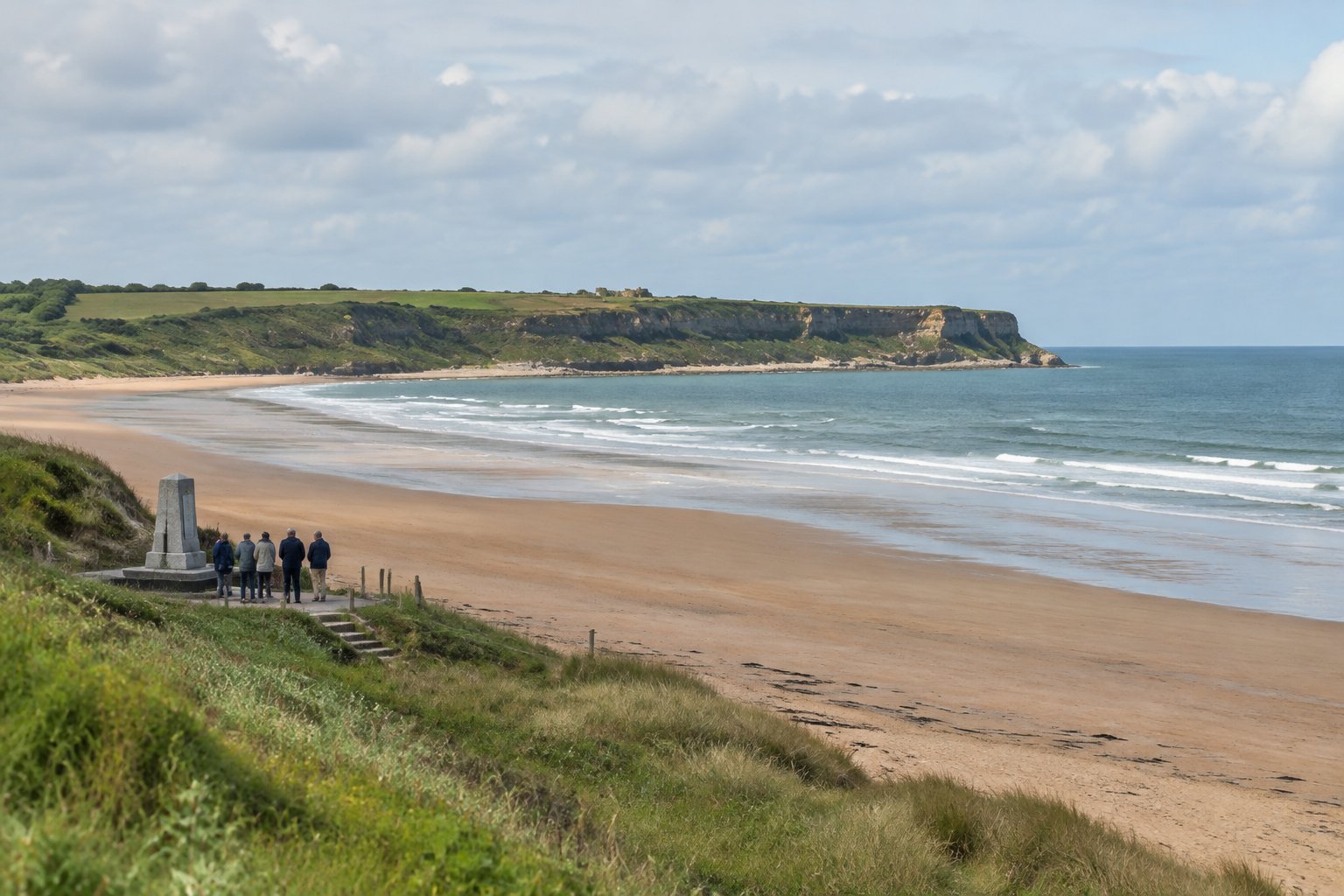
Normandy's D-Day beaches deserve their own dedicated visit, separate from any Mont-Saint-Michel day trip, given the emotional weight and scale of the sites. The five landing beaches, Utah, Omaha, Gold, Juno, and Sword, were inscribed on the UNESCO World Heritage List in 2026, recognizing their historical significance, according to Normandy Tourism.
3 Absolute Highlights:
- Omaha Beach and its American Cemetery overlook
- The medieval town of Bayeux, home to the Bayeux Tapestry
- Arromanches, with its remaining artificial harbor structures
Where Should You Start Along the D-Day Beaches?
Bayeux works well as a base, since it sits close to multiple landing sites and has train access from Caen. You can also reach several key D-Day sites without a car, using trains from Caen, Bayeux, or Carentan, according to Normandy Tourism.
The D-Day Festival Normandy runs from May 30 to June 14, 2026, drawing visitors for the anniversary commemorations across the landing beaches sector, according to Normandy Tourism.
For a central stay, the D-DAY apartment in Bayeux sits an 8-minute walk from the Bayeux Tapestry museum and under a kilometer from the cathedral.
Book a Normandy stay near the D-Day beaches on Booking.com or Expedia to secure a Bayeux base for beach-hopping.
Mont-Saint-Michel: An Abbey Shaped by the Tides
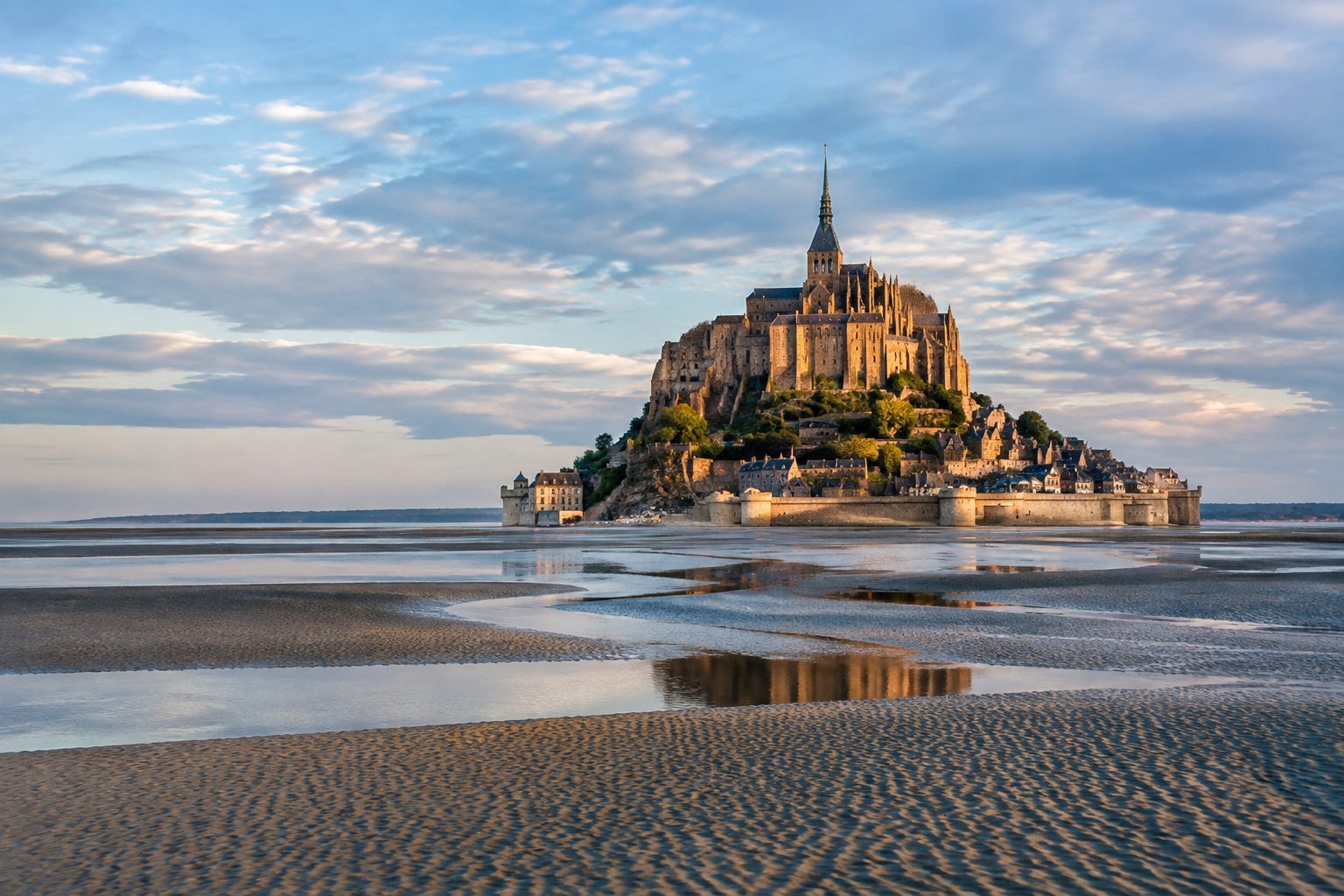
Mont-Saint-Michel stands apart from the rest of Normandy as a single, dramatic site built around one of Europe's most extreme tidal ranges. The abbey rises from a bay where tides can strand or reveal the causeway depending on the hour, so timing your visit around tide tables changes the experience significantly.
3 Absolute Highlights:
- The abbey itself, accessible via a climb through the walled village
- The surrounding bay, best seen from the causeway footbridge
- The 12-kilometer Green Way cycling path approaching from the west
When Is the Best Time to Explore the Abbey?
Early morning or early evening visits avoid the midday crowds that fill the narrow main street. A free shuttle bus, called "Le Passeur," runs continuously from 7:30 a.m. to midnight from the mainland parking area, covering the trip in about 12 minutes, according to Normandy Tourism. Parking itself is free after 6:30 p.m. during low season.
You cannot drive to the base of the Mont; a 4,000-space car park on the mainland, over a mile away, handles all vehicle arrivals.
For an overnight stay within the walls, Hôtel La Mère Poulard and Hôtel Le Relais Saint-Michel both offer rooms inside or near the fortified village, letting you see the Mont without the day-trip crowds.
Book a Mont-Saint-Michel hotel on Booking.com or Expedia to stay close enough for a sunrise or after-hours walk.
Provence: Markets, Lavender and Mediterranean Coves
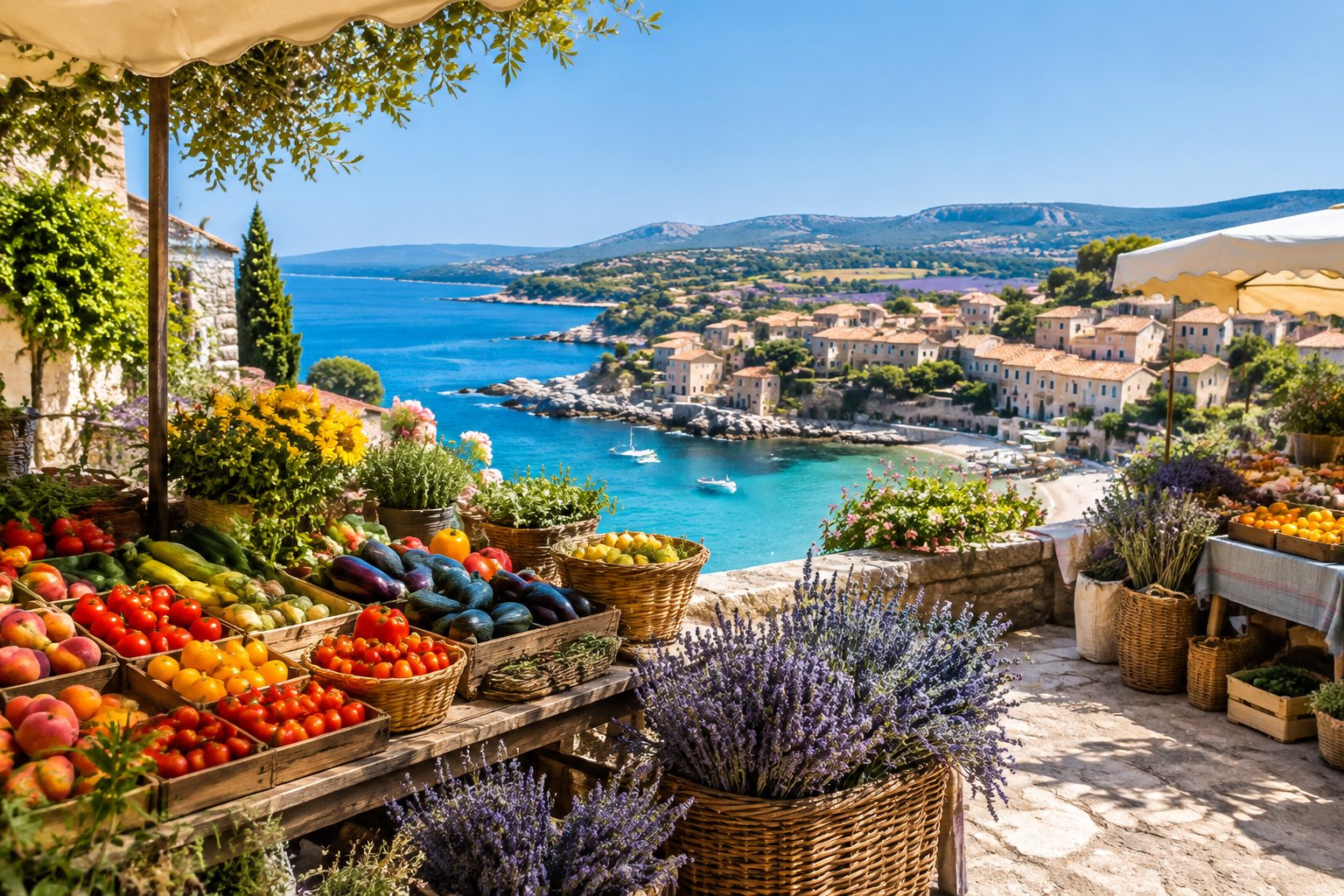
Provence combines inland market towns with a Mediterranean coastline that feels distinct from the Riviera further east. Avignon and Aix-en-Provence anchor the region's cultural side, while Marseille and Cassis open onto the Calanques National Park's limestone coves.
3 Absolute Highlights:
- Avignon's Palais des Papes and its walled old town
- Lavender fields across the Luberon and Valensole plateau in summer
- The Calanques between Marseille and Cassis, reachable by boat or trail
Where Can You Find Provence's Most Varied Experiences?
Aix-en-Provence offers a slower, market-town pace with its plane-tree-lined streets, while Marseille gives you port energy and access to the Calanques. Cassis works as a quieter coastal base between the two, where pastel harbor buildings sit right on the Mediterranean.
Boat excursions departing from the port in Cassis offer one of the easiest ways to view the dramatic limestone cliffs from the water.
Sugiton, one of the most visited calanques, now requires a free advance reservation during peak season because of erosion from heavy foot traffic, with daily visitor peaks reaching 2,500 people in summer, according to Parc National des Calanques. In 2026, this reservation system applies on select dates between June and September.
For a vacation rental near Avignon's historic center, options like A La Terrasse d'Avignon put you within walking distance of the Palais des Papes.
Book a Provence stay on Booking.com or Expedia to position yourself between the lavender routes and the coast.
French Riviera: Seaside Cities and Hilltop Views
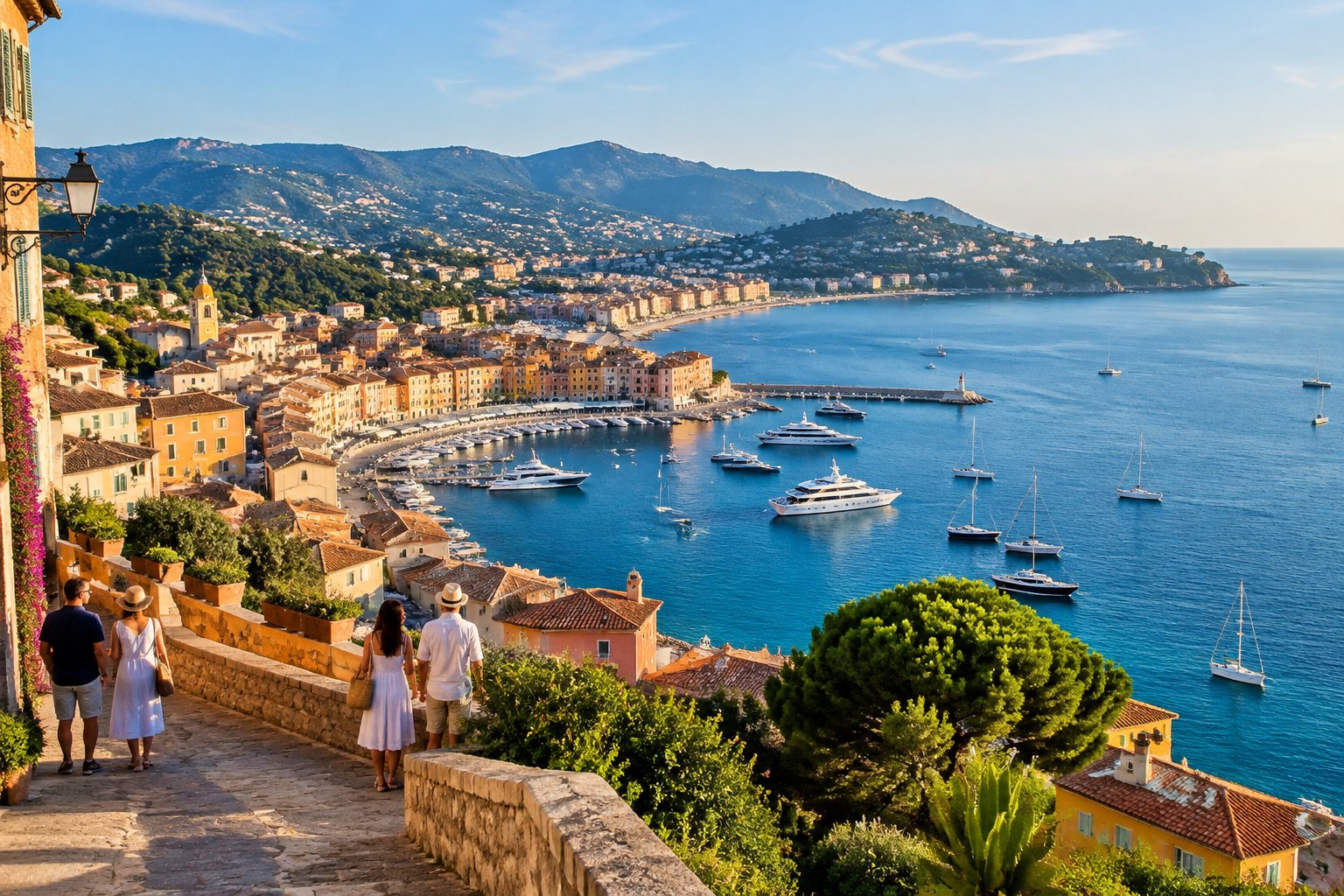
The French Riviera, or Côte d’Azur, strings together Nice, Cannes, and Antibes along a coastline built for slow exploration by train. As one of the most famous coastal areas in the South of France, the Côte d’Azur combines Mediterranean beaches with historic seaside villages.
Monaco sits just across the border and makes an easy day trip, though it is its own sovereign city-state rather than part of France.
3 Absolute Highlights:
- Nice's Old Town and the Promenade des Anglais
- The hilltop village of Èze, perched above the coastline
- Antibes' old port and its Picasso Museum
Which Riviera Town Makes the Best Base?
Nice gives you the most practical base, with a train line running every 15 minutes between Cannes and Menton, adding roughly 20,000 extra seats daily along the coast, according to SNCF TER. Weekend trains run until 2 a.m. on Sunday mornings, which suits travelers hopping between towns for dinner or nightlife.
From Nice, Cannes, Antibes, and Èze are all reachable without a car. Monaco requires only a short additional train ride, making it a straightforward add-on day trip rather than a separate base.
For a central Nice stay, Hôtel Nice Azur Riviera and Westminster Hôtel & Spa both sit within the city's accommodation core near the coast.
Book a French Riviera hotel in Nice on Booking.com or Expedia to stay close to the rail line connecting the coast.
Lyon: Food and Renaissance Streets
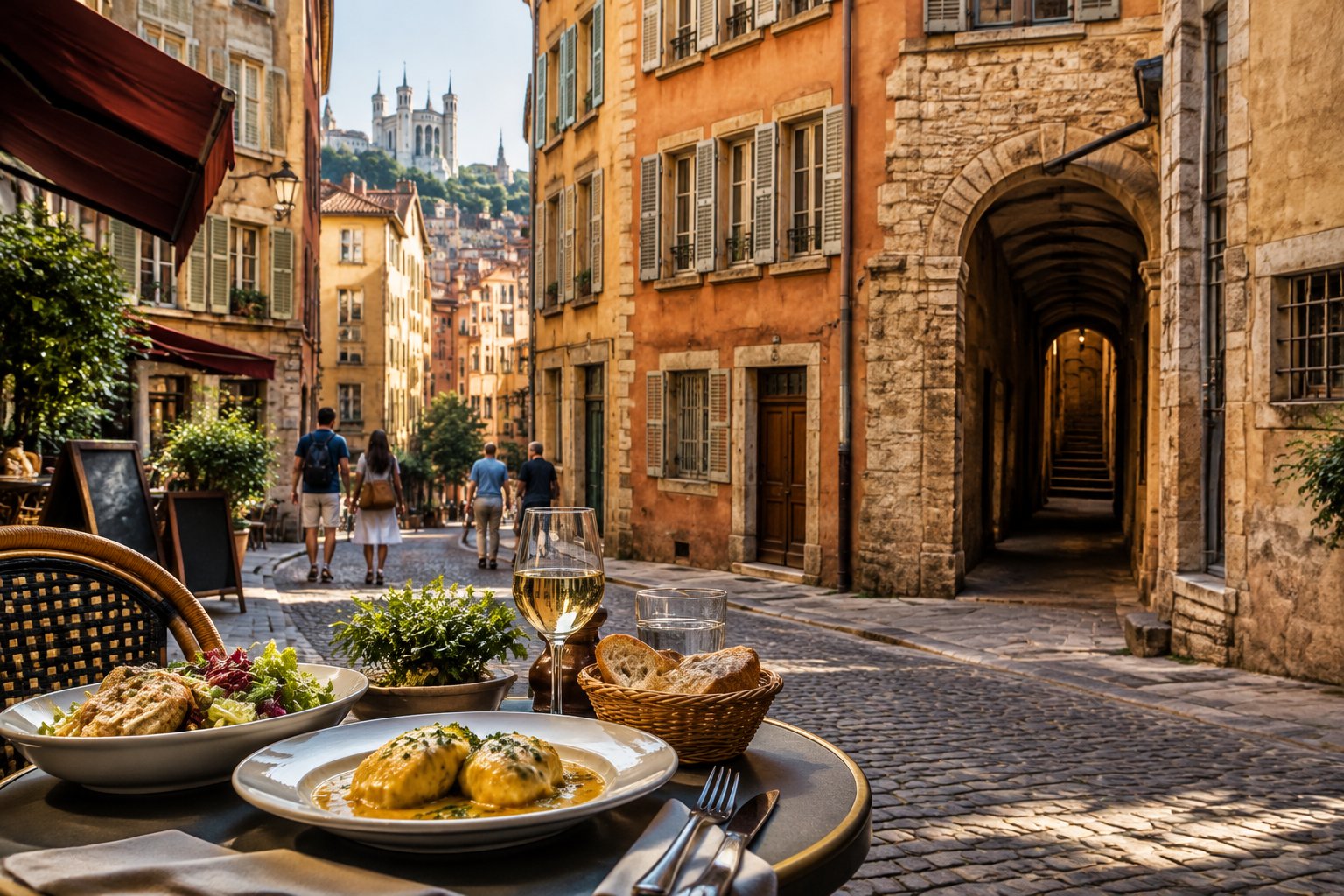
Lyon earns its reputation as a food capital through its bouchons, traditional restaurants serving hearty, affordable dishes rooted in the city's silk-worker history. The Presqu'île district and Old Lyon's Renaissance facades give the city a walkable historic core alongside its dining scene.
3 Absolute Highlights:
- A meal at a certified bouchon in Old Lyon or the Presqu'île
- The Basilica of Fourvière, with views over the city
- The Musée des Confluences, known for its angular modern design
Why Eat at a Lyonnais Bouchon?
A bouchon serves dishes like quenelles de brochet and salade lyonnaise in a rustic, checkered-tablecloth setting that reflects Lyon's working-class culinary roots, according to ONLYLYON. Look for the "Les Bouchons Lyonnais" sticker, a label created in 2013 to certify restaurants meeting strict standards for menu, ingredients, and atmosphere.
These restaurants cluster in Old Lyon, the Croix-Rousse, and the Presqu'île, the same neighborhoods worth exploring for their medieval and Renaissance architecture.
For a central stay, the Carlton Hotel Lyon - MGallery Collection occupies an 1894 building on the Presqu'île, a five-minute walk from the Bellecour metro station.
Book a Lyon hotel on Booking.com or Expedia to stay within walking distance of the city's best bouchons.
Bordeaux: Wine Culture and Atlantic Day Trips
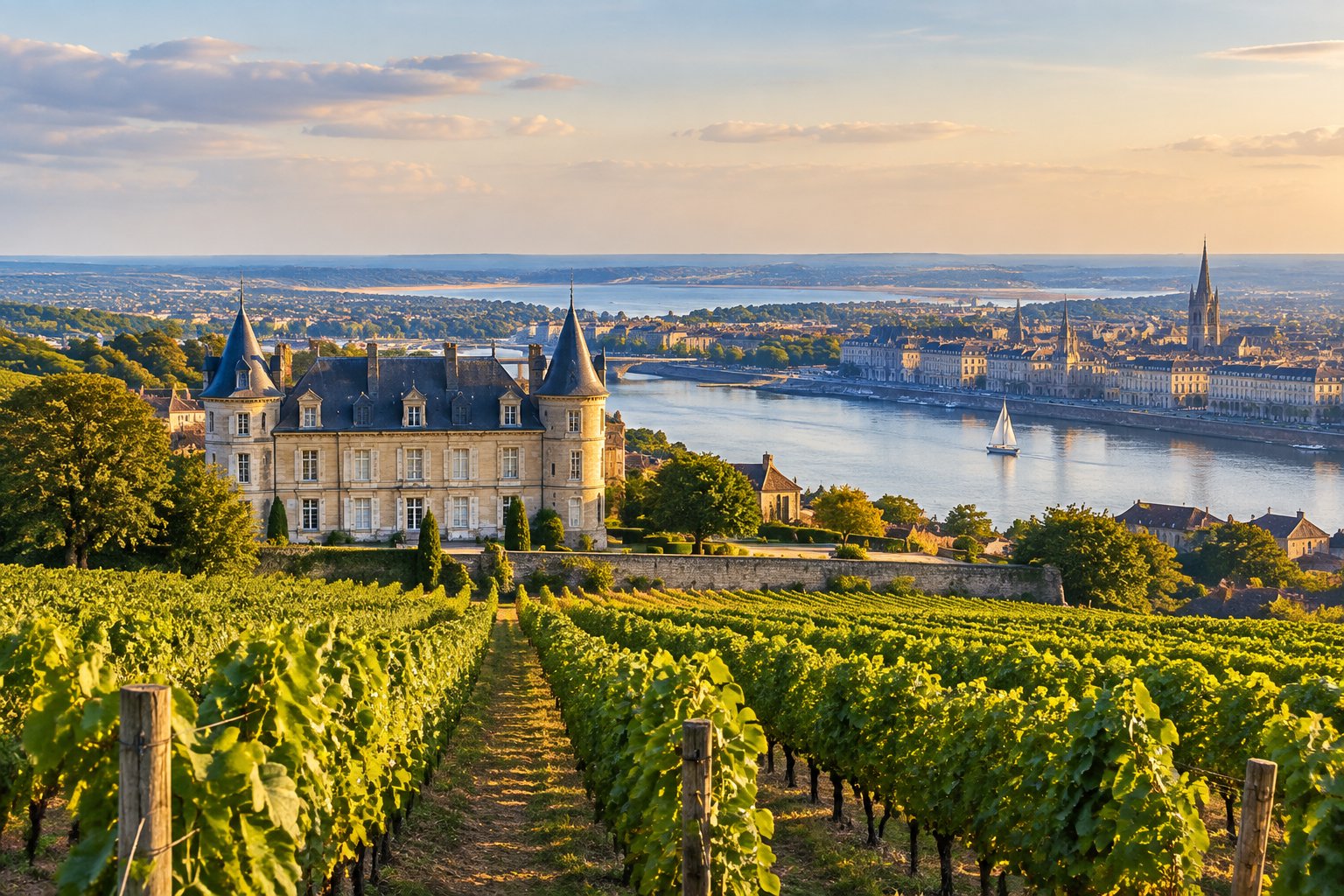
Bordeaux pairs its wine-focused identity with easy access to the Atlantic coast, making it a strong two-in-one base. The Cité du Vin museum anchors the wine side of a visit, while Arcachon and Bird Island cover the coastal half.
3 Absolute Highlights:
- The Cité du Vin's exhibits on wine history and culture
- Arcachon Bay, with its oyster ports and the Dune du Pilat
- Bird Island's historic oyster shacks, visible from the water
What Can You Explore Beyond the Vineyards?
Arcachon Bay sits under an hour from Bordeaux and spans 76 kilometers of beaches, including 39.5 kilometers of ocean coastline, according to Bordeaux Tourism. The bay's Dune du Pilat rises 109 meters and stretches 2,700 meters long, built from an estimated 60 million cubic meters of sand.
Bird Island, the symbol of the Arcachon Basin, holds around fifty historic oyster shacks on stilts, now used mainly for leisure, according to Bordeaux Tourism. The island's exposed area shifts dramatically with the tide, from 300 hectares at low tide to just 100 at high tide.
For a central stay, the Quality Hotel Bordeaux Centre, set in a 19th-century mansion, sits two minutes from the Grand Théâtre and close to the Saint-Pierre district's restaurants.
Book a Bordeaux hotel on Booking.com or Expedia to stay central for both wine tastings and Arcachon day trips.
Strasbourg: Alsatian Streets and Canal Walks
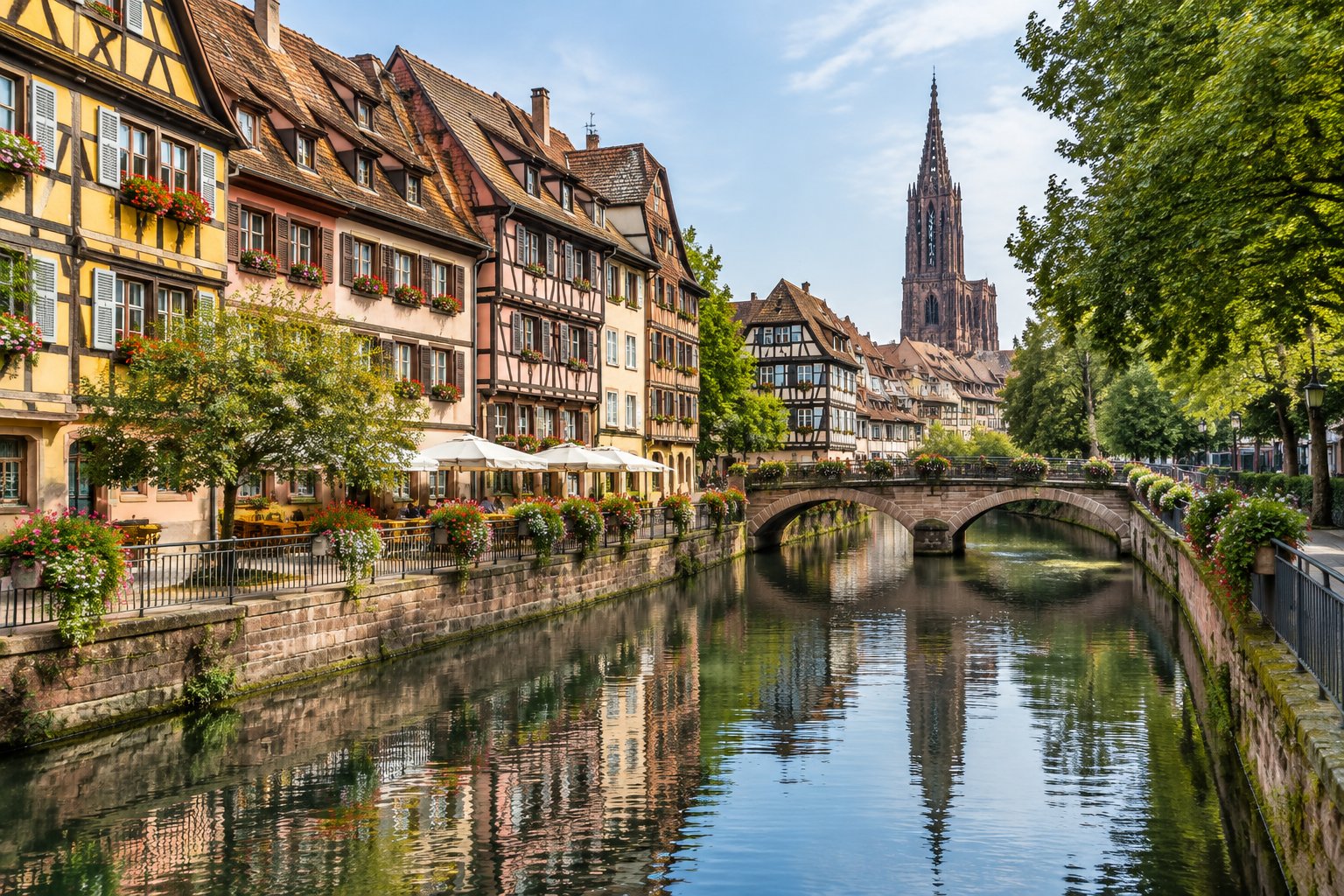
Strasbourg blends French and German influences into a city built around half-timbered houses, canals, and a Gothic cathedral. The Petite France district offers the most photographed canal views, with its preserved tanners' and millers' houses lining the water.
3 Absolute Highlights:
- Petite France's canal-side half-timbered houses
- Strasbourg Cathedral's astronomical clock and spire
- A boat tour along the Ill River through the historic center
What Makes Strasbourg Worth a Stop?
Strasbourg's compact old town makes it walkable in a day, though an overnight stay lets you see the canals lit in the evening. The city's Alsatian identity shows in its cuisine, architecture, and the mix of languages still heard in daily life.
Its central location also makes it a reasonable stop between Paris and destinations further into Germany or Switzerland, for travelers building a broader European itinerary.
Book a Strasbourg hotel near the Petite France district on Booking.com or Expedia to stay within walking distance of the cathedral and canals.
French Alps: Mountain Adventures in Every Season
The French Alps draw visitors year-round, with Chamonix and Annecy serving as the two most practical bases for different kinds of trips. Chamonix sits at the foot of Mont Blanc, Western Europe's highest peak, and centers on serious hiking, climbing, and skiing.
3 Absolute Highlights:
- Cable car access toward Mont Blanc's glaciers and viewpoints from Chamonix
- Annecy's old town canals and lake, often called the "Venice of the Alps"
- Summer hiking trails across the Mont Blanc massif
Should You Base Yourself in Chamonix or Annecy?
Chamonix suits travelers focused on mountain sports, with direct access to Mont Blanc's trails, ski lifts, and climbing routes. The town itself is small and built almost entirely around outdoor access.
Annecy offers a gentler pace, with its lake, canals, and old town providing a scenic base for shorter hikes and lake activities alongside mountain views. It works well for travelers who want Alpine scenery without committing to high-altitude trekking.
Both towns connect by road within about an hour, so pairing a few nights in each is a reasonable way to see both sides of the Alpine experience.
Book a French Alps hotel in Chamonix or Annecy on Booking.com or Expedia depending on whether mountain sports or lakeside relaxation matters more to your trip.
Choose the France Trip That Fits You
Ten regions, ten different kinds of trips. Paris and Lyon suit travelers drawn to cities, food, and museums, while the Loire Valley and Provence reward a slower pace built around châteaux, markets, and countryside driving.
Normandy and Mont-Saint-Michel stand on their own, each carrying a different kind of historical and natural weight worth a focused visit rather than a rushed stop.
The French Riviera and Bordeaux pair coastal time with culture and wine, ranking among the most rewarding places to visit in France for regional variety. Strasbourg adds a distinctly Alsatian flavor to any itinerary that includes eastern France.
For mountain time, the French Alps around Chamonix and Annecy cover both serious trekking and lakeside relaxation. If the Alps feel too crowded or you want a quieter range, the Pyrenees along France's southern border offer a comparable mix of peaks, valleys, and hiking trails with a different character.
Pick two or three regions rather than trying to cover all ten in one trip, and build in enough time at each to actually settle into its pace.
Frequently Asked Questions
How many regions should you visit on one trip?
Focusing on two or three regions works best for a 10- to 14-day trip. This allows ample time to enjoy each area without spending entire days in transit.
Do you need a car to travel around France?
Major hubs like Paris, Lyon, Strasbourg, and the French Riviera are easily explored by train. Renting a car is best saved for countryside drives through the Loire Valley or rural Provence.
When is the best time to visit France?
Spring and early autumn offer comfortable weather and lighter crowds in most regions. Summer brings peak beach weather and lavender blooms, while winter is ideal for Alpine skiing.
Comments